
Pistorius warned Ukraine of the risk of losing Germany's support due to strikes in the Baltic Sea
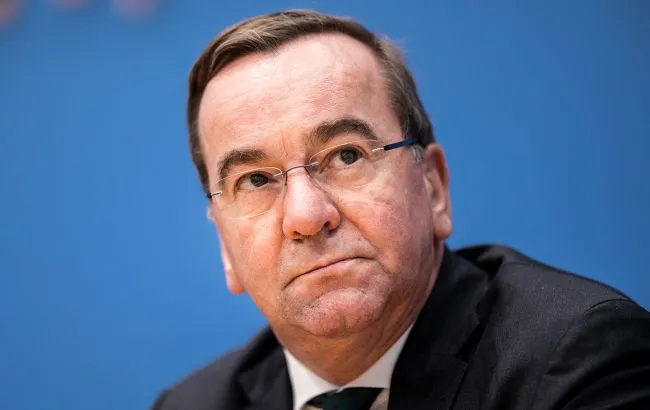
During a closed-door meeting, German Defense Minister Boris Pistorius warned his Ukrainian counterpart, Yevhen Khmara, about the possible consequences of strikes on Russian targets in the Baltic Sea. According to Spiegel, Berlin fears that such operations could lead to an escalation and weaken support in Germany for military aid to Ukraine. At the same time, German politicians do not have a unified position on Kyiv’s right to attack Russian ships.
The German government has recently urged Kyiv to exercise caution at various levels following Ukrainian strikes on Russian vessels. In particular, this issue was raised during Ukrainian Defense Minister Yevhen Khmara’s visit to Berlin on November 23. Behind closed doors, Boris Pistorius explained to his Ukrainian counterpart that expanding operations against Russian targets in the Baltic Sea could have serious consequences.
Berlin fears more than just a direct escalation of tensions with Moscow. According to Spiegel, the German government also believes that such strikes could weaken support for military aid to Ukraine among the German public. This is particularly important in light of polls showing a decline in German citizens’ willingness to support continued aid to Kyiv.
Why Germany Fears Strikes in the Baltic Sea
One of Berlin’s main concerns is the risk that Russia will respond to Ukrainian attacks much more harshly. According to German government sources, Moscow could use such strikes as a pretext for further escalation and accusations against NATO. The Baltic Sea itself is of particular importance. Important trade routes pass through it, with hundreds of commercial vessels traveling through the area every day. An escalation of the situation could disrupt shipping and lead to higher insurance costs for carriers.
In Berlin, officials are also drawing attention to the presence of Russian warships near the German coast. Therefore, potential new attacks in the region are viewed as a risk not only for Ukraine and Russia but also for the security of other Baltic Sea countries.
There is no unified position in Germany regarding Ukrainian strikes
Despite the government’s reservations, German politicians have differing views on Ukraine’s right to attack Russian ships. Adis Ahmetović, the foreign policy spokesperson for Germany’s Social Democratic Party, called for particular caution during military operations in the Baltic region. “We support Ukraine as it defends itself against Russian aggression. At the same time, special caution is needed during military operations in the Baltic region. It is essential to preserve the security of coastal states and freedom of navigation,” he told reporters.
Jürgen Hardt, the foreign policy spokesperson for the CDU/CSU parliamentary group in the Bundestag, expressed a different position. He supported Ukraine’s right to take action against Russian military ships and vessels transporting weapons. Thomas Revekamp, chairman of the Bundestag’s Defense Committee, also spoke out in support of Ukrainian operations. He emphasized that the responsibility for escalating the war lies with Russia, which launched the aggression against Ukraine.
Thus, there is no complete consensus in Germany on how Kyiv should act against Russian military logistics at sea. Some politicians are calling for avoiding actions that could threaten regional security, while others insist on Ukraine’s right to attack targets that help Russia wage war.
Which attack on a Russian ship sparked concern
One of the reasons for the debate was the Ukrainian military’s attack on the Russian cargo ship Sparta II in the Gulf of Finland on November 21. After the drone strike, a fire broke out on board the ship, and the vessel lost control and drifted into Finnish territorial waters. Ships from several countries were called in to extinguish the fire. Subsequently, a Russian rescue vessel began towing the damaged Sparta II toward St. Petersburg.
Ukrainian President Volodymyr Zelenskyy confirmed that Ukrainian forces had attacked the vessel. He explained that the Sparta II was a legitimate military target because, according to him, it was linked to the logistics operations of the Russian Ministry of Defense and was transporting military cargo. Following the attack, European countries began to discuss more actively the risks to shipping and security in the Baltic Sea. According to Spiegel, the German government fears that a further escalation of hostilities in the region could draw more countries into the conflict. This was reported by the German publication Spiegel, citing sources in government circles.
Estonian Foreign Minister Margus Tsahkna stated that Ukraine has every right to launch strikes deep into Russian territory in self-defense. According to him, all responsibility for a possible escalation of the situation in the Baltic Sea lies solely with Moscow.
On November 24, Estonian Prime Minister Kristen Michal stated that Ukraine had been warned of the risk of environmental pollution in the Baltic Sea as a result of attacks on Russian oil tankers.




