
The legacy of Francis of Assisi: from peace to ecology — Deutsche Welle
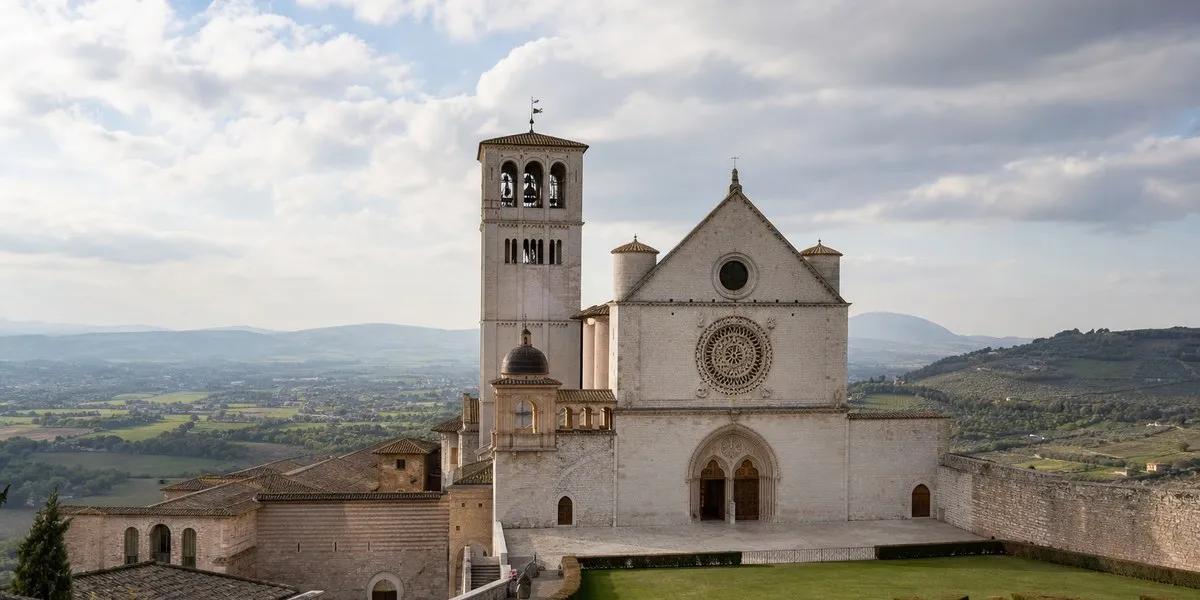
In the Italian city of Assisi, the remains of Francis of Assisi were put on public display for veneration this year to mark the 800th anniversary of his death. Hundreds of thousands of people came to honor the Catholic saint, who renounced wealth and fame during his lifetime, Deutsche Welle reports.
Francis died on October 3, 1226, and is buried in the grand basilica in his native Assisi. In the following centuries, he became one of the most frequently depicted saintly figures in Western art, inspiring, among others, Dante, filmmakers, authors of children's books and a 1980 Marvel comic.
From wealthy youth to preacher
Francis was born in Assisi in 1181 or 1182 under the name Giovanni di Pietro di Bernardone. His father, a cloth merchant, renamed his son Francesco. Early Franciscan biographies describe him as a sociable young man who loved singing, banquets and the privileges of a wealthy life.
In 1202, he fought with the forces of Assisi against neighboring Perugia, was captured and spent a year in captivity. After returning, Francis gradually changed his views. According to tradition, in the semi-ruined Church of San Damiano, he heard Christ's call to “rebuild my church” and began repairing local chapels.
Later, Francis renounced his father, inheritance and material possessions, dedicating his life to poverty, humility and helping the poor and sick. As an itinerant preacher, he gathered followers and founded the Order of Friars Minor, now known as the Franciscans. Pope Gregory IX canonized him on July 16, 1228.
More current news is available on the UA.News Telegram channel Telegram.
Peace and political interpretations
In 1219, during the Fifth Crusade, Francis arrived in the Egyptian city of Damietta with the Crusader army. He received permission to enter the Muslim camp and met Sultan Malik al-Kamil. Francis sought to convert the sultan and end the bloodshed, but the meeting brought neither religious conversion nor a political breakthrough.
Cultural historian Amanda Minervini notes that Benito Mussolini's regime used the saint's image to lend religious legitimacy to political power. Fascist rhetoric reinterpreted Francis's stigmata as symbols of heroic suffering and self-sacrifice, while downplaying his pacifism. A confidential 1929 memo for military chaplains expressed concern that they might preach ideals of peace to servicemen.
Patron saint of ecology
Francis of Assisi is also associated with care for nature and animals. In 1979, Pope John Paul II proclaimed him the patron saint of ecology. Jorge Mario Bergoglio, upon becoming pope in 2013, chose the name Francis, and in 2015 published the encyclical Laudato Si', based on Francis's 1225 hymn “Canticle of the Creatures.” In it, natural elements are called Brother Sun, Sister Moon and Sister Mother Earth.
Theologian Daniel P. Horan noted that in Francis's own time, he was troubled by the positive reception that he and his brothers received in Europe. In Minervini's view, the saint might have felt closer to portrayals of him as an advocate of peace.




