
The heat has shifted the season in Germany; grapes are already being harvested in August
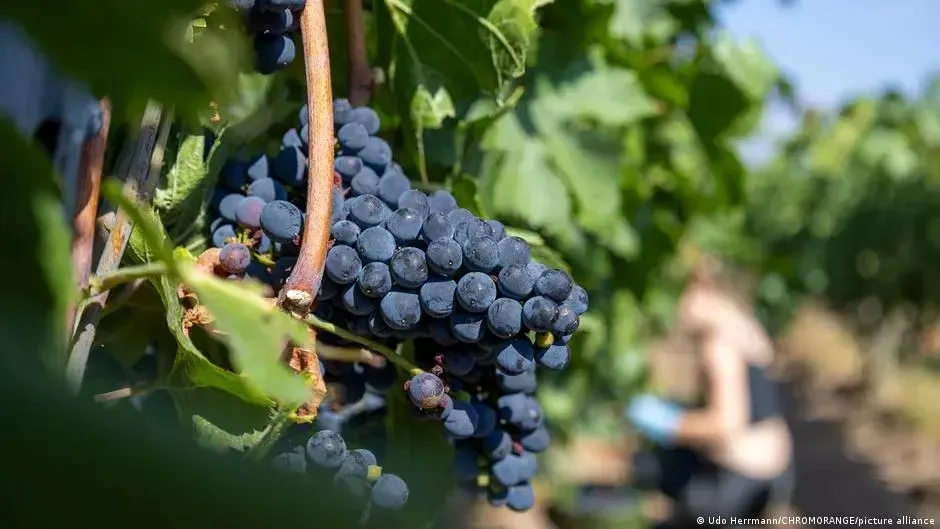
In Germany, winemakers began harvesting grapes unusually early this year—as early as August. Due to the heat, the grapes ripened several weeks earlier than usual, but the drought could reduce the harvest by about 30% and make the wine itself stronger.
German winemakers began the grape harvest earlier than ever before since regular observations began. This was due to a hot and dry summer, which caused the grapes to ripen quickly. Some winemakers even had to cut their vacations short to get to the vineyards in time. “Some winemakers even had to cut their vacations short to do this,” Ernst Büscher, a representative of the German Wine Institute, told ARD.
Just a few decades ago, September was the main month for the grape harvest in Germany. Now, this period is gradually shifting to earlier dates. Winemaker Simon Schreiber recalls that when he began his training in 2010, grapes were usually harvested in mid- or late September. “When I started my training in 2010, the harvest took place in mid- or late September. But now it’s in mid-August!” he noted.
The heat affects not only the harvest time but also the future wine. Under the intense sun, the grapes accumulate more sugar. During winemaking, this sugar turns into alcohol, so the wine may end up stronger. For winemakers, this isn’t necessarily good news. Consumers are increasingly opting for lighter wines with lower alcohol content. Additionally, due to the heat, the grapes may lose some of their acidity, which is crucial for the flavor and balance of German wines.
At the same time, winemakers hope that the quality of this year’s harvest will be high. However, the quantity is likely to be lower. The reason is the prolonged drought. In many regions, the grapes remained small because the vines lacked water. Winemaker Johannes Kopp from Sinsheim expects his estate to harvest about 30% fewer grapes than usual.
This creates yet another problem for the wine industry. Production costs are rising, but consumers aren’t always willing to pay more for a bottle of wine. According to ARD, for many shoppers in German supermarkets, a price of around five euros per bottle remains a psychological threshold. As a result, the 2026 season has proven to be a difficult one for German winemakers. The grapes ripened earlier than ever before, but due to the heat and drought, the actual yield may be significantly lower.
A similar situation is being observed in other wine-producing regions of Europe. Earlier, due to the heat and drought, the earliest grape harvest in history began, notably in Champagne, France. For winemakers, the shift in the season is becoming increasingly noticeable. Hotter summers are forcing them to react more quickly to the weather, and changes in temperature and precipitation are gradually affecting both the size of the harvest and the taste of the future wine. DW reports on this.
At this time, other countries have not made any specific commitments regarding the transfer of additional air defense systems or missiles to Ukraine.




