
The U.S. Has Nearly Exhausted Its Stockpile of Precision-Guided Missiles — Bloomberg
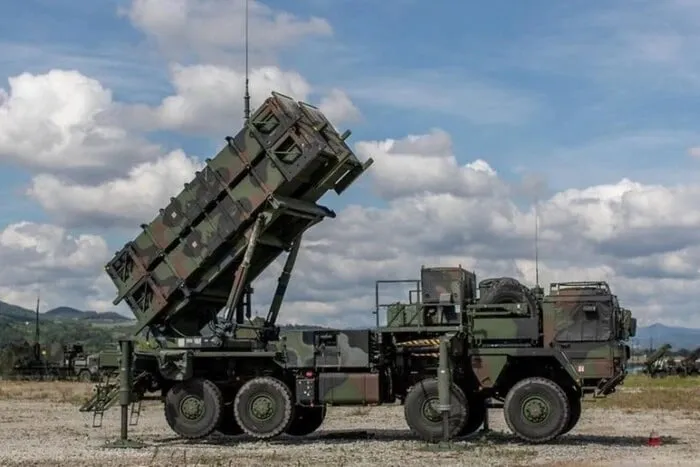
The United States has faced a significant reduction in its stockpiles of precision-guided missiles and missile defense systems. According to Bloomberg, certain types of offensive weapons have been almost completely depleted, and it could take years to replenish the arsenals.
As the publication notes, the missile shortage has already influenced Washington’s military decisions and may complicate future arms deliveries to allies.
Critical Depletion of U.S. Arsenals
According to the publication, the situation has sparked sharp dissatisfaction from U.S. President Donald Trump. While at Camp David, he demanded explanations from Secretary of War Pete Hagseth and accused him of concealing the true state of U.S. arsenals.
At the same time, Chairman of the Joint Chiefs of Staff Dan Kane had warned of the risk of weapons shortages even before the February strikes began.
The situation was worst for several key types of missiles. According to Bloomberg, the U.S. has depleted nearly all available stocks of ATACMS army tactical missiles and the newer, high-precision PrSM missiles.
Stocks of Tomahawk cruise missiles on U.S. ships and submarines have also fallen to a critical low. Stocks of missile defense systems have also been severely depleted. According to estimates by the Center for Strategic and International Studies (CSIS), about two-thirds of the available interceptors for the Patriot systems have been used. In addition, the U.S. has expended nearly half of its arsenal of missiles for THAAD systems, which are designed to intercept ballistic targets.
The Pentagon is already pressuring defense contractors to urgently ramp up ammunition production. However, even with increased production capacity, it will take years to replenish U.S. stockpiles.
The missile shortage is limiting U.S. military capabilities
The missile shortage has already affected Washington’s military decisions. As Bloomberg notes, due to a lack of ammunition, Trump was forced to cancel one of the previously planned large-scale strikes.
If massive bombing campaigns resume, the U.S. Air Force will also have to operate closer to the range of Iran’s air defense systems. This will significantly increase the risk of losing aircraft and U.S. service members.
A separate problem has been the shortage of interceptor missiles. Due to limited stockpiles, Washington will have to determine which targets and allies will receive priority protection.
Consequences for Ukraine and U.S. Allies
The depletion of U.S. arsenals has directly affected Ukraine as well. Kyiv had planned to purchase U.S. weapons with funding from European partners, particularly to defend against Russian airstrikes. However, due to shortages in U.S. stockpiles, the number of weapons available for export has been significantly reduced.
The problem has also affected Washington’s ability to contain China in the Indo-Pacific region, North Korea on the Korean Peninsula, and Russia on NATO’s eastern flank.
National security expert and former U.S. National Security Council staffer Koki Shake offered a critical assessment of the situation. According to her, Washington has not pioneered a new way of waging war; instead, it has demonstrated new ways of failing.
A Bloomberg reporter notes that the depletion of ammunition stocks has become one indicator of a much broader problem, the consequences of which are gradually becoming apparent for the U.S. and its allies.
This is reported by Bloomberg.
The Pentagon has given defense contractors 21 days to submit plans to increase weapons production.
The U.S. Army will purchase $400 million worth of Locust anti-drone laser systems.
The U.S. Army has begun searching for companies capable of developing an affordable surface-to-air missile to combat drones. The new project involves developing an effective anti-drone missile that meets specific requirements for cost and range.
The U.S. is stepping down from leading the aid group for Ukraine.
U.S. President Donald Trump stated that the agreement signed in 2025 between Ukraine and the United States on cooperation in the mineral resources sector is “very beneficial” for Washington. According to him, thanks to these agreements, the U.S. could reap significant profits from access to Ukrainian resources.
The Pentagon is developing a new nuclear weapons strategy for a war with China or Russia, according to NBC.




