
Coin of King Olaf II found in Norway among more than 5,500 silver coins — RMF24
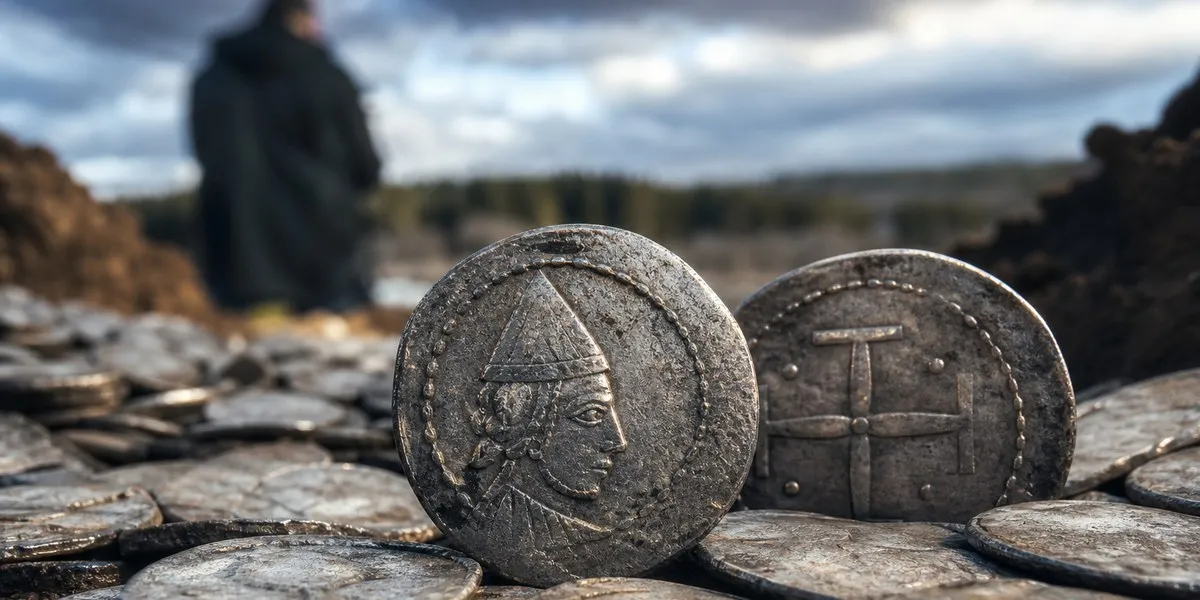
Near the town of Rena in eastern Norway, archaeologists have discovered a hoard of more than 5,500 Viking Age silver coins. Among the finds, they identified an extremely rare coin minted during the reign of Olaf II Haraldsson, also known as Saint Olaf. As RMF24 reports, the hoard is already considered the largest collection of Viking Age coins found in the country.
Rare coin of a Norwegian king
While cataloguing the coin, archaeologist Anne Skogsfjord initially believed that it dated to the Anglo-Saxon period of King Æthelred II. Further research revealed the inscription ONLAF R+ NORMANORV, which points to Olaf II Haraldsson, the king of Norway who ruled from 1015 to 1028.
The coin is dated to 1024–1028. Its obverse depicts a portrait of Olaf in a conical helmet, while its reverse features a Christian cross. According to the outlet, fewer than 20 coins minted during this ruler's reign are known, with most of them found outside Norway. The current discovery is only the second such case in the country over the past hundred years.
More current news is available on the UA.News Telegram channel Telegram.
A symbol of Christianization
Professor Svein H. Gullbekk of the University of Oslo explained that such coins had not only economic but also political and religious significance. The combination of the ruler's image and Christian crosses, he said, demonstrates the use of coins to establish the new faith and Olaf's image as a Christian European ruler.
The surface of the discovered coin bears small notches which, scientists explained, were made to test its silver content during payments. This indicates that it was in circulation and may have changed owners repeatedly. Gullbekk also did not rule out that the coin could have passed through the hands of Olaf Haraldsson himself, who, according to him, personally determined the appearance of such coins and may have been present when they were minted.




