
US signs healthcare memorandums with 35 countries — NPR
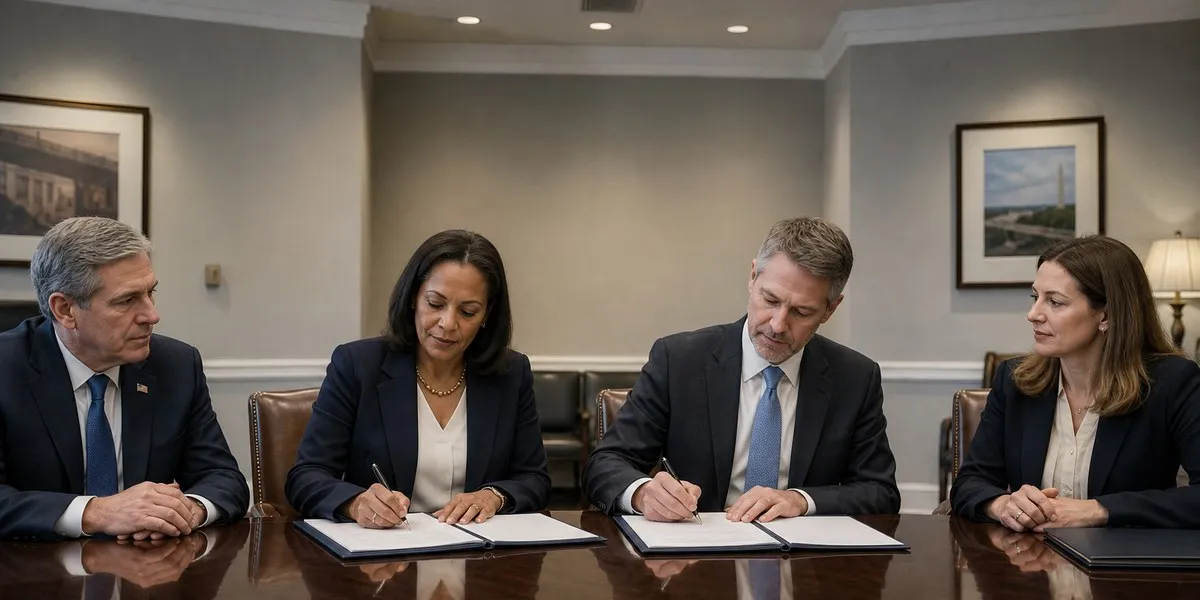
In the United States, Donald Trump’s administration said that a new phase of global health policy under the America First Global Health Strategy begins on October 1. To receive US funding, countries must sign a memorandum of understanding defining the US contribution and the financial commitments of the partner country’s government.
According to NPR, the United States has signed such memorandums with 35 countries, providing for about $14 billion in healthcare investments over five years. Parties to the agreements include Nigeria, Rwanda, the Philippines, Tajikistan, Bolivia, and El Salvador.
Terms of the new model
The US administration believes that the co-financing requirement should strengthen the self-reliance of partner states and reduce their dependence on US assistance. According to Tom Bollyky, director of the Global Health Program at the Council on Foreign Relations, the new model provides for a more pragmatic approach to aid: the United States seeks to define more clearly what American taxpayers receive in return.
In Bollyky’s view, this could mean, among other things, preferential access to critical minerals or access to patient data. The US administration explains that sharing such data can strengthen a country’s ability to detect outbreaks of infectious diseases and prevent their spread to the United States.
More current news is available on the UA.News Telegram channel Telegram.
Under the memorandum with Rwanda, the United States is to provide $157 million, while Rwanda is to allocate $70 million. The country also agreed to transfer patient data to the United States and recognize approvals by the US Food and Drug Administration for the use of medicines during disease outbreaks without additional approval by the Rwandan regulator.
Refusal by certain countries
Ghana, Namibia, and Zimbabwe refused to sign the memorandums, citing sovereignty concerns. Ghanaian President John Dramani Mahama said that the proposed terms provided for the transfer of patients’ medical records, pathogen data, and recognition of the FDA as the final authority on medicine approvals.
US Ambassador to Zimbabwe Pamela Tremont said on September 25 that the United States was ending all global health funding in the country after it rejected the agreement. According to her, the United States plans to shift the focus of its relations with Zimbabwe from healthcare to economic investment and trade.
Experts interviewed by NPR consider coordination with national governments and their gradual assumption of costs for their own healthcare systems to be a justified approach. At the same time, they warn that the rapid implementation of the model and a reduction in US funding could complicate the transition, particularly for countries with a significant number of people at risk of HIV. NPR notes that it is currently unclear whether US State Department funds will arrive on time under the new arrangements.




