
A court in the aggressor state barred "Yabloko" from participating in the elections in Russia
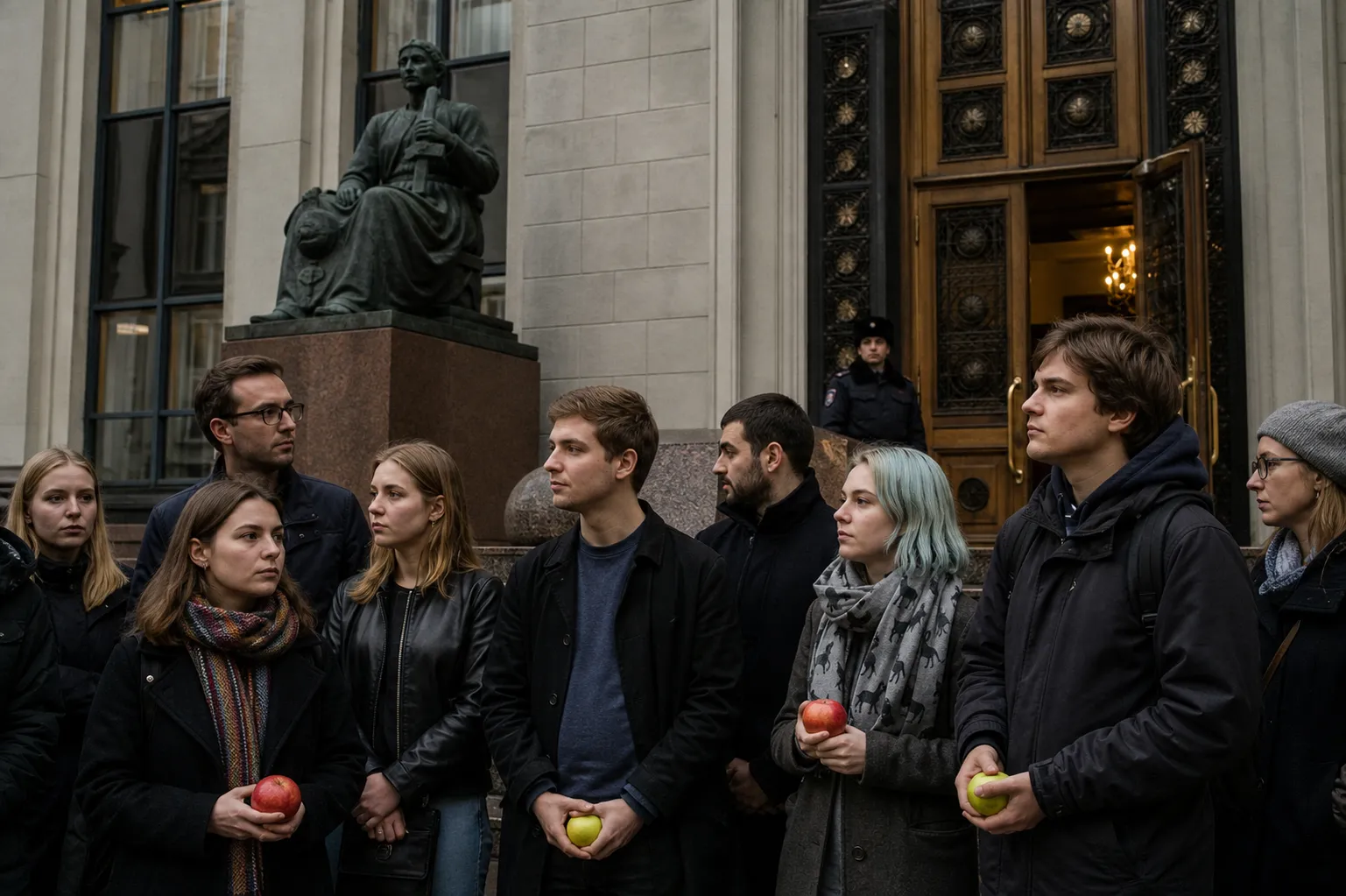
The Supreme Court of Russia, the aggressor state, has upheld a lawsuit against the anti-war opposition party “Yabloko.” Its candidates will not be allowed to run in the parliamentary elections scheduled for September 18–20, according to Deutsche Welle.
The lawsuit was filed by the pro-Kremlin party “Rodina.” It accused “Yabloko” of copyright infringement in its campaign materials and also alleged extremist activities and illegal foreign funding. “Yabloko” Chairman Nikolai Rybakov stated that the party had not violated Russian laws and announced his intention to appeal the decision.
During the nine-hour court hearing, at least 500 party supporters gathered outside the Supreme Court building. They handed out apples and sang songs. At the end of the hearing, security forces threatened those present with arrest and warned young men that they could be taken to the military registration and enlistment office.
For more breaking news, follow the UA.News Telegram channel.
One of Yabloko’s founders, Grigory Yavlinsky, stated that the authorities fear the party’s platform, which calls for peace, freedom, and a life without fear. Russian opposition and cultural figures living abroad also expressed their support for “Yabloko,” including Yulia Navalnaya, Lyubov Sobol, Ilya Yashin, Andrei Pivovarov, Dmitry Bykov, and human rights activist Oleg Orlov.
Pivovarov noted in a comment to DW that Yabloko’s participation in the elections could demonstrate the extent of anti-war sentiment in Russia, although it would not lead to rapid political change or an end to the war against Ukraine. The exclusion of the party’s candidates will also complicate independent observation of the vote: “Yabloko” will not be able to send representatives to polling stations.
Political analysts Ivan Preobrazhensky and Mikhail Vinogradov offered DW various theories regarding the motives behind the decision. Preobrazhensky believes that the authorities may have underestimated the number of people willing to support a force advocating for an end to the war. Vinogradov suggested that a poor showing by “Yabloko” could give the Kremlin grounds to portray public support for the war as widespread.


