$ 44.7 € 51.71 zł 12.01
+32° Kyiv +25° Warsaw +25° Washington

Holiday on August 16, 2026 — World Kite Day
UA.NEWS 16 August 2026 08:00
Holiday on August 16, 2026 — World Kite Day

August 16 marks World Kite Day—an unofficial holiday dedicated to one of the oldest flying machines in history. This day is an opportunity to reflect on the centuries-old history of kites, their use in science, military affairs, and culture, as well as simply to fly a colorful kite with friends or family.


World Kite Day is celebrated annually on August 16. However, it is important to note that this is an unofficial date, not an international holiday recognized by the UN or any other global organization. The origin of the tradition of celebrating Kite Day specifically on August 16 has not been reliably established. Therefore, this date should be viewed as a themed day dedicated to kites, their history, and culture. It does not have a single official organizer or a mandatory program of celebrations. Anyone who enjoys flying kites, making them, or simply watching them in the sky can join in the fun.

Всесвітній день повітряних зміїв відзначають щороку 16 серпня


In 2026, World Kite Day falls on Sunday, August 16. This makes it a great day for a nature walk, a family outing, or a small picnic with a kite. There are other dates associated with kites as well. For example, the international peace initiative One Sky One World organizes joint kite-flying events on the second Sunday in October. Separately, on January 14, large-scale kite festivals are held in India in connection with the Uttarayan holiday. Therefore, the various “kite days” should not be confused with one another.

How It All Began

The exact place and time of the first kite’s appearance are unknown. Most often, the origin of this design is linked to Ancient China, where kites may have appeared over two thousand years ago. Lightweight materials, such as silk and bamboo, were used to make them, as these were well-suited for creating a sturdy yet lightweight frame.

Всесвітній день повітряних зміїв


The first kites were very different from the ones we’re used to seeing today. They might have been decorated with images of dragons, birds, and other creatures. Some designs were equipped with special strings that produced unusual sounds during flight. Kites quickly ceased to be merely a toy. At various times, they were used for observation, signal transmission, and military experiments. With the help of a kite, it was possible to lift an object—or even a person—into the air, and so inventors began to see much greater potential in them.

Всесвітній день повітряних зміїв


Over time, the tradition spread to other Asian countries. Different cultures attributed their own significance to kites. In some places, they were part of religious rituals; in others, they were used for entertainment; and in certain areas, they were employed for fishing or to scare birds away from crops.

Kites and Ancient Traditions

  • In China, kites became an important part of folk culture. They were crafted in the shapes of dragons, butterflies, birds, and other figures. Large structures, consisting of dozens or even hundreds of parts, held a special place.

  • In Korea, various folk beliefs were associated with kites. In particular, flying a kite could symbolize the desire to rid oneself of misfortune and begin a new phase of life. The tradition combined entertainment with a symbolic wish for good luck.

  • In Thailand, kites also held cultural significance. They were flown, in particular, during seasonal rituals related to rain and the harvest. People believed that this was a way to ask for favorable weather for agriculture.

  • In Japan, kites appeared many centuries ago and gradually became part of local festivals. There are various regional styles of kites, and some designs are impressive for their size and intricate patterns.

How Kites Came to Europe

Gradually, kites began to spread beyond Asia. In Europe, people learned about them through travelers and merchants who brought various unusual inventions and items from Asia. Over time, European scientists also became interested in the potential of kites. A kite was a cheap and relatively simple way to lift something into the air. That is why it began to be used for experiments with wind, temperature, and the atmosphere.

Всесвітній день повітряних зміїв


In the 18th and 19th centuries, kites became a unique tool for inventors seeking to understand the principles of flight. Their designs helped researchers study lift and the behavior of various objects in the air. These experiments were crucial to the development of aviation. The kite did not become an airplane, but it helped scientists and inventors understand how air currents could be used to lift a structure.

Kites Contributed to the Development of Aviation

One of the people who took a serious interest in the potential of kites was the British inventor George Cayley. In the late 18th and early 19th centuries, he conducted experiments with flying structures and studied the principles of lift. Cayley is considered one of the pioneers of aviation. His research helped shape the understanding of how a flying machine should work. It was precisely these experiments that gradually brought humanity closer to the advent of gliders and airplanes.

Всесвітній день повітряних зміїв


In 1826, British inventor George Pocock patented a system in which kites were used to tow a crew. With a favorable wind, such a design could reach speeds that were significant for that time. Kites were also used in meteorology. Thermometers and other instruments were lifted to high altitudes using kites. This allowed scientists to gather information about the atmosphere in places they could not reach on their own.

The Kite and Franklin’s Famous Experiment

One of the most famous stories in the history of kites is associated with the American scientist Benjamin Franklin. In 1752, he conducted his famous kite experiment during a thunderstorm. Franklin wanted to test his hypothesis about the electrical nature of lightning. He used a kite with a metal element and a conductor to demonstrate the presence of an electrical charge in the atmosphere.

Повітряний змій і знаменитий експеримент Франкліна


This experiment went down in the history of science. At the same time, modern historians emphasize that repeating such an experiment during a thunderstorm is extremely dangerous. Lightning can kill a person, so flying kites during a thunderstorm is strictly prohibited.

Kites were even used for photography

Kites also proved useful for the first attempts to take photographs from above. Before the advent of airplanes and drones, getting a camera into the air was a difficult task. A kite provided a simple solution. A camera could be attached to it, raised to the desired height, and a photograph taken from above. This approach was used to capture photographs of the landscape.

Всесвітній день повітряних зміїв


Over time, such technologies were applied not only for civilian purposes. Kites could be used for surveillance, and during wars—to gather information on enemy positions. Today, their role has largely been taken over by airplanes, satellites, and drones. But the principle itself remains fascinating: a simple kite can lift a payload high above the ground.

From Science to Sport

In the 20th century, kites gradually returned to their role as a form of entertainment. At the same time, advances in materials made it possible to create much more complex designs. Sport kites appeared, which can be controlled using two or even several lines. They are capable of performing complex maneuvers in the air, quickly changing direction, and moving along a predetermined trajectory.

Всесвітній день повітряних зміїв


Kitesurfing is a separate discipline. Here, the kite is used as a kind of sail that pulls the athlete on a board across the water. Depending on wind strength and the athlete’s skill, kitesurfing can be a very dynamic sport. Modern kites are made from lightweight and durable materials. They can range from small sports models to massive structures that require dozens of people to launch.

The Largest and Most Amazing Kites

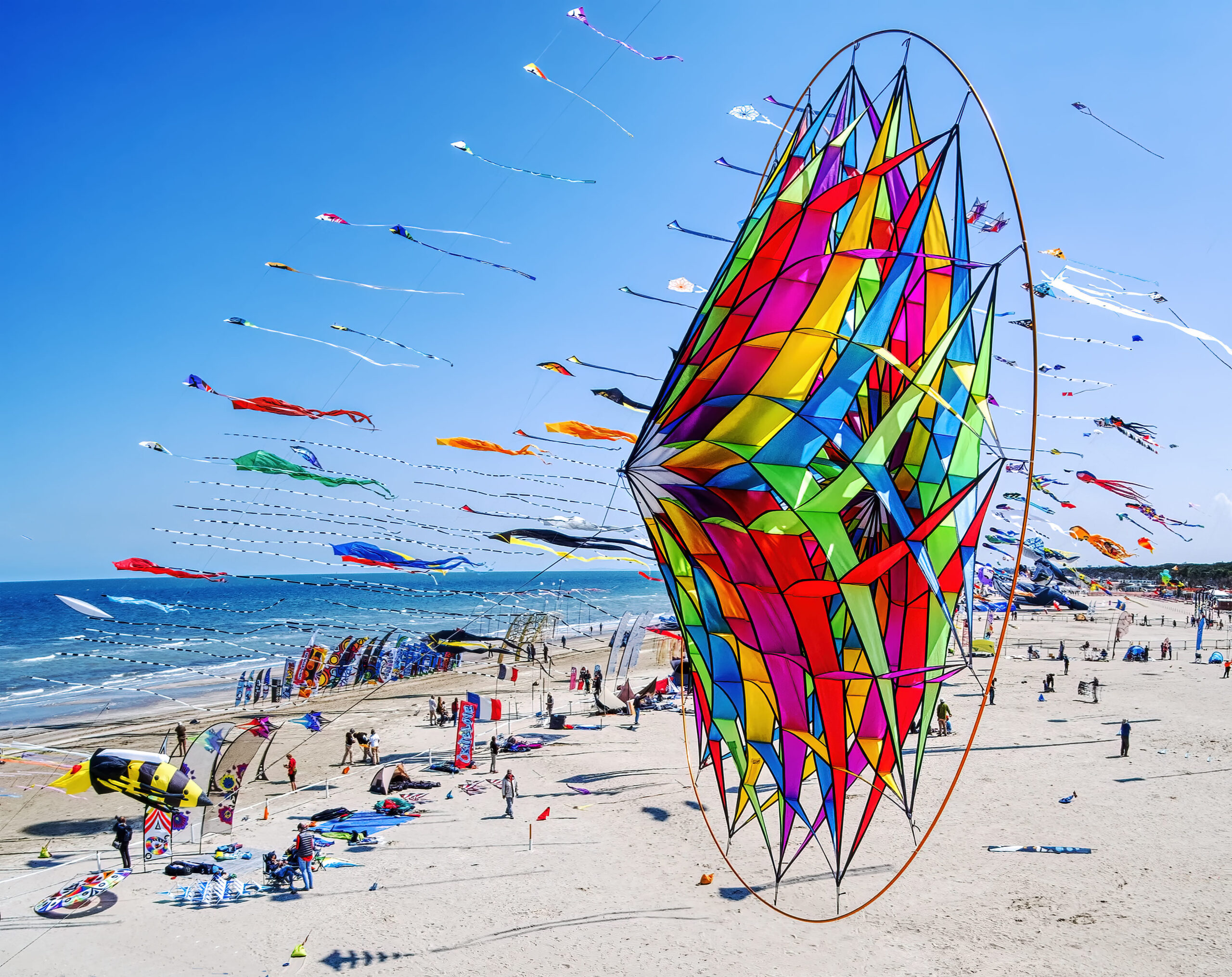
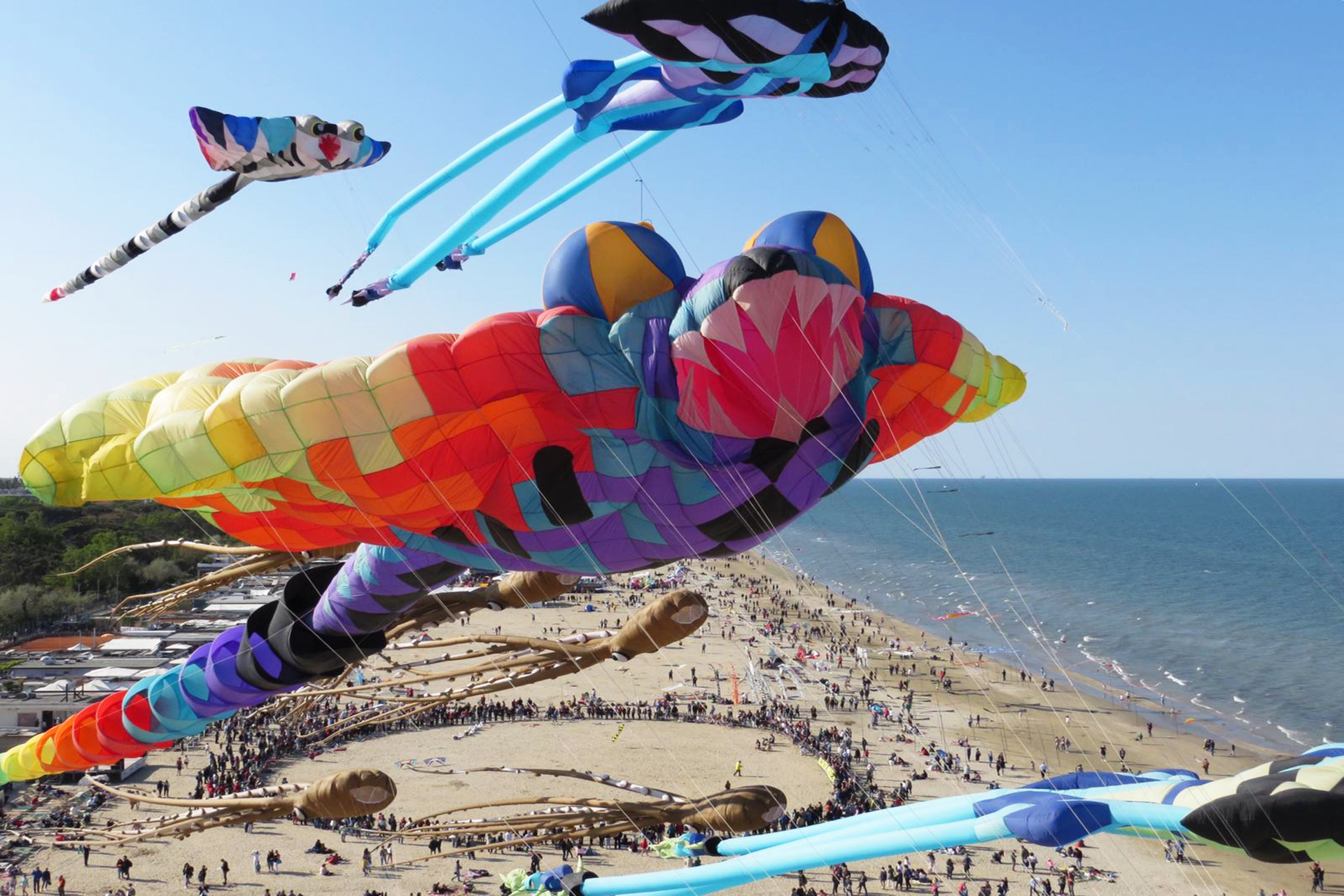
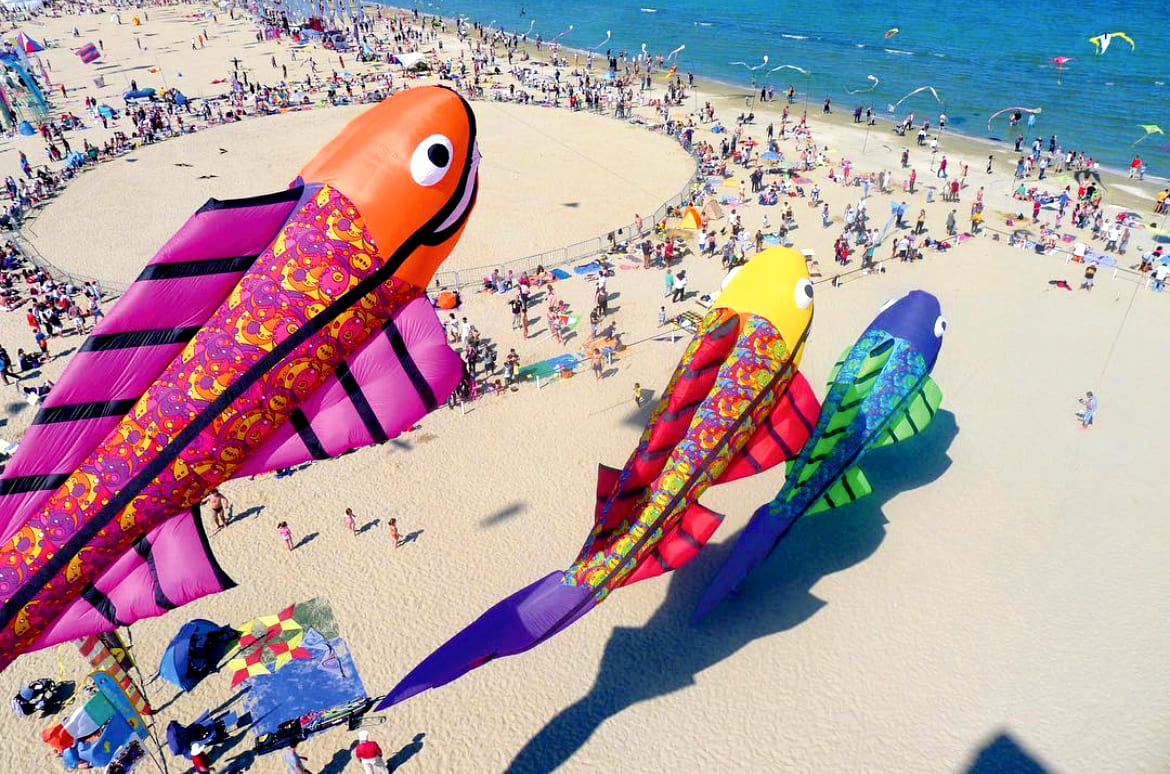
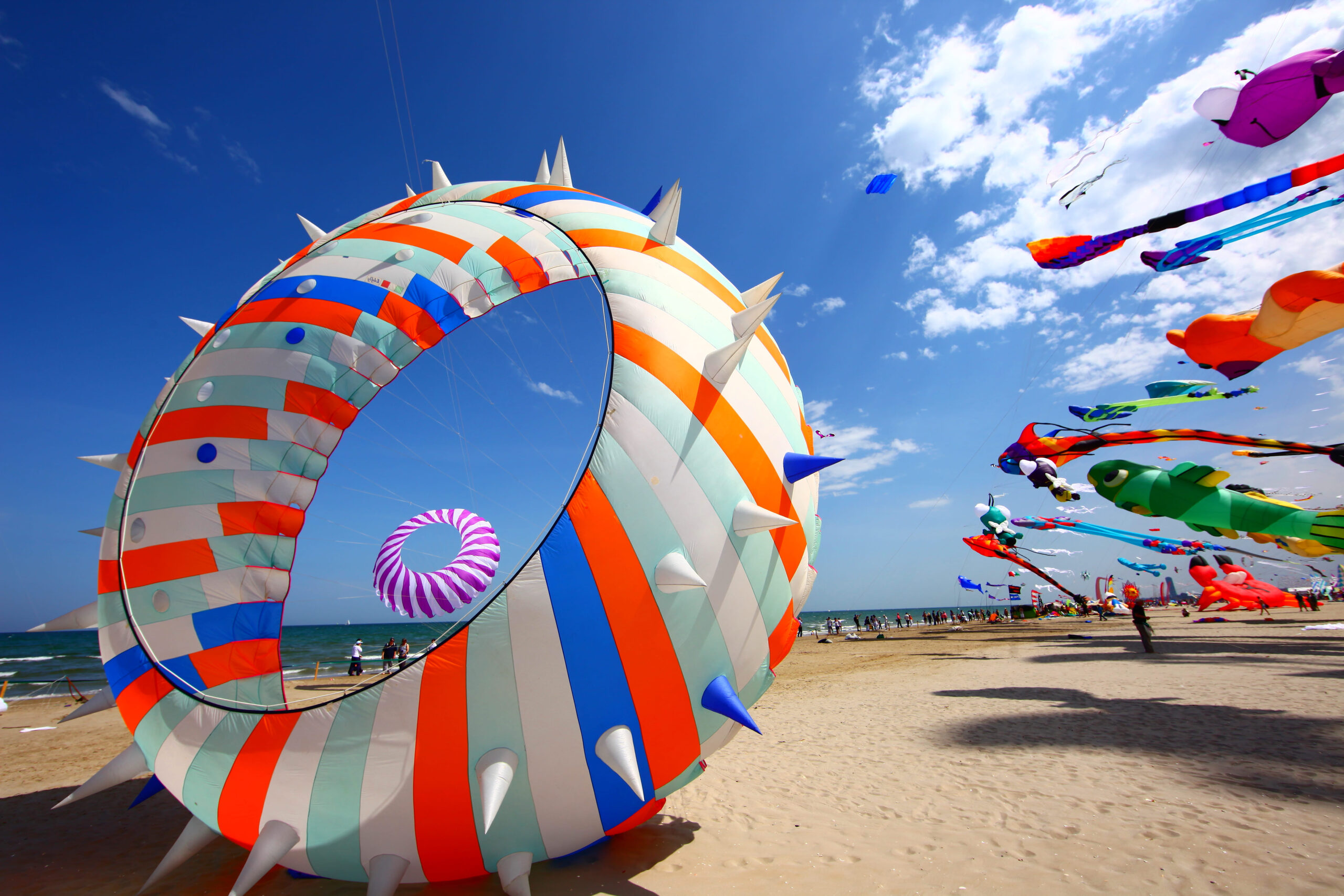
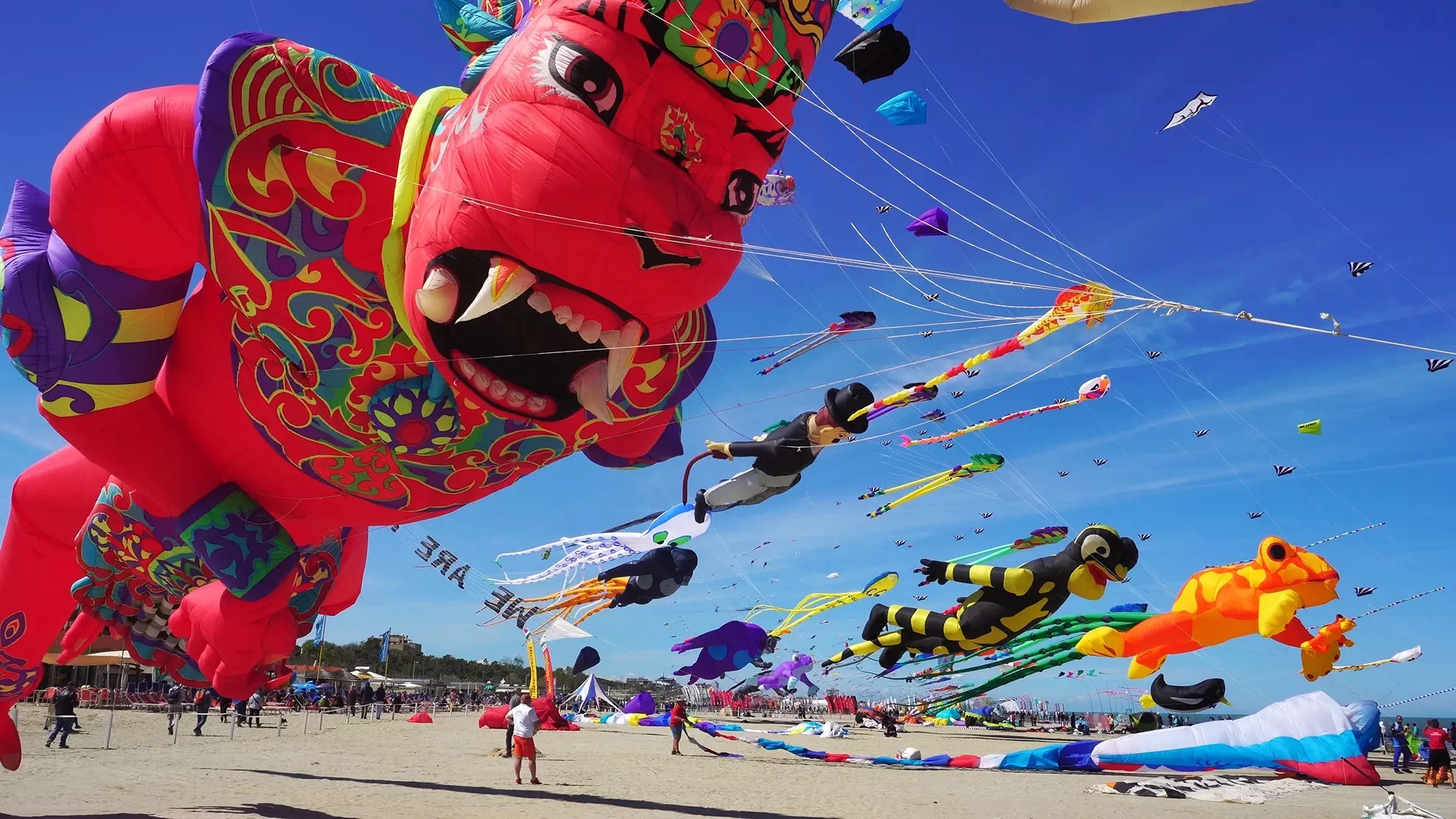
Kite festivals are held regularly in various countries. There, you can see kites shaped like dragons, whales, octopuses, birds, cartoon characters, and other enormous figures. One of the most famous centers of kite culture is the Chinese city of Weifang. It is often called the world capital of kites. Every year, an international festival is held here, bringing together masters and enthusiasts of this art from various countries.

Найбільші та найдивовижніші кайти


Weifang is also home to a large kite museum. It features thousands of exhibits that showcase the history and diversity of this tradition. Some kites are so large that it takes an entire team to launch them. For example, in 2021, a 280-meter-long dragon kite was launched in Weifang. It took 55 people to get it airborne.

Why Kites Are Still Popular

It would seem that in the age of smartphones, drones, and virtual reality, a simple paper kite should be a thing of the past. But that hasn’t happened. Kites still attract people with their simplicity. You don’t need batteries, a screen, or complicated equipment to fly one. You simply hold the string and feel how the wind changes the kite’s behavior. To keep it in the sky, you need to learn to react to gusts and shifts in wind direction.

Всесвітній день повітряних зміїв


In addition, a kite offers room for creativity. You can paint it yourself, come up with an unusual shape, or make your own design out of paper, lightweight strips of wood, and string. For children, this can be more than just entertainment—it’s a mini-lesson in physics. They see firsthand how the wind affects an object, why the kite rises, and what happens when the direction of the airflow changes.

How World Kite Day Is Celebrated

Since August 16 is an unofficial date, there is no single way to celebrate. People can decide for themselves how to spend the day. The simplest option is to buy a kite and head to a park or out of town with it. You can bring your kids, friends, or family along and have a small picnic.

Всесвітній день повітряних зміїв


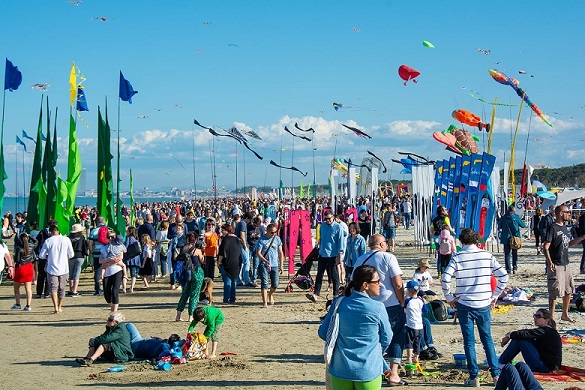
Another option is to make a kite yourself. It can be a simple, basic design or a more complex model for those who want to experiment a bit. You can encourage children to come up with their own designs and decorate the kite. You can also visit a kite festival on this day if there’s an event nearby. Such festivals feature workshops, contests, exhibitions, and demonstration flights of large kites.

Всесвітній день повітряних зміїв


For sports enthusiasts, this is also an opportunity to learn about modern kite-related sports. And for those who simply want to relax, all you need to do is head out to an open space and spend a few hours away from your gadgets.

How to Fly a Kite Safely

To fly a kite, choose an open area free of power lines, roads, tall trees, and other obstacles. It’s especially dangerous to fly a kite near power lines. Avoid flying kites near airports or other locations where they could pose a danger to aircraft. Also, do not fly a kite during a thunderstorm.

Як запускати повітряного змія безпечно


Be mindful of people around you. Long lines can be dangerous to pedestrians, cyclists, and others if you fly a kite in a crowded area. It’s best to choose an open area, check the weather, and make sure there are no hazardous objects nearby. Then flying a kite can be a simple but very enjoyable summer activity.

Interesting Facts About Kites

  • Kites are considered one of the oldest man-made flying devices.
  • In various cultures, they have been used for entertainment, religious rituals, military purposes, and scientific experiments.
  • Kites helped scientists lift meteorological instruments to high altitudes.
  • Kites were used to take aerial photographs even before the advent of modern aerial photography.
  • The history of kites is linked to the development of aviation, as inventors used them to study lift and the behavior of structures in the air.
  • Modern sport kites can perform complex maneuvers and reach high speeds.
  • Large festival kites can be hundreds of meters long.
  • In many countries, kite-making has evolved into a distinct folk art.
  • Kitesurfing uses a kite as a source of traction to propel the athlete across the water.
  • In some countries, kites are a symbol of freedom, good luck, peace, and good wishes.

Why This Day Is Worth Celebrating

World Kite Day is an occasion to reflect on a simple thing that has turned out to be much more important than it might seem at first glance. Kites were part of ancient traditions, helped scientists conduct experiments, and inspired inventors who dreamed of lifting humans into the sky.

Всесвітній день повітряних зміїв


Today, their story continues in a different form. Kites have become part of festivals, sports, family outings, and folk traditions. They can be small paper toys or massive structures that take to the sky with the help of an entire team. So on August 16, you can simply put your phone away, step outside into the fresh air, and fly a kite. Sometimes, you don’t need complicated technology to have a good time—all you need is wind, the open sky, and a colorful kite.


Read us on Telegram and Sends

Download our app