
Holiday on August 24, 2026 — Liberian Flag Day: History and Traditions
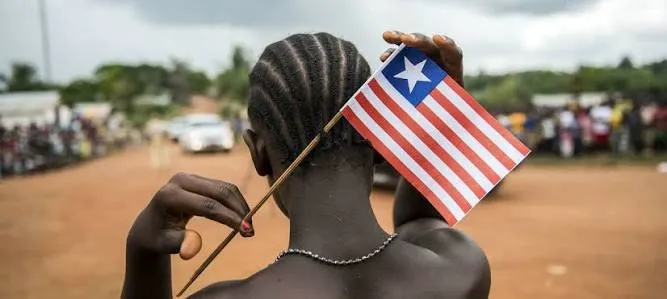
On August 24, Liberia celebrates National Flag Day—a holiday that means much more to the country than just a ceremonial date on the calendar. On this day, people commemorate the history of one of Africa’s most famous flags and celebrate independence, unity, and national pride. In 2026, Flag Day falls on Monday, August 24, and is an official national holiday.
National Flag Day in Liberia is celebrated annually on August 24. The date commemorates an event in 1847, when the country adopted its national flag following the declaration of independence. Today, it is a national holiday intended to remind citizens of the country’s history, its sovereignty, and the significance of national symbols. Liberian authorities traditionally encourage citizens to fly the flag outside their homes and on government and public buildings. Ceremonial flag-raising ceremonies, educational programs, and various public events play an important role in the festivities.

Interestingly, Flag Day did not become an official holiday immediately after the flag was created. The legislation designating August 24 as National Flag Day was passed on October 25, 1915. Since then, the date has been part of Liberia’s official calendar. The government explained the need for the holiday as a desire to foster patriotism and respect for the national symbol. The flag is viewed not merely as a piece of cloth, but as a visible symbol of Liberia’s independence and existence as a sovereign state.
In 2026, the holiday falls on Monday, August 24. It will be a regular calendar day, with no shift of the day off, since the date does not fall on a Sunday. Flag Day in Liberia is a national holiday, so government offices, schools, and many businesses are typically closed.
How the Liberian Flag Came to Be
The history of the Liberian flag began in the early years of the independent nation. Liberia declared its independence on July 26, 1847, and on August 24 of that same year, the new national flag was unveiled and adopted. Thus, less than a month separates Independence Day and Flag Day in Liberia. This explains why August is a particularly eventful month for the country in terms of public holidays and historical dates.
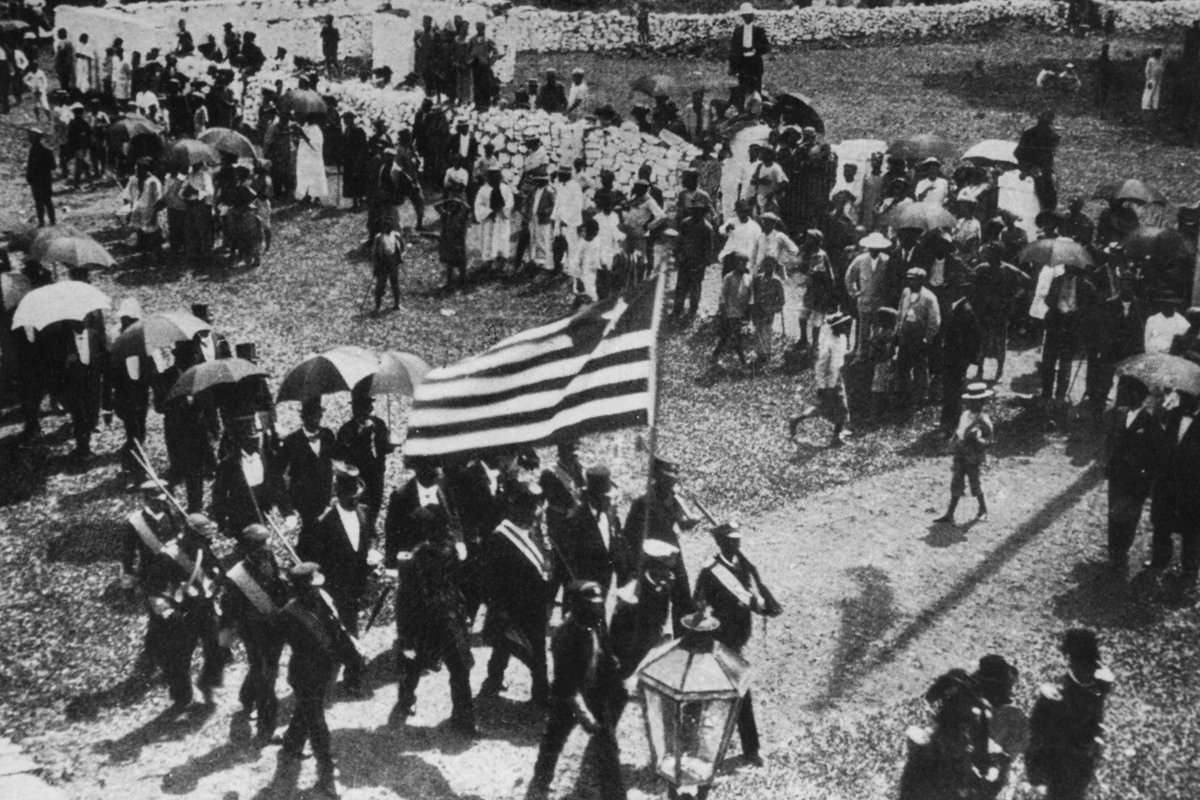
It is particularly interesting that women played a key role in the creation of the flag. The committee responsible for its design and production was led by Susanna Lewis. According to the Liberian Ministry of Foreign Affairs, it was this all-female committee that created the flag, which became one of the main symbols of the young republic. The flag was handmade, and its first public appearance took place in Monrovia during the celebrations. At that time, Susanna Lewis delivered a patriotic speech, and the ceremony was accompanied by addresses from political and religious leaders, as well as music.
This story is also interesting because Liberia’s current flag closely resembles the U.S. flag. This is no coincidence. Liberia was founded with the participation of the American Colonization Society as a settlement for freed African Americans, and its history is closely linked to that of the United States. Therefore, American motifs are also evident in the country’s national symbols. At the same time, the Liberian flag has its own system of symbols, directly linked to the history of this African nation.
What the Colors of the Flag Mean
The Liberian flag features eleven horizontal stripes—six red and five white. According to the official explanation, they symbolize the eleven signers of Liberia’s Declaration of Independence. In other words, the number of stripes is not related to the number of states or regions, but directly to the birth of the independent nation. In national symbolism, the color red is associated with the blood of those who died in the struggle for independence. White symbolizes the purity and clarity of the intentions of previous generations.

In the upper left corner of the flag is a blue field with a single white star. This star is one of the most noticeable differences between the Liberian flag and the American flag. According to the official interpretation, it is associated with Liberia’s special status as an independent republic on the African continent. The blue field, in turn, was associated with Africa. Because of this, the entire flag can be interpreted as a brief historical narrative about the emergence of an independent state.
There is another interesting detail. The flag is often called the “Lone Star.” This image has become synonymous with Liberia precisely because of the single white star on the blue field. For the country, it has become not just a decorative detail, but a recognizable symbol of statehood. That is why, in official statements by Liberian authorities, the flag and the star often appear as symbols of national unity and independence.
Why Flag Day Wasn’t Established Until Decades Later
At first glance, it may seem strange that the flag was adopted in 1847, yet a separate national holiday in its honor was not officially established until 1915. However, for Liberia, this was a way to make the commemoration of the national symbol a part of annual public life. Lawmakers decided that the day should remind citizens of their belonging to a single nation. Documents from that time emphasized loyalty to the national flag and the need to foster patriotism.

Since then, August 24 has become an annual day of public reflection on Liberia’s history. Government agencies organize themed events, and the flag is displayed on buildings and in the streets. The government also engages the education system to ensure that schoolchildren learn more about the significance of the national symbol. Therefore, the holiday has not only a ceremonial but also an educational character.
How Flag Day Is Celebrated
One of the main traditions is the ceremonial raising of the national flag. It is displayed at government institutions, public buildings, and private homes. In previous years, the Liberian government specifically called on citizens and foreigners residing in the country to join the celebration by displaying the flag. On the holiday, government offices and many private institutions are usually closed.

Celebrations may include parades, formal ceremonies, and events for schoolchildren. National symbols are the central theme of public programs, and educational institutions hold events dedicated to the history of Liberia. Over the years, the format of these events has varied depending on the situation in the country. For example, in 2021, due to the COVID-19 pandemic, the government recommended holding some of the events virtually.
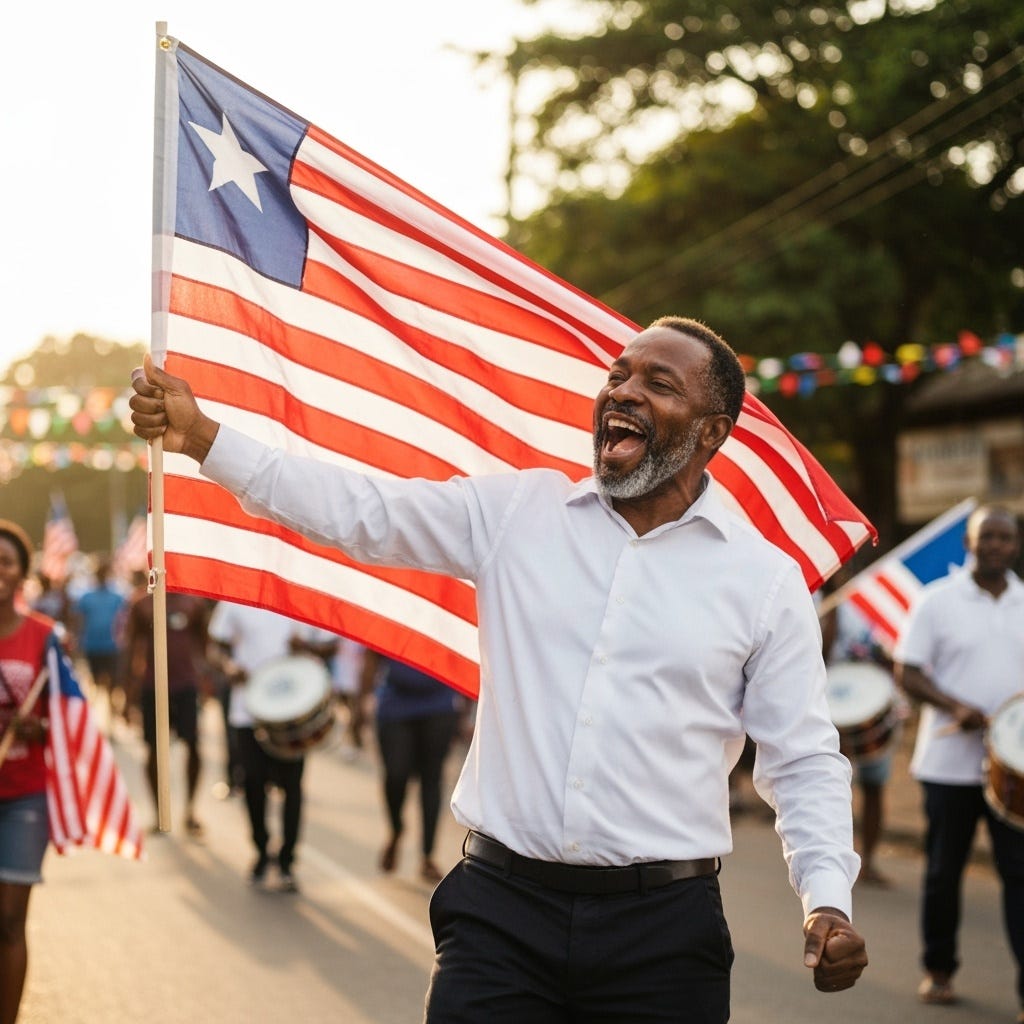
Flags displayed on buildings play a special role in the celebrations. As a result, on August 24, Monrovia and other towns can literally transform their appearance—the red, white, and blue colors appear on government buildings, schools, and private homes. For Liberians, this is a simple way to show their connection to the holiday. At the same time, the government uses Flag Day as an opportunity to speak about unity, peace, independence, and the country’s shared history.
A Flag That Has Endured the Country’s History
Over nearly two centuries, the Liberian flag has witnessed very different periods of history. The country has endured political crises, coups, civil wars, and protracted conflicts. Yet the flag’s design itself has remained one of the nation’s most enduring symbols. That is why Flag Day holds special emotional significance for Liberia. It is not only a commemoration of 1847 but also a reminder that the country has maintained its statehood despite difficult times.
Liberia also holds a special place in African history. Its independence was declared in the 19th century, even before the wave of decolonization that swept the continent in the 20th century. Today, official Liberian sources refer to the country as Africa’s first independent republic. That is why Liberia’s national symbols hold significance far beyond the country’s borders.
Interesting Facts About Liberia’s Flag Day
The flag and independence emerged almost simultaneously. Liberia declared independence on July 26, 1847, and adopted its flag on August 24 of the same year. As a result, the country’s two main August holidays share a very close historical connection.
Women played a role in the creation of the flag. The committee responsible for its design was led by Susanna Lewis. This is one of the most interesting details in the history of Liberian national symbols, as it dates back to a time when women’s political roles in many countries were significantly more limited than they are today.
The eleven stripes have specific meanings. The six red and five white stripes together represent the eleven people who signed Liberia’s Declaration of Independence. Therefore, even the number of stripes on the flag is linked to the history of the nation’s founding.
The single star is no coincidence. Unlike the American flag, which features many stars, the Liberian flag has only one. It has become a symbol of independent Liberia and its special place in African history.
The holiday has over a century of official history. The law establishing National Flag Day was passed in 1915. Thus, in 2026, Liberia will mark more than 110 years since August 24 was designated as the official day to honor the flag.
If August 24 falls on a Sunday, the holiday may be moved. This is exactly what happened in 2025: Flag Day fell on a Sunday, so the public holiday was moved to Monday, August 25. In 2026, there will be no such rescheduling, since August 24 falls on a Monday.
What Will Flag Day Be Like in 2026?
In 2026, Liberia’s National Flag Day falls on Monday, August 24. It will be observed as a national holiday and a day off. Traditionally, the main events will include a flag display, as well as ceremonies and programs dedicated to the history of the national symbol.

This date is particularly interesting because, on the Liberian calendar, it follows immediately after Independence Day—one of the main national holidays, celebrated on July 26. In fact, the entire period from late July to late August serves as a reminder of Liberia’s emergence as an independent state. In this sense, Flag Day is a unique continuation of the conversation about independence, but through a single, concrete symbol.
For Liberia, the flag is more than just the colors displayed on government buildings. Behind it lies the history of the nation’s founding, the memory of the struggle for independence, the role of the people who established the republic, and the country’s difficult journey after gaining sovereignty. That is why on August 24, people here commemorate not only the flag itself, but also the history it represents.
When is Liberia’s Flag Day in the coming years
- 2026 — Monday, August 24
- 2027 — Tuesday, August 24
- 2028 — Thursday, August 24
All of these dates fall directly on August 24, since Liberia’s National Flag Day has a fixed date. As a result, August 24 is a day when Liberia reflects on its history through one of its most recognizable symbols. The red and white stripes symbolize the nation’s founders, the white star represents independence, and the flag itself commemorates the country’s long journey from the proclamation of the republic to the present day. And perhaps the most interesting thing about this story is that one of Liberia’s main symbols was not created in the office of a politician or military leader, but through the work of a committee of women led by Susanna Lewis. That is why Flag Day here is not just a formal national holiday, but a way to revisit, year after year, the moment when a young African republic was forging its own identity.


