
August 6, 2026: 60 years ago, Sheikh Zayed became the ruler of Abu Dhabi

On August 6, 1966, Sheikh Zayed bin Sultan Al Nahyan became the ruler of Abu Dhabi. This date is considered the beginning of a new era in the emirate’s history; over the following decades, it transformed from a relatively poor region of the Persian Gulf into one of the most influential centers in the Middle East. The year 2026 will mark the 60th anniversary of Sheikh Zayed’s accession to power, and his name today is inextricably linked not only with Abu Dhabi but also with the founding of the United Arab Emirates itself.
On August 6, 1966, Sheikh Zayed bin Sultan Al Nahyan became the ruler of Abu Dhabi, succeeding his older brother, Sheikh Shahbut bin Sultan Al Nahyan, in this position. This date in the history of the UAE is known as Accession Day—that is, the day he came to power. For Abu Dhabi, this marked the beginning of a new era, as Zayed immediately set a course for the emirate’s development and the use of oil revenues to improve the lives of its people. Official UAE government documents note that he began actively developing schools, hospitals, roads, housing, and other infrastructure.
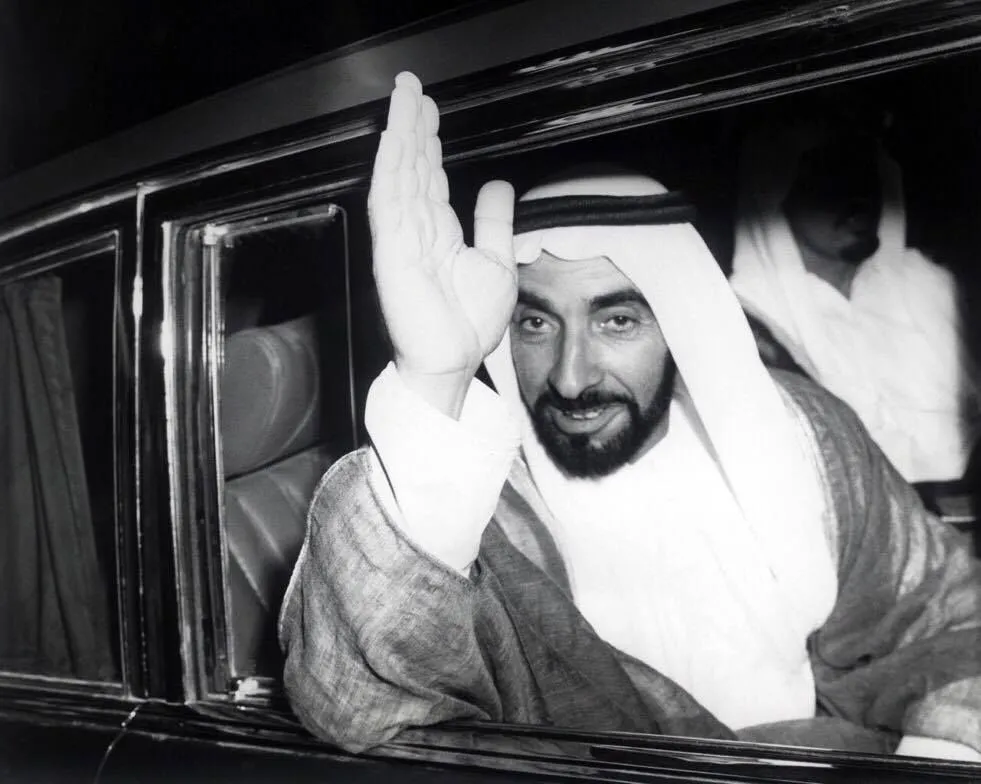
The 60th anniversary of this event will be in 2026. However, it is important not to confuse this date with Independence Day or UAE National Day. The Federation of the United Arab Emirates was established later—on December 2, 1971—when six emirates united to form a new state, and Sheikh Zayed was elected its first president.

Therefore, August 6 is, first and foremost, a historic date associated with Sheikh Zayed himself and the beginning of his reign in Abu Dhabi. It was during those five years—from 1966 until the creation of the federation in 1971—that he began to lay the groundwork for what would later become the foundation of a large-scale transformation of the entire UAE.
Who Was Sheikh Zayed
Zayed bin Sultan Al Nahyan was born around 1918 in Abu Dhabi. He was the youngest of four sons of Sheikh Sultan bin Zayed Al Nahyan. Zayed spent much of his youth in the Al Ain region, where he gradually gained administrative experience and became well acquainted with the lives of local residents and Bedouin communities.
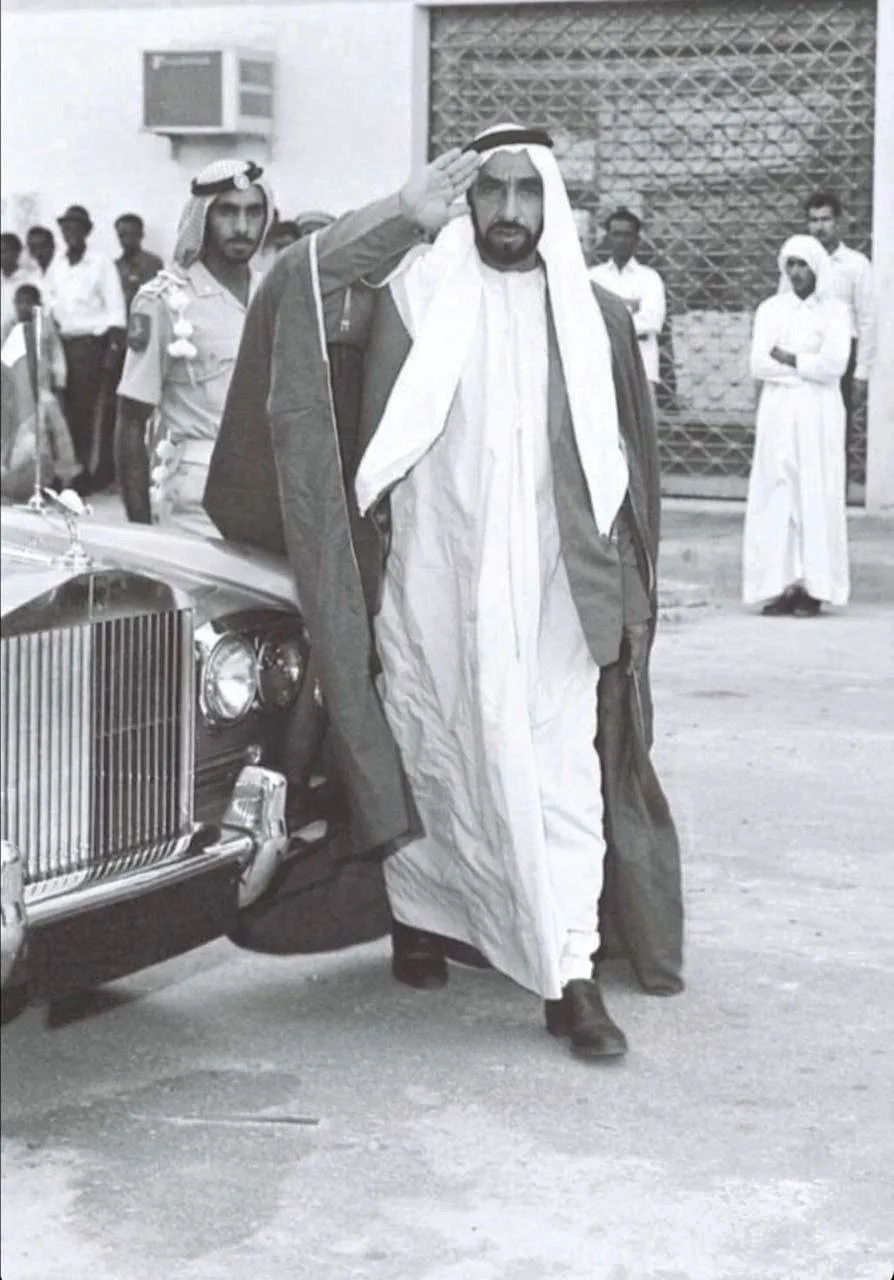
In 1946, he was appointed the ruler’s representative in the Eastern Region of Abu Dhabi. It was in Al Ain that he began actively working to develop the area, which at the time had very limited resources. Zayed worked on an irrigation system and supported agriculture, education, and the development of public infrastructure. According to official data, thanks to his efforts, Al Ain saw the establishment of its first modern school, hospital, and covered market.

This experience served as a kind of preparation for his future reign. Zayed saw how even small investments could transform people’s daily lives. He also came to realize that development is not limited to oil revenues—roads, water, education, healthcare, and decent living conditions are essential. That is why, after coming to power on August 6, 1966, he began to act quite swiftly. The official history of the UAE describes this moment as the beginning of a new era of development for Abu Dhabi.
What Abu Dhabi Was Like Before the Oil Boom
Today, Abu Dhabi is associated with skyscrapers, modern roads, major museums, universities, and massive oil revenues. In the 1960s, the picture was quite different. The emirate was just beginning to generate significant revenue from oil production. The first shipment of oil from Abu Dhabi was exported in 1962, and this gradually transformed the region’s economic prospects. However, infrastructure remained weak, and many areas still lived in conditions far removed from today’s standards.
Zayed faced a difficult challenge: to use the new revenues not only to accumulate wealth but also to develop the emirate itself. He chose the latter path. In the early years of his reign, active construction began on roads, schools, hospitals, housing, government buildings, power grids, and other facilities. This was a time when Abu Dhabi began to change very rapidly. What today seems like a familiar part of the city was then a major infrastructure project. Zayed effectively began laying the foundation for the future modern emirate.
Why August 6 Became an Important Date
For Abu Dhabi, Zayed’s rise to power was significant not only because of the change in leadership. It coincided with a period when the region was facing major changes. Britain was gradually preparing to withdraw from the Persian Gulf region, and local rulers had to think about the future of their emirates. Zayed quickly realized that the small emirates could be stronger together than apart. Therefore, the idea of unification became one of the central themes of his political career.

Shortly after coming to power, he began actively strengthening ties with the other emirates. The official history of the UAE quotes him as saying that “in harmony, in a certain form of federation,” the region’s states could move forward following the example of other developing countries. Thus, August 6, 1966, was not merely the date of a change in power in Abu Dhabi. It marked the beginning of a period that, a few years later, led to the creation of one of the most famous federations in the modern Middle East.
How Zayed Began to Transform Abu Dhabi
One of Sheikh Zayed’s guiding principles was that natural resources should serve the people. As oil revenues grew, the government began allocating significant funds to construction and social projects. This included schools, hospitals, roads, housing, electricity, water supply, and public services. In September 1966, just one month after Zayed came to power, the Planning Council was established in Abu Dhabi. Its purpose was to coordinate major projects and accelerate the emirate’s development. According to the leadership’s vision, Abu Dhabi was not merely to profit from oil but to lay the foundation for long-term economic growth.

These changes also affected ordinary people. More opportunities for education, healthcare, and employment became available. The government invested in infrastructure, without which it would have been impossible to build a modern city. This approach later became one of the hallmarks of Zayed’s policy. He believed that development should be evident not only in economic statistics but also in people’s everyday lives.
From Abu Dhabi to the Creation of the UAE
The full historical significance of Zayed’s rise to power became clear a few years later. In 1968, Britain announced its intention to withdraw its forces from the region east of the Suez Canal, including the Persian Gulf area. For the local emirates, this meant that the old order would soon change. Zayed began looking for a way to build a system that could ensure the region’s security and development after the British withdrawal. The ruler of Dubai, Sheikh Rashid bin Saeed Al Maktoum, became an important partner.
On February 18, 1968, Zayed and Rashid met in the Al-Semha area, near the modern-day border between Abu Dhabi and Dubai. They agreed to form a federation and invited the other emirates, as well as Bahrain and Qatar, to join the negotiations.
Later, the format of the negotiations changed, but the main idea remained the same. In 1971, six of the seven emirates of the former Trucial States agreed to form a federation. On December 2, 1971, the United Arab Emirates was officially established. The rulers of the emirates unanimously elected Sheikh Zayed as the first president of the new country. Ras al-Khaimah joined the federation later—on February 10, 1972.
Why Zayed Is Called the Father of the Nation
In the UAE’s contemporary historical memory, Sheikh Zayed holds a special status. The country’s official government refers to him as the “Father of the Nation”—for his pivotal role in establishing the federation and transforming the country into a modern state. He remained the ruler of Abu Dhabi from 1966 until his death in 2004. Zayed served as President of the UAE from the moment the federation was established in 1971. Thus, he led both the emirate and the country for more than three decades.
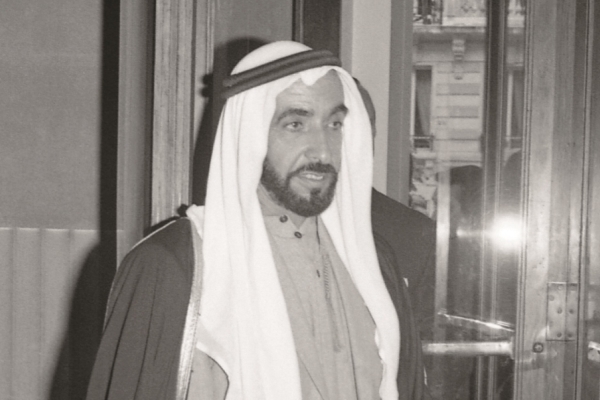
His political style was not based solely on top-down decision-making. Zayed is described as a man who interacted extensively with local residents, listened to them, and helped resolve disputes. For this, he earned a reputation as a wise mediator. At the same time, his legacy extends beyond the economy. He supported the development of education, humanitarian programs, environmental protection, and international aid. That is why his memory in the UAE extends far beyond political history.
What Happened After Zayed’s Ascension
The early years of his reign were a period of rapid modernization. In Abu Dhabi, roads, hospitals, schools, and residential areas were built, and the power grid and telecommunications infrastructure were expanded. Gradually, the city began to transform into a modern administrative and economic center. Zayed also supported education. The emirate began developing a system of schools and scholarship programs that gave residents the opportunity to study abroad. In his vision, education was one of the key tools that would help the country develop after the oil boom.
He also focused on agriculture and greening. The experience he gained in Al Ain remained an important part of his approach. Zayed supported irrigation, tree planting, and the development of green spaces even under challenging climatic conditions. That is why modern Abu Dhabi is often cited not as the result of a single oil boom, but as the result of a combination of resources and long-term planning.
How This Date Is Commemorated Today
Since August 6 is not a federal public holiday in the UAE, there is no single mandatory celebration format in the country similar to National Day on December 2. At the same time, the date is regularly commemorated in government, educational, and cultural initiatives dedicated to the legacy of Sheikh Zayed. A notable example was 2018, which the UAE declared the “Year of Zayed” to mark the 100th anniversary of his birth. Government and civic organizations held exhibitions, educational programs, cultural events, and charitable initiatives dedicated to his views and legacy.
For example, the Dubai Electricity and Water Authority organized a cultural initiative called “My Culture, My Identity,” dedicated to Zayed’s legacy and his contribution to the preservation of national culture. The program took place during the days marking the anniversary of his rise to power in Abu Dhabi. Another way to honor his memory is the Founder’s Memorial in Abu Dhabi. It is a large cultural space dedicated to the life and legacy of Sheikh Zayed. There, visitors learn about his political activities, his role in establishing the federation, and his vision for the country’s future.
Traditions and Symbols of Remembrance
This date is marked not so much by mass celebrations as by commemorative, cultural, and educational events. Schools, government agencies, and civic organizations may hold lectures, exhibitions, themed programs, and presentations about the life of the UAE’s founder. Historical materials—photographs, archival documents, recordings of speeches, and videos from various periods of his life—play an important role. Such materials help illustrate what Abu Dhabi was like before its large-scale modernization and how it changed during Zayed’s reign.

Another important theme is national heritage. Events dedicated to Zayed often highlight Bedouin traditions, culture, history, crafts, and society’s connection to nature. This is because Zayed himself lived among Bedouin communities for many years and was very familiar with their way of life. His humanitarian work is also highlighted. Zayed supported aid to other countries and peoples, and his name is used today in various charitable and humanitarian projects. This has become another part of his legacy.
Interesting Facts About Sheikh Zayed
On August 6, 1966, Zayed became the ruler of Abu Dhabi. He succeeded his older brother and remained in this position until his death in 2004.
Five years later, he became the first president of the UAE. On December 2, 1971, the federation was established, and the rulers of the emirates unanimously elected Zayed as its first president.

The year 2026 marks the 60th anniversary of his rise to power in Abu Dhabi. That date marked the beginning of the period that directly preceded the creation of the UAE.
Zayed initially gained political experience in Al-Ain. In 1946, he became the ruler’s representative in the Eastern Region, and in the 1950s, he focused on the city’s development, particularly agriculture and infrastructure.
Oil became a vital resource for modernization. The first shipment of oil from Abu Dhabi was exported in 1962, even before Zayed came to power. During his reign, oil revenues began to be actively used for the emirate’s development.
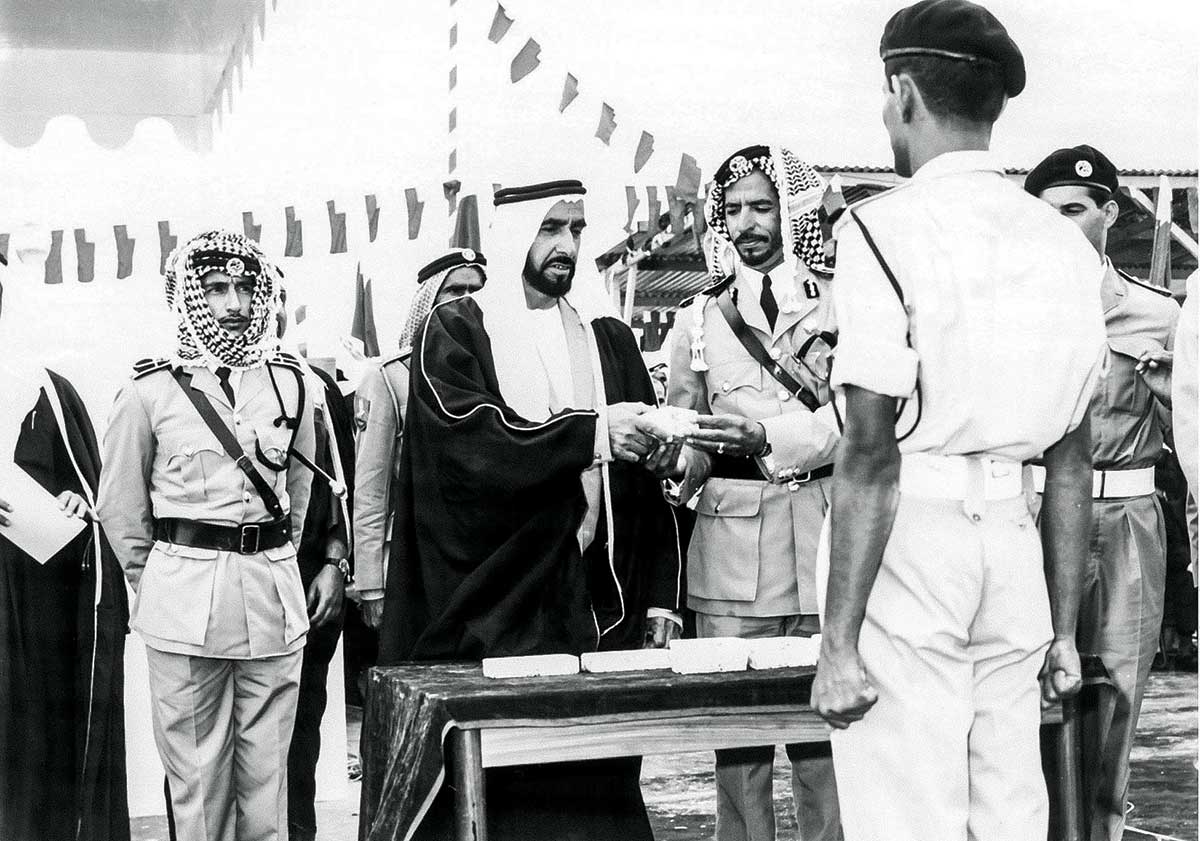
It was Zayed who became one of the main architects of the federation. In 1968, together with the ruler of Dubai, Sheikh Rashid, he began a new phase of negotiations on the unification of the emirates.
Zayed served as the first president of the UAE for nearly 33 years. He led the federation from its creation in 1971 until his death on November 2, 2004.
From August 6, 1966, to the Modern UAE
Sixty years ago, Abu Dhabi stood on the threshold of major changes. Oil was already providing the emirate with new financial opportunities, but the question of how to make the most of them lay ahead. Zayed focused on infrastructure, education, healthcare, and long-term development. His rise to power was a major turning point also because, from the very beginning, Zayed thought beyond Abu Dhabi alone. He spoke of the need for cooperation among the emirates and gradually moved toward the idea of a federation. Two years after taking power, he had already begun active negotiations with the ruler of Dubai regarding a possible union.
In 1971, this idea became a reality. The United Arab Emirates was formed, and Sheikh Zayed became its first president. He remained in this position until 2004, when he died after decades of leading the country. Today, August 6, 2026, marks the 60th anniversary of the day Zayed took the helm of Abu Dhabi. For the UAE, this date is an occasion to commemorate not merely a change in leadership, but the beginning of a historic period that shaped the emirate’s future and, in many ways, paved the way for the emergence of the modern federation.
The history of this date clearly illustrates just how much a country can change in a single generation. Abu Dhabi has evolved from a small emirate with limited infrastructure into one of the region’s wealthiest and most influential centers. And in the UAE’s contemporary historical memory, this journey is inextricably linked to Sheikh Zayed bin Sultan Al Nahyan.


