
September 6 Holiday: Eswatini Celebrates Independence and Reflects on Its History
On September 6, 2026, Eswatini celebrates its Independence Day—Somhlolo Day. It was on this day in 1968 that the country gained independence from Great Britain after decades of colonial rule. In 2026, the holiday falls on a Sunday, so the following Monday, September 7, is an additional day off.
Eswatini’s Independence Day is celebrated annually on September 6. In the country, this holiday is called Somhlolo Day and is an official public holiday. The date commemorates one of the most significant events in the country’s history—gaining independence from Great Britain in 1968. In 2026, September 6 falls on a Sunday. Because of this, Monday, September 7, is declared a day off in lieu of the holiday that fell on Sunday. Thus, for the residents of Eswatini, the holiday period will last two days.

This is not just a date on the calendar. Independence Day holds great symbolic significance for the country, as it was in 1968 that Eswatini ceased to be a British protectorate and became an independent state. The celebrations typically combine official events, speeches by government officials, cultural programs, and traditional performances. The Somhlolo National Stadium in Lobamba takes center stage during the festivities. It is there that large-scale national ceremonies marking Independence Day have been held over the years.
How Eswatini Gained Independence
Prior to independence, the territory of modern-day Eswatini was under British control. After the Anglo-Boer War, Britain established a protectorate over Swaziland. British rule lasted until 1968. The movement for self-government gradually gained strength. In 1964, Swaziland adopted its first constitution, and the country subsequently took several more steps toward self-government. In 1967, a new constitutional system was introduced to prepare the country for independence.
Finally, on September 6, 1968, Swaziland officially gained independence from Great Britain. At that time, the country became an independent constitutional monarchy. Its first monarch after independence was King Sobhuza II. The independence ceremony took place at a stadium now known as Somhlolo National Stadium. A representative of the British Queen presented King Sobhuz II with the documents confirming the country’s independence. On the same day, the new state adopted its own flag, coat of arms, and national anthem.
Interestingly, it was on Independence Day, September 6, 1968, that Sobhuz II delivered his first throne speech in parliament. This tradition of officially opening the parliamentary session in Eswatini has been preserved to this day.
Why Is the Holiday Called Somhlolo Day?
The holiday’s name is associated with King Sobhuza I, who was also known as Somhlolo. He is an important figure in the history of the Swazi people and one of the rulers credited with the founding of the kingdom. That is why the name “Somhlolo Day” has not only political but also historical and cultural significance. It serves as a reminder of the country’s ancient history and its traditional monarchy.

In Eswatini’s modern calendar, Somhlolo Day is effectively the official name for Independence Day. Consequently, international sources may use several different names—Somhlolo Day, Independence Day, or Independence Day of Eswatini. This distinguishes Eswatini’s holiday from many other Independence Days. Here, a modern political event is directly linked to the memory of the traditional monarchy and the history of the people. Even the country’s main stadium in Lobamba bears the name Somhlolo. It has become one of the main venues for major national ceremonies.
Who Was Sobhuza II?
King Sobhuza II holds a special place in the history of independence. He became king in 1921 and remained monarch until his death in 1982. The Eswatini government refers to him as the longest-reigning monarch in the country’s history. Sobhuza II ruled Swaziland during the colonial period and remained a key political figure during the transition to independence. He was the one who led the country at the moment it gained independence in 1968.

His role is particularly emphasized during state ceremonies. In Eswatini government documents, Sobhuza II is cited as one of the principal figures who contributed to the achievement of independence. After Sobhuz II’s death, the throne eventually passed to his successor—the current King Mswati III, who was proclaimed monarch in 1986. The royal tradition remains an important part of modern Eswatini. The country’s constitution combines modern state institutions with a traditional system of governance.
Eswatini is one of the few monarchies in Africa
Eswatini is also notable for its form of government. It is one of the few monarchies on the African continent. Official parliamentary documents describe the country’s political system as a “monarchical democracy.” It combines a monarchy, parliamentary elections, and traditional institutions. The king is the head of state and plays a central role in the country’s political life. At the same time, the country has a bicameral parliament, a government, and a judicial system. Parliament consists of the Senate and the House of Assembly.
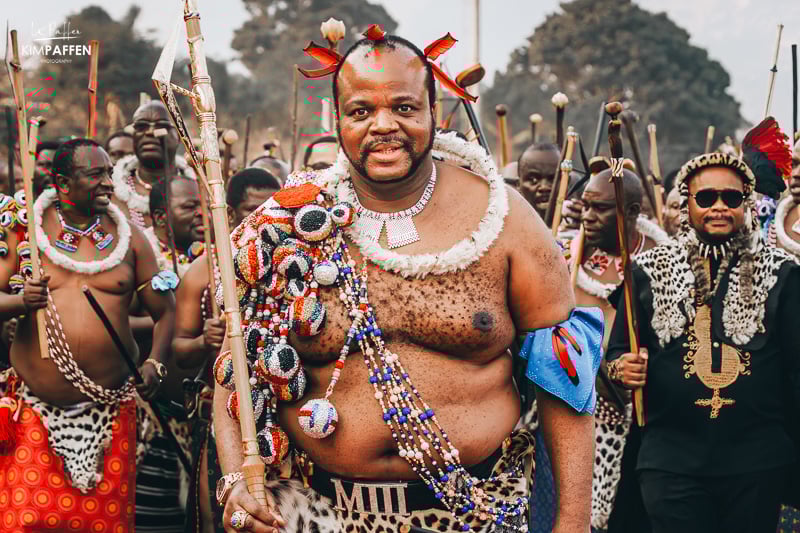
This system has evolved historically and largely reflects the country’s desire to preserve traditional institutions alongside modern state structures. That is why Independence Day here has more than just political significance. During the celebrations, a great deal of attention is paid to culture, traditional dances, music, national dress, and the history of the people.
How the Celebrations Unfold
The main festivities usually take place at Somhlolo National Stadium in Lobamba. Government officials, traditional leaders, members of cultural groups, and ordinary citizens gather there. The stadium becomes the main venue for the celebrations. One of the main parts of the program consists of ceremonial performances and speeches. The king and government officials speak about the country’s history, its development, unity, and future.
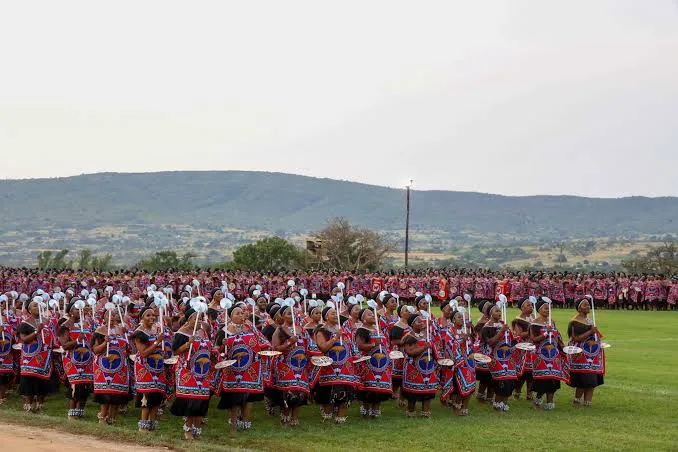
Traditional dances and music play a significant role. Members of cultural groups perform in traditional attire, singing and dancing before the audience. Such performances are an integral part of Eswatini’s major national events. Schools, youth organizations, and local communities may join in the celebrations. Rehearsals, cultural programs, and various contests are held in preparation for these events. Festive events take place in more than one location. Smaller cultural and patriotic events are organized in different parts of the country so that communities throughout Eswatini can celebrate Independence Day.
Traditional culture remains important
Eswatini is known for its active support of traditional culture at the national level. Major national holidays are often accompanied by songs, dances, and performances by cultural groups. One of the most famous traditional dances is the sibhaca. It is performed by male groups, and the dance is accompanied by singing and rhythmic movements. Such performances can be seen during major national events.
Eswatini’s culture is closely linked to the monarchy. Royal residences serve as venues for major traditional ceremonies, and members of the royal family participate in state and cultural events. For example, the Ludzidzini Royal Residence, located near Lobamba, is the site of important traditional ceremonies. One of the most famous is the annual Umhlanga, or Reed Dance. Therefore, Independence Day is not just a reminder of 1968. For many residents of the country, it is also an opportunity to showcase their cultural heritage and connection to traditions.
What Has Changed Since Independence
After declaring independence, Eswatini began to independently shape its own public policy and develop national institutions. The country adopted its own flag, coat of arms, and national anthem. It also began to fully participate on the international stage as an independent state. In 1972, the first post-independence elections were held. A year later, the country’s political system underwent significant changes: the 1968 constitution was repealed, and parliament was dissolved. In 1978, a new system of parliamentary representation, known as Tinkhundla, was established.

Eswatini’s modern political system was shaped to a large extent by these historical changes. The monarchy, however, remained a central element of the state structure. The country also continued to utilize traditional institutions in public and civic life. As a result, modern Eswatini combines the legacy of the past with contemporary state structures.
Why Is the Country Called Eswatini?
There is another interesting fact related to the country’s current name. Until 2018, the country was officially known as the Kingdom of Swaziland. In April 2018, King Mswati III announced the return of the name Eswatini. This is how the country is called in the Swazi language. The name was changed during the celebrations marking the 50th anniversary of independence.
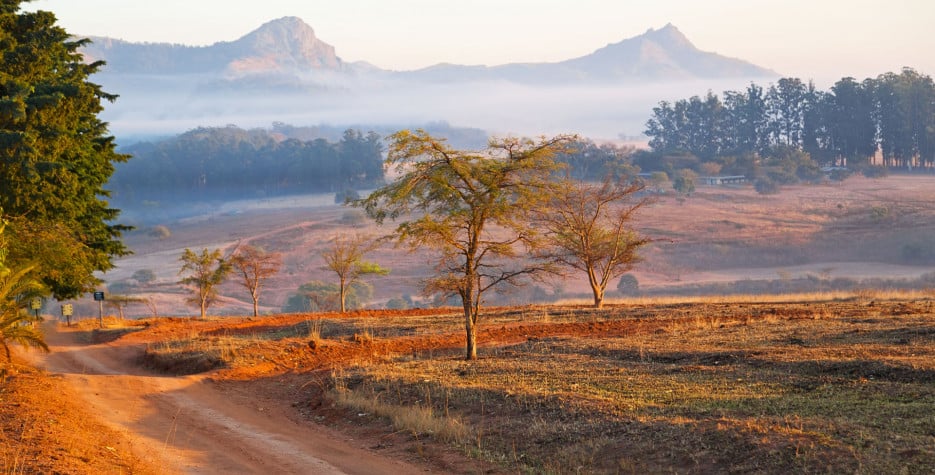
For the government, this was a way to emphasize national identity and move away from a name that dated back to the colonial era. Today, the official name of the state is the Kingdom of Eswatini. However, the name Swaziland can still be found in old documents, historical materials, and some calendars.
Interesting Facts About Eswatini
Eswatini is one of the smallest countries in Africa. It is a landlocked country that borders primarily South Africa and shares a border with Mozambique to the east. The country covers an area of approximately 17,400 square kilometers.
The country has four administrative regions: Hhohho, Manzini, Siseleni, and Lubombo. The administrative capital is Mbabane, while the royal and legislative capitals are located in Lobamba.
Eswatini is also known for its many cultural ceremonies. Umhlanga is particularly famous—a multi-day ceremony whose main day in 2026 falls on August 31. According to the country’s tourism board, tens of thousands of young women may participate in the ceremony.
Another distinctive feature is that the country officially uses the traditional Tinkhundla system. These are administrative and electoral units through which a significant part of political life is organized.
Eswatini also remains one of the few countries in the world where the monarchy plays a very significant role in modern public life.
Independence Day in 2026
In 2026, Eswatini will celebrate the 58th anniversary of its independence. The main date is September 6, as it is every year. This year, the holiday falls on a Sunday. Therefore, Monday, September 7, will be an additional day off for the population.
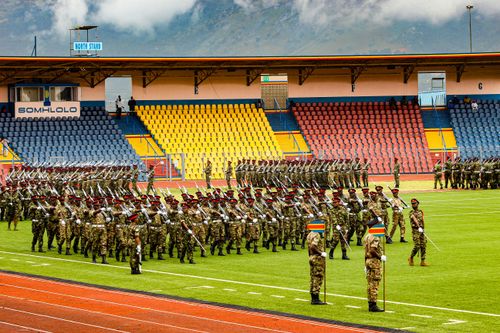
For Eswatini, this will be another opportunity to commemorate the events of 1968, when the country broke away from British rule. The focus will remain on independence, national unity, the monarchy, and cultural heritage. The celebrations traditionally combine official ceremonies with cultural performances. People gather for state events, watch parades and performances, listen to speeches, and sing and dance.
What Somhlolo Day Symbolizes
Eswatini’s Independence Day is, first and foremost, a reminder of the moment when the country gained the right to determine its own path. For the country’s current residents, it is also a day of national pride. The celebrations blend the history of independence, traditional culture, and modern life in the country.

A special role is played by the memory of those who participated in the struggle for self-governance, as well as King Sobhuza II, who led the country at the time of independence. Therefore, Somhlolo Day is not just another day off. It is a day when Eswatini reflects on its own history and demonstrates that its cultural heritage remains an important part of the modern state.


