
Putin's tanker was damaged during a voyage through the Arctic
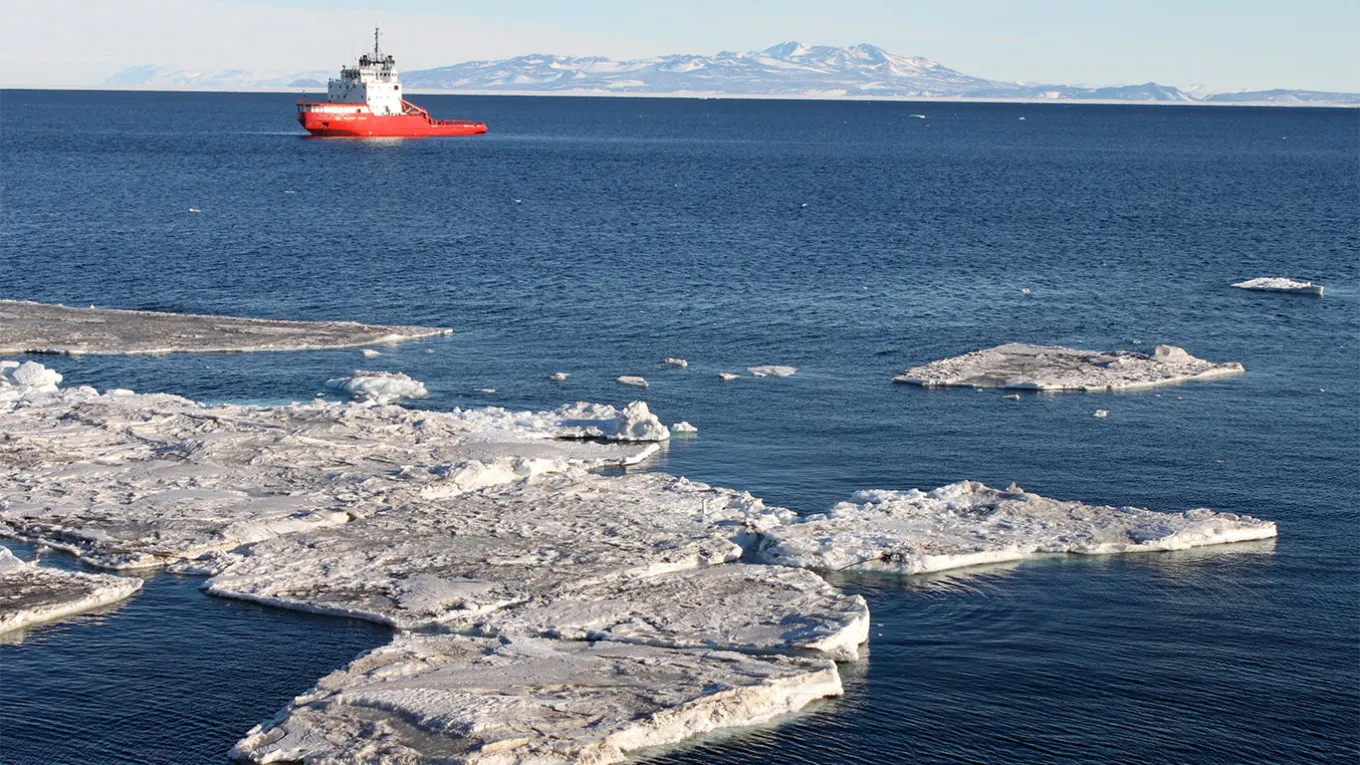
A Russian oil tanker sustained serious damage while sailing through the Arctic Ocean. The vessel was transporting oil to China and was being escorted by an icebreaker, but still sustained damage to its hull. The incident occurred amid the Kremlin’s efforts to make more active use of the Northern Sea Route to circumvent risks and restrictions in European waters.
The accident was reported by gCaptain, citing the Russian insurance company AlfaStrakhovanie. According to the insurer, the vessel sustained hull damage while navigating Arctic waters.
The company paid 53 million rubles in compensation for this incident. However, it is not known exactly which tanker was involved or when the incident occurred. The insurance company did not disclose the vessel’s name or details of the accident. Russian authorities have also not provided sufficient information about the incident. What makes this situation unique is that the tanker was not traveling through the Arctic alone. It was escorted by an icebreaker, but even that did not prevent damage to the hull.
Russia is increasingly transporting oil to China via the Northern Sea Route
Moscow has recently been trying to make more active use of the Northern Sea Route to transport Russian oil to Asian countries. This route runs along Russia’s Arctic coast through the Arctic Ocean. It is of particular importance to the Kremlin. Russia aims to use it as an alternative route for exporting raw materials and reducing its dependence on traditional maritime routes.
In particular, the route reduces transit time between Asia and Europe by approximately 7–10 days. The total length of the Northern Sea Route is about 5,600 kilometers. But shipping in the Arctic involves additional risks. Ice, challenging weather conditions, low temperatures, and the remoteness from ports and rescue infrastructure can pose serious problems for ships.
This route is particularly challenging for large oil tankers carrying significant volumes of fuel. Even with an icebreaker, a vessel can sustain damage or become trapped in the ice.
This is not the first accident involving tankers
This latest incident is not the first involving ships transporting Russian oil or fuel through Arctic waters. In 2025, the tanker Lynx, which was carrying approximately one million barrels of Russian oil to China, became stuck in the ice in the East Siberian Sea. The vessel was unable to continue on its own and required assistance from a nuclear-powered icebreaker.
Even earlier, in 2015, the tankers “Saint Peter” and “Saint Paul” collided in the Laptev Sea. And in 2010, two ships—the Indiga and the Varzuga—collided in the same region. The latter two were carrying about 26,000 metric tons of diesel fuel. No oil spill was reported at the time, but the accident itself demonstrated just how challenging navigation in Arctic waters can be.
Thus, the current incident marks at least the fourth such case in the past 15 years. For Russia, this is particularly troubling given its plans to dramatically increase shipping through the Arctic.
Russia has sent an entire fleet of tankers to Asia
Despite the risks, Moscow has significantly increased its use of the Northern Sea Route to transport oil to Asia this summer. An entire group of oil tankers has already passed through the Arctic. In total, they carried about 8 million barrels of Russian oil.
By comparison, in July 2025, only one tanker used the Northern Sea Route to transport oil. In other words, Russia has dramatically increased the scale of such shipments over the course of a year.
The reason is obvious—Moscow is seeking alternative routes for its oil exports. In recent years, Russia’s “shadow fleet” has faced increasing risks due to sanctions and the detention of vessels in European waters. Therefore, the Arctic appears to the Kremlin as a way to partially reshape its logistics. However, the accident shows that such a route comes at a price.
Putin’s Grand Plan for the Northern Sea Route
The development of the Northern Sea Route has long been one of Vladimir Putin’s major transportation projects. The Kremlin wants to transform the Arctic route into a key international corridor for cargo transport. In 2018, at the start of his fourth presidential term, Putin set a goal of increasing the volume of cargo transported via the Northern Sea Route to 80 million metric tons by 2024.
Looking ahead, Moscow planned to increase this figure even further—to 200 million metric tons per year by 2030. However, the actual results turned out to be significantly more modest. In 2025, approximately 37 million metric tons of cargo were transported via the Northern Sea Route. A year earlier, this figure stood at approximately 38 million metric tons. In other words, Russia has not even come halfway close to Putin’s stated goal of 80 million metric tons.
Now the Kremlin is trying to make more active use of the route specifically for oil exports. But every accident, delay, or need to deploy icebreakers shows that transforming the Arctic into a stable and high-volume transport corridor remains a difficult task.
For Russia’s “shadow fleet,” this also means new risks. If Moscow wants to transport millions of barrels of oil through Arctic waters, it will have to take into account not only sanctions and possible detentions but also the harsh conditions of the route itself. This is reported by Russian media.
Russian streamer Ksenia Guzaeva, known by the pseudonym Fasoollka, was deported from Kazakhstan. She was also banned from entering the country for five years and fined.




