
James Webb Telescope Shows Panorama of Stellar Nursery IC 348 — Live Science
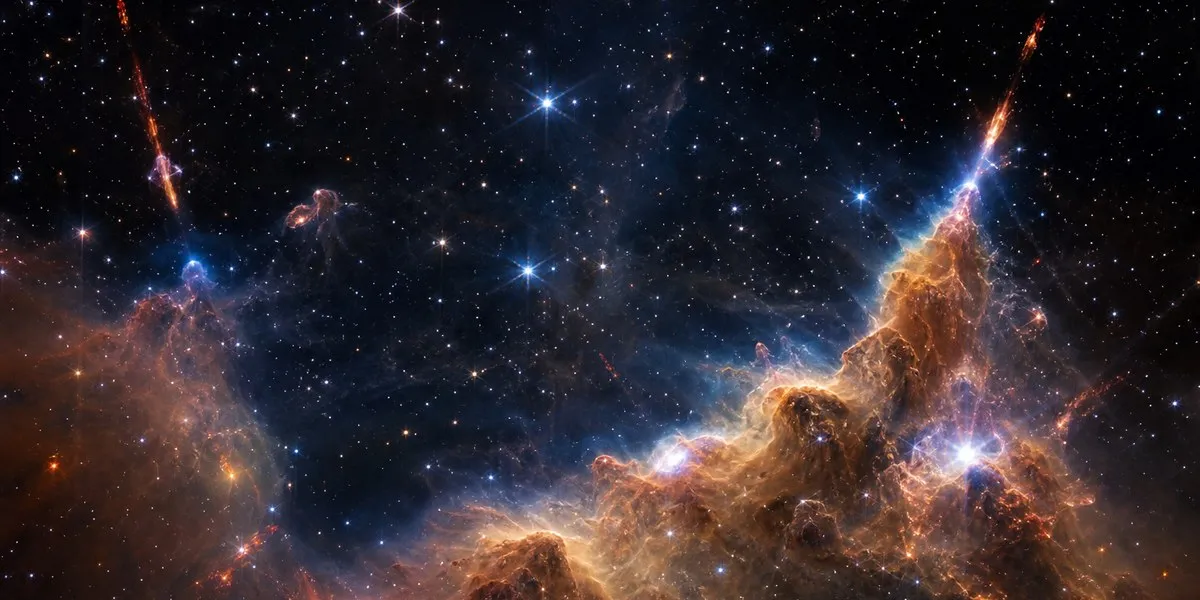
The James Webb Space Telescope has captured one of the largest images to date of the IC 348 star-forming region in the constellation Perseus, about 1,000 light-years from Earth. The near-infrared image shows young stars, clouds of gas and dust, as well as protostars.
As Live Science reports, IC 348 is one of the stellar nurseries closest to Earth. The greatest concentration of young stars is located near the center of the panorama. The bright stars have characteristic diffraction spikes caused by the telescope's optical design.
Search for brown dwarfs
Researchers are studying IC 348 to determine the mass limits of the smallest objects formed during the star-formation process. In 2024, the NIRCam instrument surveyed part of this region and identified 39 brown dwarf candidates. The following year, the NIRSpec instrument examined the emission from 15 of them.
More current news is available on the UA.News Telegram channel Telegram.
Nine objects were identified as new substellar members of the cluster. The faintest of them were estimated to have masses of about two Jupiter masses. The source notes that these are the least massive brown dwarfs among those detected.
Jets from young protostars
Brown dwarfs form during the gravitational collapse of molecular clouds of gas and dust, similarly to ordinary stars. However, their cores do not heat up sufficiently to begin fusing hydrogen into helium.
Protostars hidden in a dusty environment are also visible in the upper-right part of the image. They eject jets of matter into the surrounding gas and dust, forming bright Herbig-Haro objects. Such jets can extend trillions of miles into space. The IC 348 region was also observed by NASA's Chandra X-ray Observatory.




