
Warriors’ dwellings from the New Kingdom and horse burial found in Egypt — Jerusalem Post
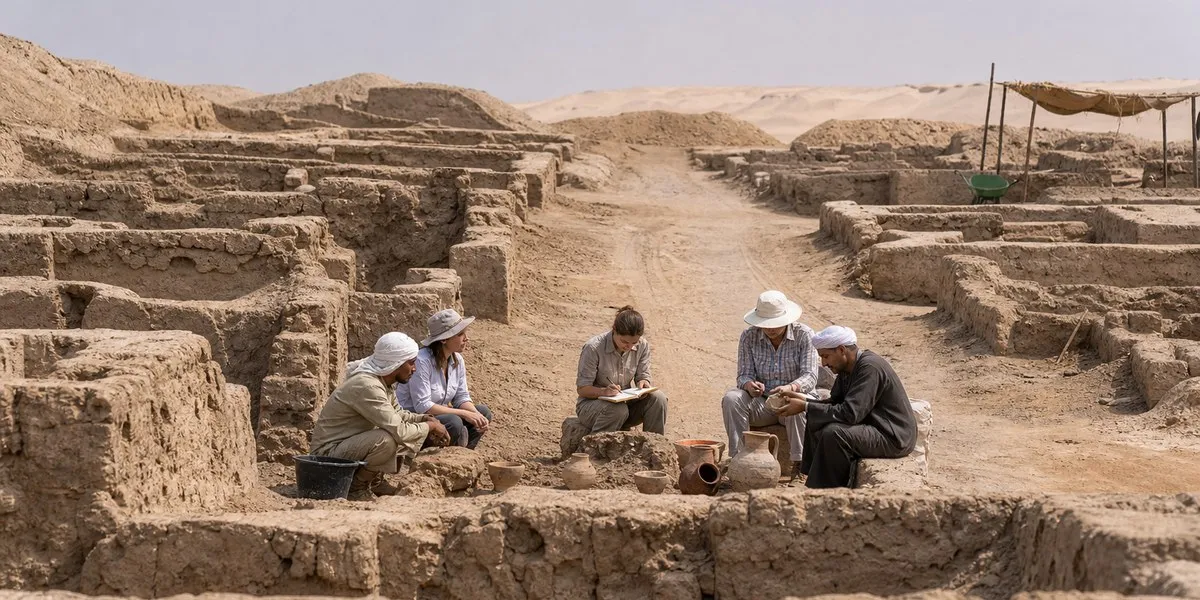
Archaeologists excavating the ancient Egyptian fortress of Tell el-Abqain in Egypt’s Beheira Governorate have found living quarters of warriors from the New Kingdom era, granaries, royal inscriptions and the burial of a young stallion. This was reported by the Jerusalem Post, citing Egypt’s Ministry of Tourism and Antiquities.
The ministry said the finds confirm the strategic importance of the fortress, which protected the country from attacks by Libyan tribes during the New Kingdom period.
Roads and wheat supplies
In the northern part of a large residential complex made of mudbrick, researchers cleared a four-metre-wide main road running from east to west. It is crossed by a north-south street, while the road itself leads to the southern entrance of the fortress and connects the residential area with the military facility.
Grain silos and cylindrical ceramic ovens for cooking were discovered in the complex’s rooms. Some rooms, including those north of the main road, were used to store wheat. Archaeologists found large vessels with charred grains there, providing direct evidence of food storage.
More current news is available on the UA.News Telegram channel Telegram.
Horse and royal stelae
One of the most notable finds was the complete burial of a young male horse of medium size. Preliminary research indicates that the animal belonged to a breed known for agility and speed and may have been used for training, military needs or harnessing to war chariots. The position of the body, the direction of the head and the orderly nature of the burial indicate that the horse was buried deliberately, likely ceremonially.
Near the burial, cylindrical fragments of alabaster and limestone were found which, according to archaeologists, may have been decorative elements of the harness of a horse hitched to a chariot.
A fragment of a limestone stele bearing the remains of a hieratic inscription of Merneptah, a pharaoh of the 19th Dynasty, was also found at the site. The inscription compares the pharaoh’s strength to the power of the god Set and also mentions the creator god Ptah. Another stele contains the hieroglyphic names of Ramesses II, while a third depicts a bound Libyan captive in a pose of submission.
Other finds include scarabs bearing the names of Ramesses II and Seti I, amulets in the shapes of a fish, lotus, cobra, the “nefer” sign and a baboon, pottery, a pilgrim flask, stone tools and ornaments.




