
Chimpanzees used in hepatitis B vaccine research examined in Liberia
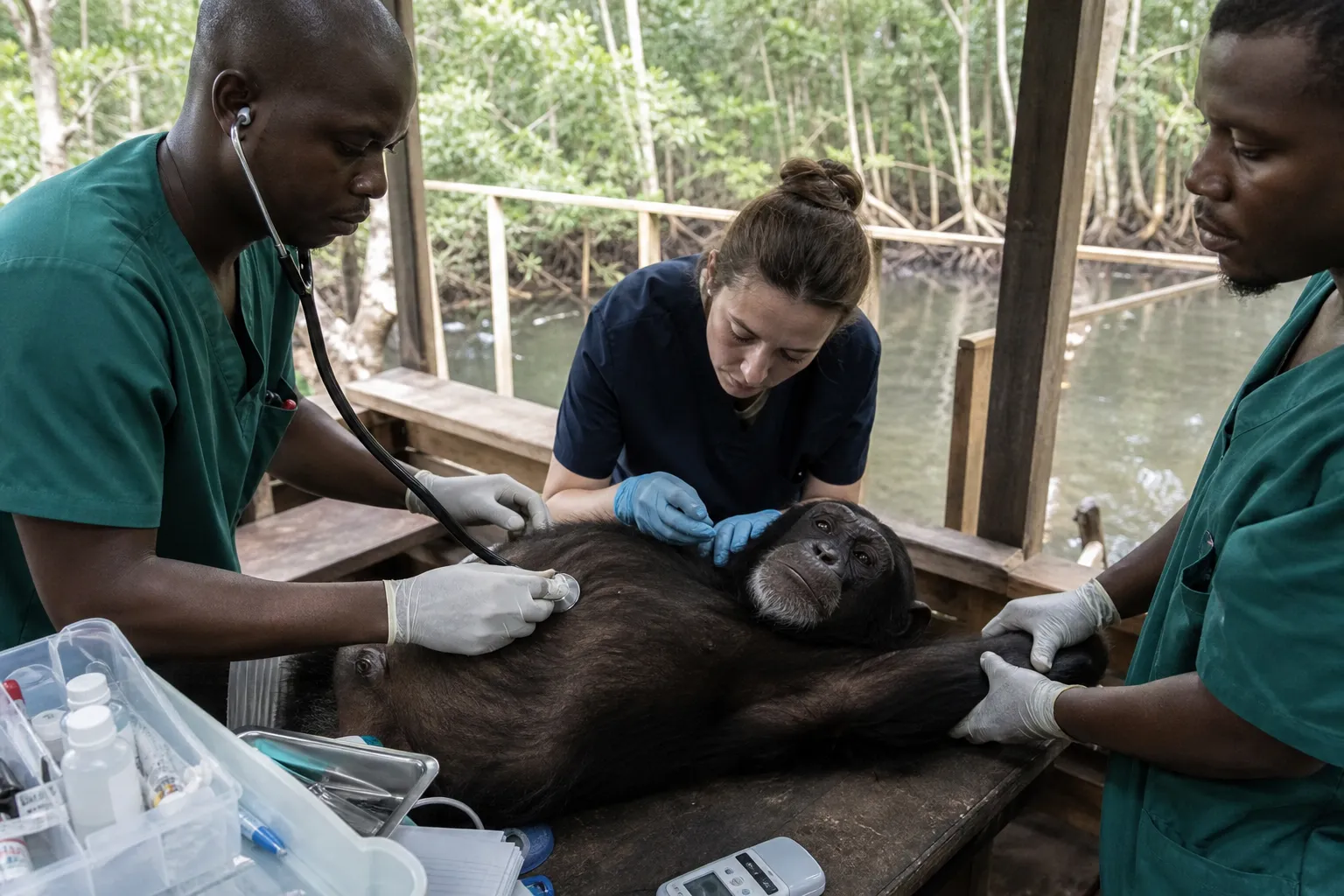
Comprehensive medical examinations have been conducted on chimpanzees at the Second Chance Chimpanzee Refuge in central Liberia that were previously used in laboratory research on a hepatitis B vaccine. This was reported by TimesLIVE, citing the refuge’s director, Liliana Pacheco Ricote.
The animals had their teeth cleaned, underwent X-ray examinations and had their nails trimmed. The examinations under anesthesia included checks of the teeth, heart, lungs and nervous system, as well as blood tests. The chimpanzees are also receiving booster vaccinations. The refuge plans to examine other animals as well.
Long-term care
According to Humane World for Animals, the medical checks are needed to assess the animals’ long-term health, detect possible illnesses early and develop individual care plans as they age. The average age of these chimpanzees is between 30 and 35 years.
More current news is available on the UA.News Telegram channel Telegram.
In 2015, Humane World for Animals assumed permanent responsibility for 60 chimpanzees that remained after the research program ended. They now mostly live at the refuge on islands covered with mangrove forests.
Research lasted for decades
According to Ricote, U.S. researchers used more than 400 chimpanzees in Liberia for hepatitis B vaccine experiments from the 1970s until the early 2000s. Many of the animals were captured in the wild as infants.
Western chimpanzees are classified as critically endangered because of a rapid population decline. Liberia ranks second in West Africa in the number of these primates, after Guinea. The results of the current medical assessments are still being processed, so the full impact of laboratory experiments on the animals’ health has not yet been determined.


