
80,000-year-old microlithic points found in Uzbekistan
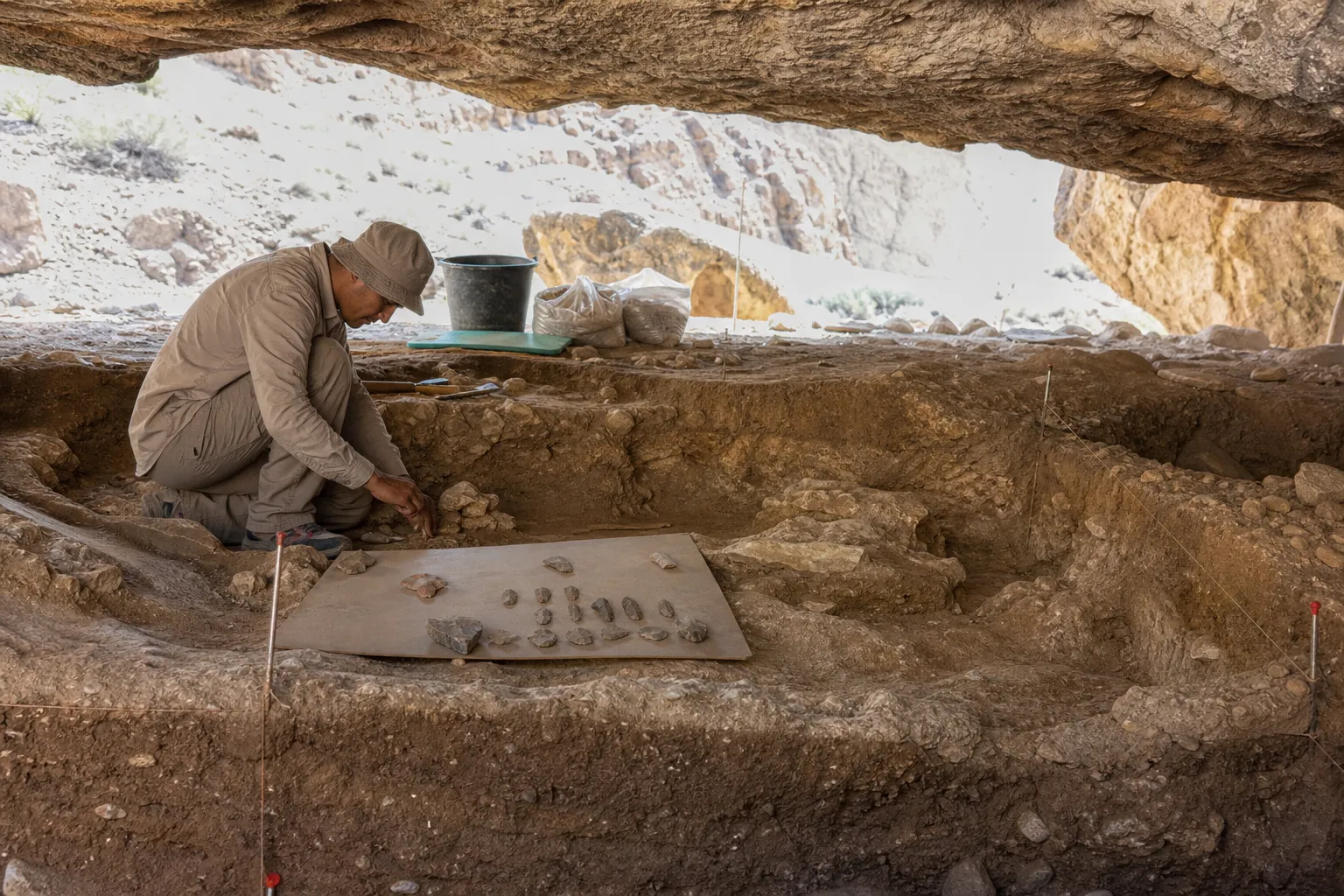
Archaeologists have discovered miniature triangular stone points dating to about 80,000 years ago in the oldest layers of the Obi-Rakhmat rock shelter in Uzbekistan. Macro- and microscopic impact traces were recorded on their surfaces and compared by researchers with experimental samples. The artifacts match the dimensions of small arrowheads, although the study’s authors cautiously refer to them as projectile points.
ScienceDaily reports on the results of the study published in the journal PLOS One. Obi-Rakhmat is located near the southwestern part of the Talas Alatau range in the Tien Shan system, at an altitude of 1,250 meters. The site’s stratigraphic sequence, more than 10 meters thick, covers a period from approximately 80,000 to 40,000 years ago.
Use-wear traces on micropoints
The discovered points have no secondary modification, are triangular in shape, less than 2 centimeters wide, and weigh only a few grams. Due to their small size and fragility, scientists believe they were unsuitable for mounting on heavy shafts. The width of their cutting edges corresponds to the diameter of arrow shafts recorded in ethnographic data for bows with low draw strength.
More current news is available on the UA.News Telegram channel Telegram.
At the same time, the same assemblage contained considerably more massive retouched points with traces of impact use. They are 15–20 times heavier and three to four times thicker than the micropoints; in size, such tools correspond to spear or dart points. The authors believe that the design differences indicate the use of different types of hunting weapons.
Comparison with a site in France
Researchers found the closest known counterparts to the Obi-Rakhmat micropoints at the Mandrin site in the Rhône Valley in France. Similar points there come from a layer dating to about 54,000 years ago, approximately 25,000 years younger than the Uzbek finds. A Homo sapiens milk tooth was also found in this layer.
Scientists note that artifacts from the two sites, located more than 6,000 kilometers apart, are similar in shape, manufacturing method, and traces of use. This may support the hypothesis of a prolonged presence of Homo sapiens in Central Asia before its further dispersal across Eurasia. At the same time, the remains of a child from Obi-Rakhmat, dated to approximately 70,000 years ago, combine traits associated with Neanderthals and anatomically modern humans.


