
Lebanon begins handing over prefabricated homes to families in Zawtar al-Gharbiya — Asharq Al-Awsat
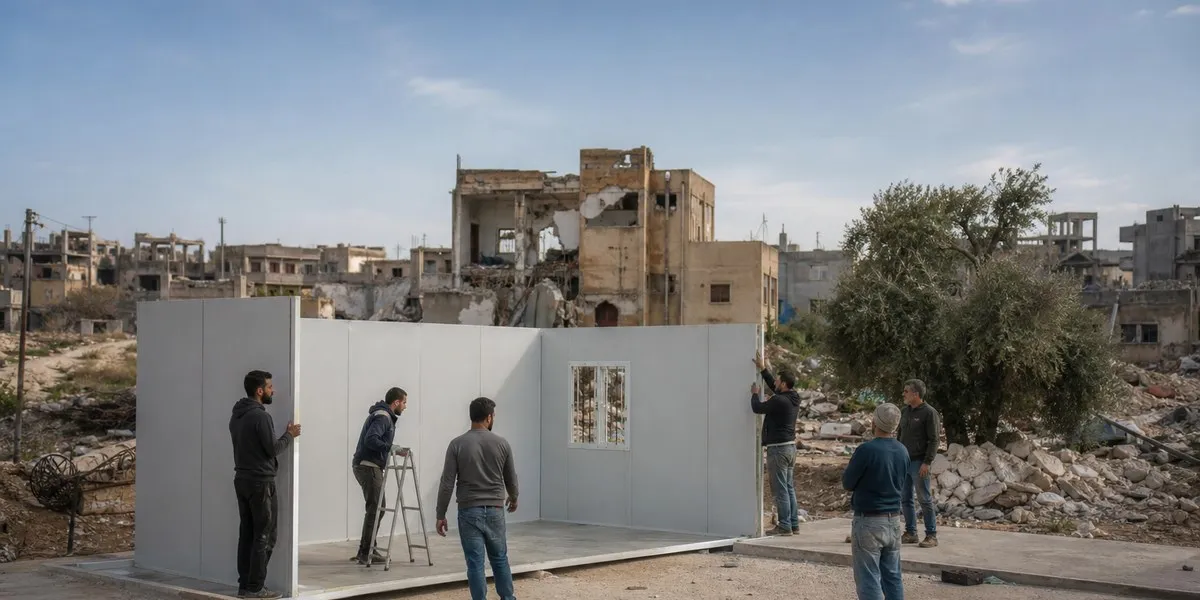
In the village of Zawtar al-Gharbiya in southern Lebanon, authorities have begun handing over the first batch of prefabricated homes to families whose housing was destroyed during fighting between Hezbollah and Israel. The temporary dwellings are being installed on plots cleared of rubble and prepared for assembly, Asharq Al-Awsat reports.
Residents’ return
According to local authorities as of September 9, about 70% of Zawtar al-Gharbiya’s residents were able to return to inspect their property. At the same time, only 16% of the population — around 60 out of 450 families — were able to settle in the village. Officials estimated that 85% of homes in the locality had been completely destroyed, while another 15% had sustained partial damage.
Zawtar al-Gharbiya Mayor Abed Ezzeddine said that the municipality had requested 15 prefabricated homes. According to him, some families still cannot afford rent, while others are temporarily living in buildings that must be vacated when schooling resumes. Local authorities expect demand for such housing to be greater, as other residents also seek to return to the village.
More current news is available on the UA.News Telegram channel Telegram.
Destruction and security situation
The Lebanese army began deploying in Zawtar al-Gharbiya in late July after Israeli forces withdrew from the area. This is taking place under a plan agreed by Lebanon and Israel with U.S. mediation, which provides for the Lebanese army to remove Hezbollah weapons in designated areas and for a phased withdrawal of Israeli forces.
A source at the Higher Relief Commission said that prefabricated housing is only one option for supporting residents’ return. According to the source, there are about 300,000 housing units in the country that have been destroyed or damaged to such an extent that they are uninhabitable. Authorities are also considering purchasing structures available on the local market, securing donor assistance, and obtaining supplies from abroad.
Ezzeddine noted that the security situation in the area remains unstable because of almost daily explosions near Zawtar al-Sharqiya. According to him, this discourages people from returning permanently. The source at the Higher Relief Commission also stressed that residents’ return must be accompanied by the restoration of municipal services, civil defense, police, and medical facilities.




