
Mongolian herders use GPS and AI amid drought and severe weather — Asharq Al-Awsat
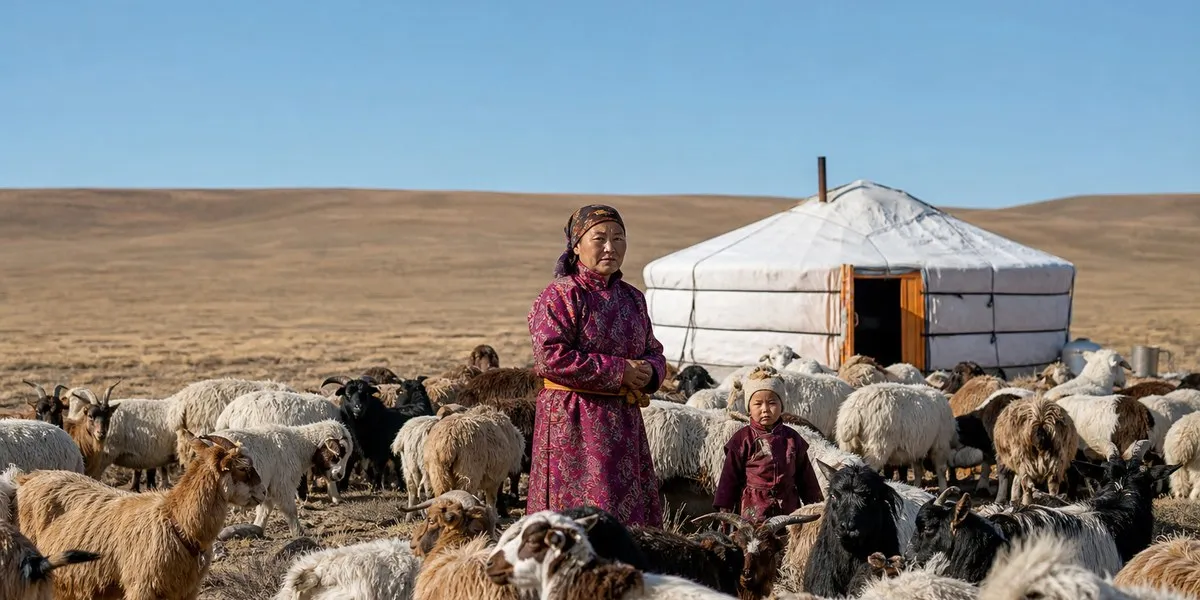
In Mongolia, nomadic herders are using the Hunu app with GPS trackers and artificial intelligence-based weather updates to monitor livestock and make decisions amid drought, dust storms and severe cold. In the Bayantal settlement of Govisumber Province, herder Ganchimeg said that thanks to GPS, her husband found a flock in time after it had approached a salt lake due to a lack of vegetation.
According to her, the sheep could have died if they had drunk brackish water or entered it. The solar-powered device is attached to one animal in a group, as herds on steppe pastures usually stay together.
Data for nomadic families
The founder of the Hunu app, 26-year-old Bilgudei Gankhulug, told AFP that he was inspired by the 2024 dzud, an extreme weather phenomenon during which temperatures dropped to minus 45 degrees. According to him, more than eight million head of livestock died in Mongolia at the time, while many herders lost their income and livelihoods within several months.
As Asharq Al-Awsat reports, Hunu provides map data on snow depth, wind direction, soil moisture and drought. The app also has an AI-based weather feature with updates on dust storms and blizzards. This information is intended to help herders determine where to move with their herds.
More current news is available on the UA.News Telegram channel Telegram.
Desertification and grazing
About 80% of Mongolia consists of pastures covered with natural grasses and shrubs, said Chimeddoj Buyanaa, conservation director of the World Wildlife Fund in Mongolia. He stressed that overgrazing along with climate change threatens pastures and local species, including snow leopards and saiga antelopes.
About one in four Mongolian residents is a nomadic herder. In August, authorities reported that land degradation and desertification had affected nearly 82% of the country’s territory. Some herding families are moving to cities, while others are seeking new pastures. Herder Bolormaa Erdene said that several nomadic households near her summer pasture had already moved nearly 200 kilometers in search of greener grazing land.
Bilgudei Gankhulug said he aims to expand Hunu to Central Asian countries. During the COP17 conference on combating desertification, he also spoke with herders from Tanzania and Uruguay who were interested in this experience.




