
More than 5,700 people missing in Nepal a month after floods — Dawn
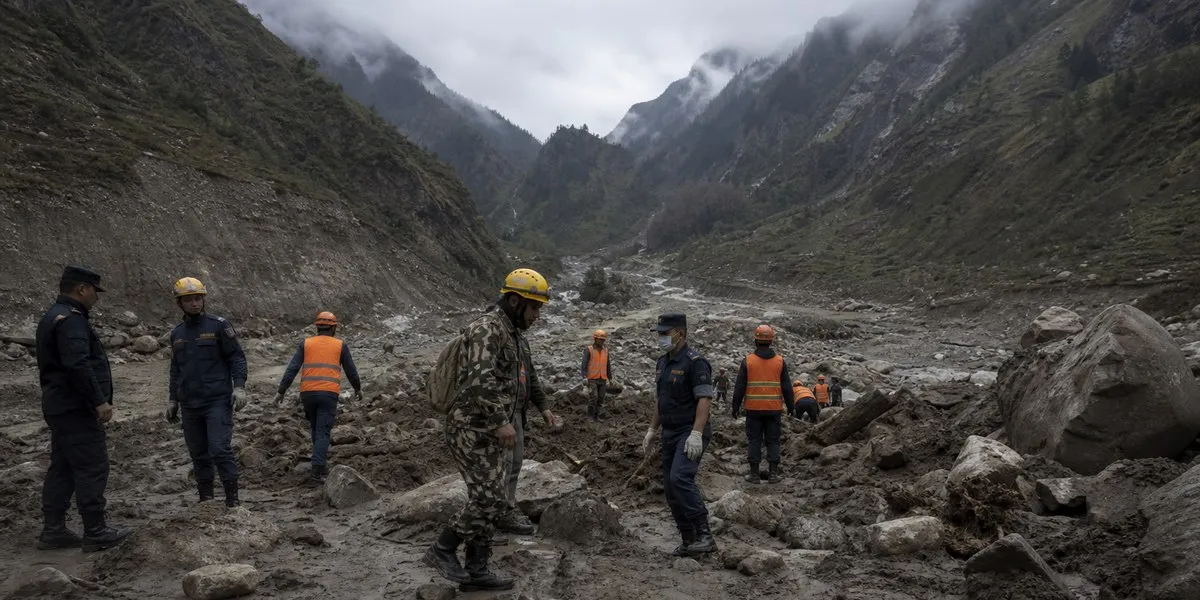
One month after the devastating flood in Nepal, caused by the collapse of ice and rock on Mount Langtang Lirung, rescuers have recovered 1,451 bodies, while more than 5,700 people are considered missing. Dawn reports, citing Nepal’s disaster response authorities.
The collapse occurred on August 26 on the northern slope of Mount Langtang Lirung near the China-Nepal border. According to geologist Sudan Bikash Maharjan of the International Centre for Integrated Mountain Development, the mass of ice and rock came down from an altitude of about 5,200 meters. The debris traveled approximately 20 kilometers and descended 1,700 meters into the Rasuwagadhi area in just seven minutes.
Search and identification of the dead
Those missing include hundreds of workers on hydropower projects, as well as foreigners, including tourists and pilgrims. The identification of victims is complicated by the need for DNA testing. Due to overloaded morgues, many bodies were buried in mass graves after DNA data had been recorded. So far, the identities of about 100 victims have been established.
On the Chinese side of the border, state media reported 43 deaths and 519 people missing. Hundreds of rescuers, some of whom were delivered by helicopter, continue searching through mud and debris. In Nepal, three workers — two Nepalese and a Chinese citizen — were rescued from tunnels under construction. One of them, 30-year-old Sanjay Sah, told AFP that he survived 10 days in darkness by drinking muddy water.
More current news is available on the UA.News Telegram channel Telegram.
Aid and damage
The disaster affected more than 80,000 people, with thousands living in temporary shelters. The UN has appealed for nearly $50 million in emergency aid. Some communities near the epicenter remain cut off, so the UN and Nepalese authorities are delivering supplies there by helicopters and cargo drones.
Nepal estimates the cost of reconstruction at $4.78 billion, of which $57 million is needed over the next six months for short-term recovery. The flood reduced the country’s total generating capacity by 10%, mainly because of damage to hydropower facilities. The energy sector accounts for half of all infrastructure damage.
Scientists from World Weather Attribution called the disaster a “compound crisis” linked to prolonged warming, glacier retreat, permafrost thaw and geological instability. Friederike Otto, a climate science professor at Imperial College London, said climate change was one of the factors in the tragedy.




