
A deadly strain of bird flu has been detected in New Zealand for the first time
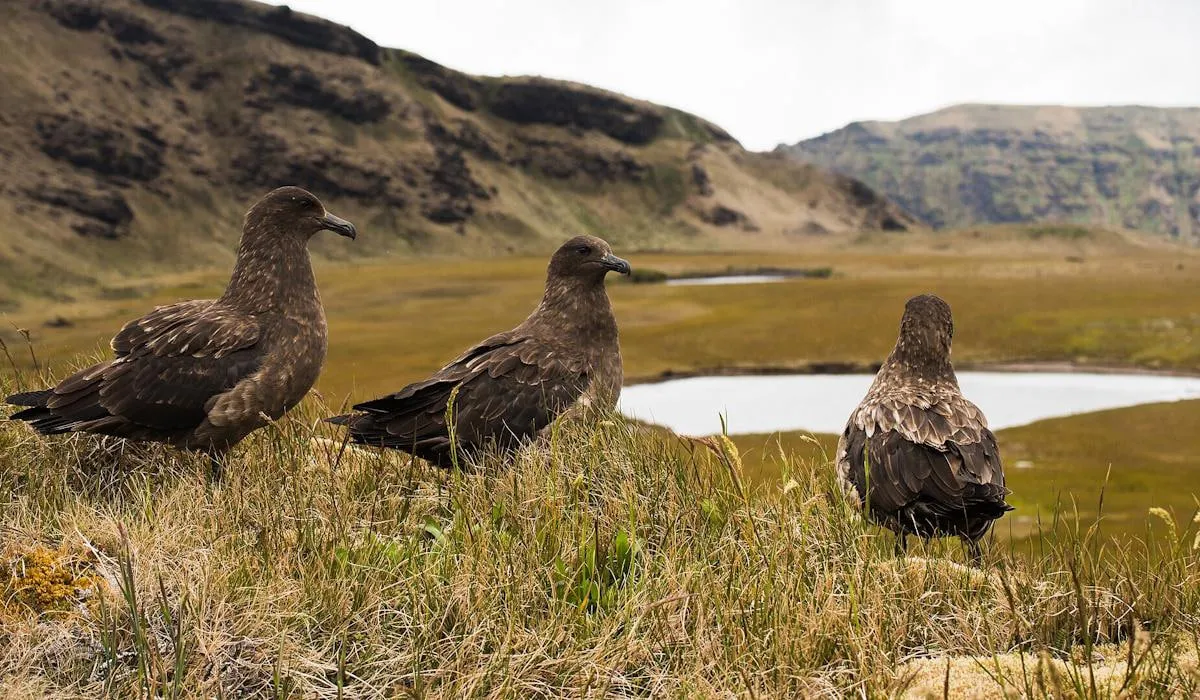
New Zealand has officially confirmed its first case of infection with the highly pathogenic H5N1 strain of avian influenza. Experts warn that the emergence of the virus poses a serious threat to the country’s unique wildlife, particularly to rare bird species.
Experts note that H5N1 could have severe consequences for local ecosystems, as many New Zealand birds are endemic and found nowhere else in the world. Currently, relevant agencies are taking measures to monitor and contain the spread of the virus.
Scientists and conservationists fear that if the virus begins to spread actively, it could deal a devastating blow to the country’s unique birdlife, a significant portion of which is already threatened with extinction.
One seabird, a brown skua, tested positive for H5N1. It was found on July 10 on Petone Beach near Wellington, and authorities announced the confirmation of the diagnosis on Wednesday, as stated yesterday by the country’s Minister of Biosecurity, Andrew Hoggard.
For New Zealand, where birds are of special importance to both nature and culture, the emergence of H5N1 could have catastrophic consequences.
However, the country has been preparing for such a scenario for several years. A vaccination program is currently underway for five species of rare birds kept in breeding centers. Among them are the legendary kakapo and takahē.
The Ministry of Primary Industries also reported that the country has a comprehensive monitoring system in place, covering nature reserves, zoos, poultry farms, veterinary services, and reports from the public.
James Russell, a professor of conservation biology at the University of Auckland, noted that the emergence of avian influenza has become yet another serious challenge for local species.
According to him, it is unlikely that the spread of the virus among wild birds can be completely stopped, but other risk factors can be reduced so that populations remain strong enough to recover after the epidemic.
For his part, Minister Andrew Hoggard emphasized that there is currently no evidence of mass bird deaths or transmission of the virus among wild birds in New Zealand.
At the same time, authorities have urged residents to remain vigilant and report any instances where three or more sick or dead birds are found in a single location to a dedicated hotline.
The virus has already spread almost worldwide
The H5N1 strain originated in Asia and has been spreading rapidly across Europe and the Americas since 2021. During the 2023–2024 season, it reached Antarctica, and in early July of this year, the first confirmed cases were also recorded on the Australian mainland. During this time, the virus has killed millions of birds worldwide, and in some regions, the size of certain populations has declined by approximately 75%.
Characteristic symptoms include weakness, convulsions, abnormal twisting of the neck and head, and difficulty breathing.
Rare species are particularly vulnerable
New Zealand’s fauna is unique. The only native terrestrial mammals here are bats and marine mammals, so birds have evolved in a distinct way.
This is home to the world’s largest number of flightless bird species—both living and extinct. In addition, the country has the world’s most diverse array of seabirds.
About 80% of native species are already considered threatened with extinction, and more than a dozen are on the brink of complete extinction.
Jemma Geoghegan, a virologist at the University of Otago, noted that New Zealand is, to some extent, fortunate because it can draw on the experience of other countries that have already dealt with H5N1, particularly Australia.
At the same time, Nigel French, a professor of epidemiology at Massey University, emphasized that the virus’s impact on local species remains largely unpredictable for now, as different birds have varying susceptibilities to the infection.
He sees the greatest danger to species that live in large colonies, primarily coastal birds and scavengers. Among them are extremely rare species, such as the New Zealand tern, whose population numbers only about 50 individuals.
In addition, marine mammals can also become infected, particularly New Zealand sea lions, which are also threatened with extinction.
According to the professor, the virus could spell disaster for many of the country’s national symbols. That is why New Zealand must make the most of vaccination and other measures to contain the infection.
He emphasized that protecting local birds is not only important for conservation but also has immense cultural significance for the entire country.
This was reported by The Guardian.
As a reminder, the dangerous H5N1 virus was detected for the first time in a wild seabird in Australia.
In Italy, the H9N2 strain of avian influenza was detected in a human for the first time in Europe.
As a reminder, the new H5N1 bird flu is spreading in Germany: should we expect an epidemic?
Additionally, Spain is imposingrestrictions on poultry farms due to bird flu.


