
Pakistan plans to vaccinate 7.3 million children against polio — Dawn
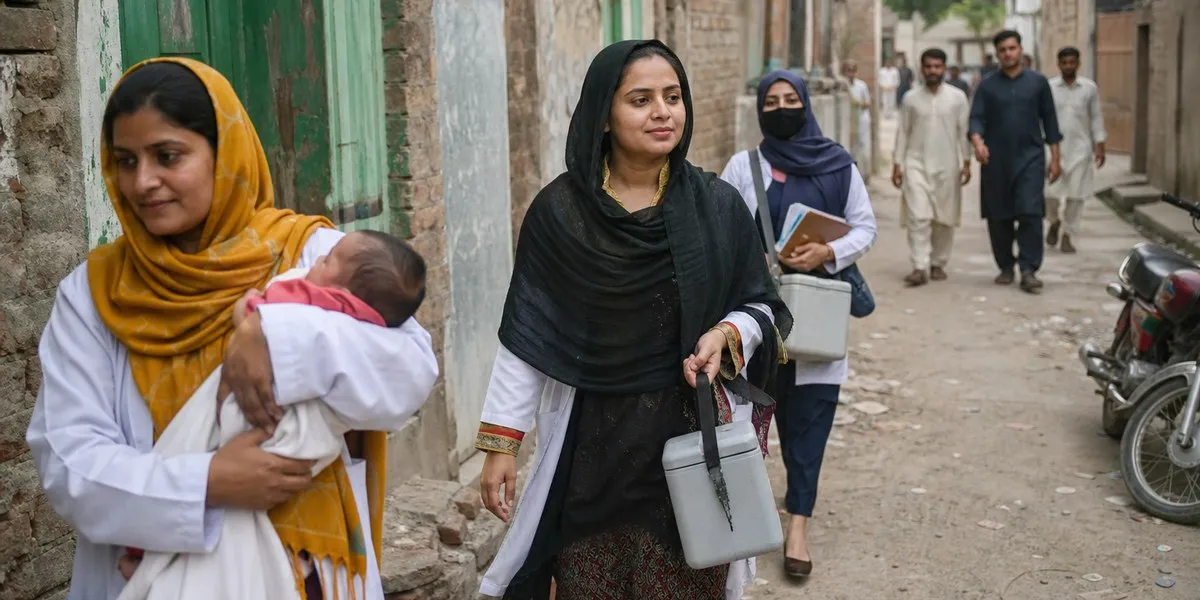
Authorities in Pakistan’s northwestern Khyber Pakhtunkhwa province have officially launched the September polio vaccination campaign. It is scheduled to be conducted simultaneously across the province from September 21 to 27 and is expected to cover 7.3 million children.
The campaign was jointly launched by Health Minister Khalikur Rehman and Provincial Chief Secretary Shahab Ali Shah. As Dawn reports, 35,000 vaccination teams, security personnel and other relevant services will be involved in the campaign. Health Secretary Fayaz Ali Shah, representatives of the Provincial Emergency Operations Centre for Polio Eradication, and international partner organizations also attended the event.
Khalikur Rehman called on the public and social media activists to join the campaign. He also said that the chief secretary’s personal oversight of its implementation had helped improve results compared with last year.
More current news is available on the UA.News Telegram channel Telegram.
Access to children in dangerous areas
Shahab Ali Shah said that all three polio cases registered this year were linked to areas where security problems made it difficult to reach children. According to him, three special campaigns were conducted over the past three months in Upper South Waziristan, Lower South Waziristan, North Waziristan and Bannu to reach every child.
Measures for the healthcare system
The chief secretary also reported measures to improve healthcare in the affected areas. In particular, authorities recruited and deployed 2,400 doctors, finalized and procured the necessary medicines, and outsourced the management of 72 remote hospitals. According to him, patients at these facilities will continue to receive treatment free of charge at the government’s expense.
The official noted that the polio threat is not limited to Khyber Pakhtunkhwa, as the presence of the poliovirus in neighboring Afghanistan creates a risk of cross-border spread. He called on the media and social media users to inform the public, particularly in poor and underserved areas.




