
South Africa studies tunnels under R40 to protect leopards
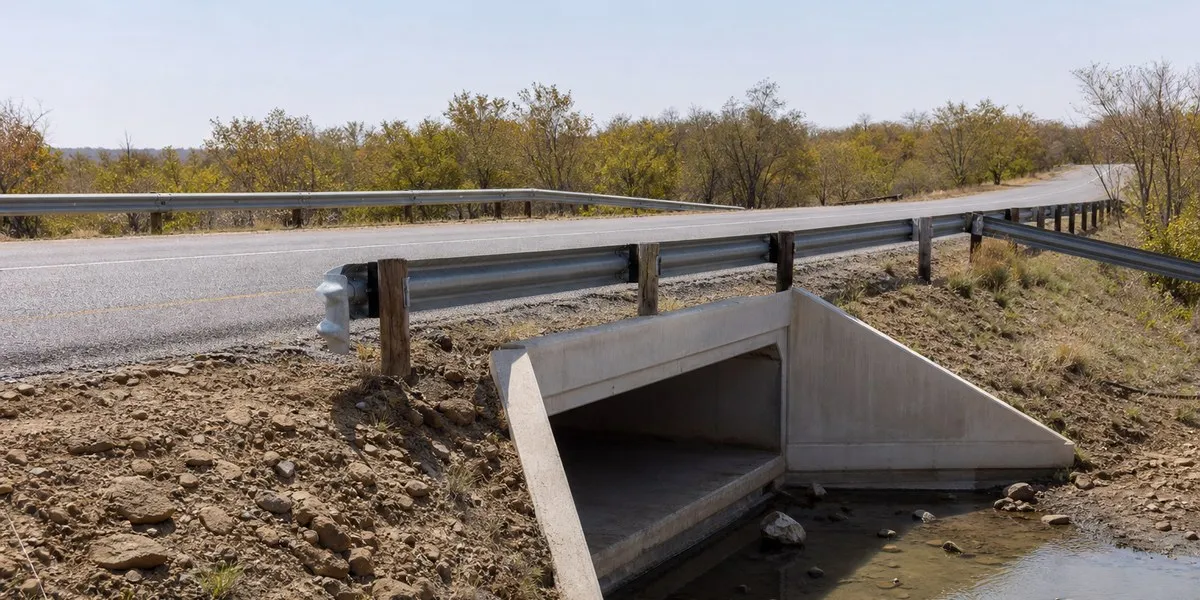
In the Hoedspruit area of Limpopo province, South Africa, researchers are studying how culverts beneath the R40 highway can reduce the number of leopards and other wild animals killed in road accidents. As Daily Maverick reports, these concrete passages were built to drain water, but they are already being used by animals crossing the road along the western boundary of Kruger National Park.
According to Africa Geographic’s documentary “Spots on the Line”, from May 2024 to August 2026, nine leopards whose deaths were known about were killed in vehicle collisions on roads in the region. Seven cases were recorded on the R40, and several animals died on a single 15-kilometre stretch of road.
Animals use the passages
A road ecology project run by the Ingwe Research Programme together with partners is studying how animals cross the highway, which underpasses they choose, and what influences their choice. Cameras recorded porcupines, leopards, genets and warthogs using the structures. According to Transfrontier Africa NPC research assistant Christoffel de Lange, porcupines use such passages more than 40 times a week, while leopards have also been recorded in them repeatedly during the week.
More current news is available on the UA.News Telegram channel Telegram.
Researchers identified factors that may affect the use of the passages, including their openness and distance from gates. At the same time, not all animal species choose the underground route. Preliminary data indicate that use of the structures may be significantly lower during the rainy season; scientists are still checking whether this is linked to water inside them.
Cameras, dogs and clearing structures
For monitoring, researchers have around 60 cameras, which limits the number of passages and road sections that can be monitored simultaneously. Separately, specialists are testing conservation dogs trained to detect the scent of leopards. If a dog repeatedly detects the target scent near a fence, trail or culvert, researchers can install cameras there for additional verification.
Ingwe executive director Marine Servonna believes that, if redesigning the highway is possible, the passages should be enlarged to at least 90 cm in diameter. However, researchers have not yet developed final recommendations on their design and placement, as they are collecting and analysing data. The nearest practical step may be clearing blocked structures: de Lange said that most culverts on the studied route are clogged.


