
South Korea plans to launch chip production in the southwest in 2030
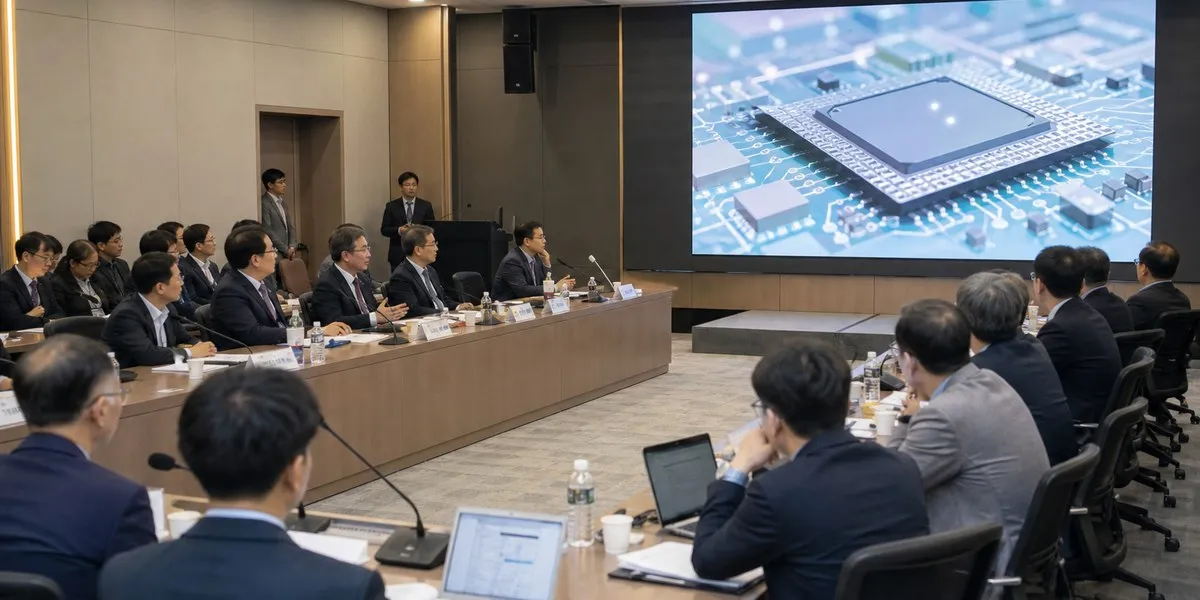
In Gwangju, in southwestern South Korea, officials discussed the creation of a major semiconductor manufacturing and artificial intelligence development hub. Local authorities plan to begin the first phase of construction next year, complete it by the end of 2029, and move to initial chip production in 2030, The Korea Herald reports.
Infrastructure for the cluster
The development of the cluster was considered at a forum on semiconductors and AI-driven transformation held at the Gwangju Chamber of Commerce and Industry. Participants noted that the region must provide electricity, water, administrative permits, personnel and a supplier network in a timely manner for future investments.
Jeonnam-Gwangju Mayor Min Hyeong-bae said the administration seeks to keep pace with the rate of corporate investment. Gwangju Chamber of Commerce and Industry Chairman Han Sang-won stressed that allocating land plots and making investment announcements alone are insufficient for the project’s success.
Among the necessary conditions, he named stable electricity and water supplies, faster administrative procedures, transport and logistics links, as well as skilled workers. According to him, the region also needs housing, medical, educational and cultural facilities to attract engineers and their families.
More current news is available on the UA.News Telegram channel Telegram.
Energy and personnel
Lee Min-woo, a representative of the Ministry of Trade, Industry and Energy, said the government wants to link the new manufacturing base with regional capabilities in materials, components, equipment and advanced chip packaging. He warned that delays in establishing energy, water and other basic infrastructure could put the project at risk even before production begins.
Lee Soon-hyeon, a professor at Dongshin University, estimated that four semiconductor fabrication plants could require 6.4 gigawatts of grid connection capacity. He stressed that such manufacturing requires not only generation volumes but also a stronger power grid and stable supplies without fluctuations.
Ryu Sang-won, head of the Semiconductor Research Institute at Chonnam National University, drew attention to the unresolved question of whether jobs, suppliers and research activities linked to the fabrication plants will be based specifically in the country’s southwest. Chung Won-joo, chairman of Herald Media Group, Jungheung Group and Daewoo Engineering & Construction, pledged to allocate 10 billion won, or about $7.5 million, for the development of the semiconductor and AI cluster.


