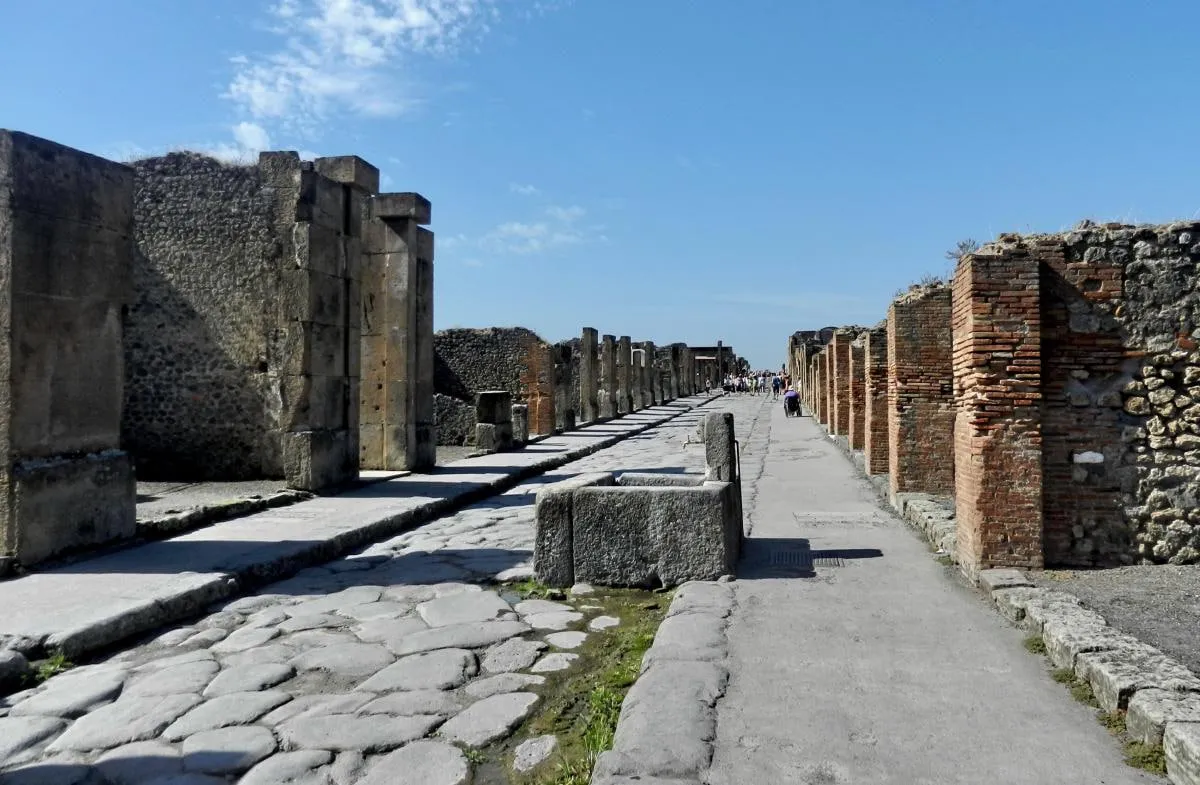
Archaeologists speculate that one of the victims of the eruption of Vesuvius in 79 AD in ancient Pompeii may have been a doctor.
Items resembling medical instruments were found near the remains, leading researchers to believe that this person may have been trying to help victims during the disaster.
Researchers reached this conclusion after studying the objects found near the human remains.
It is noted that Pompeii—one of the most famous archaeological sites in the world—was destroyed and buried under a layer of ash following the eruption of Mount Vesuvius in 79 AD. Within 24 hours of the disaster, most of the city’s residents died from suffocation due to toxic ash and thermal shock.
In a new study, archaeologists reported on a small case found among the remains of 13 people who had tried to take shelter in a vineyard in an area later named the “Garden of the Fugitives.”
Inside, they discovered: a small box made of organic material with metal elements; a fabric pouch containing bronze and silver coins; and objects resembling medical instruments.
Archaeologists also found a stone slab used in ancient times to prepare medical or cosmetic mixtures, as well as small metal instruments that may have been surgical.
Scientists believe that the man next to whom the set was found was a medicus—the term used in Ancient Rome for a doctor. Pompeii archaeologist Gabriel Zuchtriegel suggested that the man was trying to save his instruments to start a new life elsewhere or to help people even while fleeing.
"This man took his instruments with him to be ready to rebuild his life elsewhere through his profession, but perhaps also to help others," the archaeologist noted.
He also added that this discovery is dedicated to all medical professionals who, even today, work with a strong sense of responsibility toward society.
New technologies aided the research
Researchers were able to examine the contents of the case without damaging the artifact thanks to modern diagnostic methods—specifically CT scanning and artificial intelligence technologies.
According to Tuchtriegel, even two thousand years ago there were people who remained dedicated to their profession until the very end.
Scientists emphasize that this discovery opens up new possibilities for studying ancient artifacts and once again confirms that Pompeii remains a unique archive of human stories, many of which are still waiting to be uncovered.
A volcano in Europe could erupt at any moment — TwojaPogoda.
As a reminder, Mount Etna has become active again in Italy, with hot ash and lava fountains being observed.
A volcano has also erupted on one of the Galápagos Islands.