
More than 9,000 km of water pipes in Osaka Prefecture have exceeded their service life — The Japan Times
In Osaka Prefecture, Japan, more than 9,000 kilometers of water pipes have exceeded their standard service life of 40 years. As of fiscal year 2024, this accounted for about 36% of the network still in use — the highest figure among the country’s 47 prefectures, The Japan Times reports.
Network replacement lags behind needs
The problem also affects the regional sewage network managed by the prefectural authorities. Its total length is 573 kilometers and it covers several municipalities, including the Neyagawa River basin. Work on Japan’s first regional sewage project here began in fiscal year 1965.
About 86 kilometers of the network, or approximately 15%, have already exceeded their standard service life of 50 years. Another 171 kilometers, or about 30%, have been in use for between 40 and 50 years. This increases the need for inspections and maintenance.
Rapid replacement of pipelines is considered nearly impossible due to staffing and financial constraints. A representative of the prefectural sewerage bureau’s construction division said that even replacing eight kilometers of pipes per year for 10 years would be a very difficult task.
More current news is available on the UA.News Telegram channel Telegram.
Risks during downpours and earthquakes
Old cast-iron pipes are particularly vulnerable to seismic tremors, although exceeding their standard service life does not mean an immediate accident or leak. They are to be replaced with ductile iron or steel pipes with earthquake-resistant joints. As of the end of fiscal year 2023, only about 35% of the network in Osaka City had been upgraded.
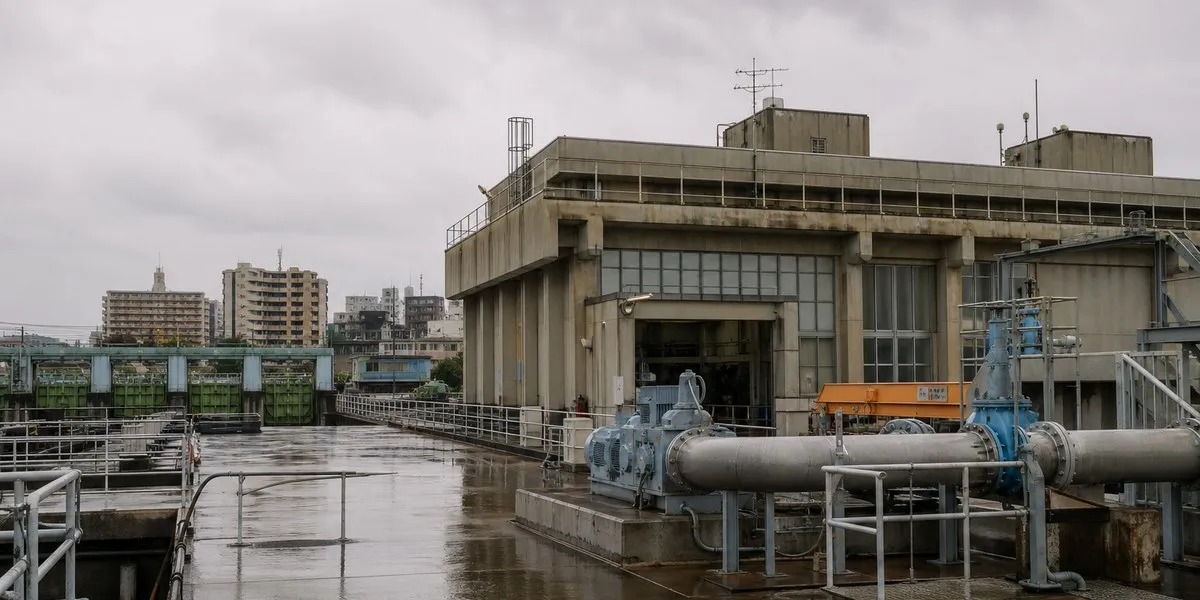
On June 26, during heavy rainfall, all six large pumps at the Suminoe pumping station in Osaka’s Suminoe Ward were flooded. A city investigation found that water entered the premises through a rupture in a rubber connection between an underground drainage channel and the pump room.
The estimated cost of fully restoring the station is about 30 billion yen. The work is expected to last three and a half years and be completed at the end of fiscal year 2029. Until then, an increased risk of flooding will remain, including in the Ikuno, Abeno, Hirano, Higashisumiyoshi, Sumiyoshi and Suminoe areas.




