
Border checks will continue in 2027 in the seven Schengen countries
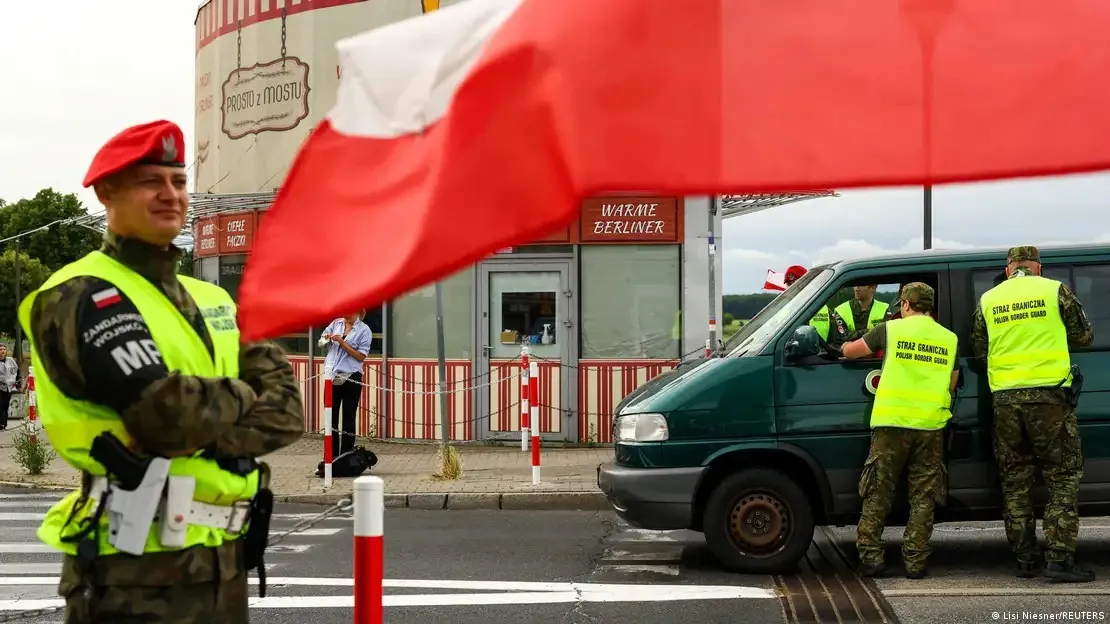
Seven Schengen Area countries have informed the European Commission that they will continue temporary checks at their internal borders in 2027. As of November 4, 2026, such controls are in place in eight countries, including Germany, France, Poland, and Italy. For travelers, this means that their documents may be checked while traveling through Europe, and delays are possible on certain routes.
Temporary border controls at some or all of the Schengen Area’s internal borders are currently being carried out by Austria, Denmark, Italy, Germany, Norway, Poland, France, and Sweden. Seven of these countries have already notified the European Commission that they will continue these checks next year. These are the countries that cite security risks, terrorist threats, organized crime, and potential acts of sabotage as the reasons for these measures.
Where border controls will continue in 2027
Denmark, Norway, and Sweden have announced new six-month periods of border controls. These will be in effect from November 12, 2026, to May 11, 2027. This decision was made five months after the European Commission recommended that these countries gradually phase out border checks. Each country cites its own reasons for extending the controls.
- Denmark cites risks of sabotage, terrorism, and organized crime. Checks are conducted at land and sea borders with Germany.
- Norway points to threats to the energy sector and the risk of sabotage. Controls apply to ports with ferry connections to other Schengen Area countries.
- Sweden cites cross-border organized crime, threats from Russia, hybrid attacks, and the use of migration as a tool of pressure among its reasons. The list also mentions the events in Ceuta.
At the same time, the number of countries conducting such checks is gradually decreasing. In late September, the Netherlands suspended temporary controls at its internal borders. Italy and Spain have also abandoned mutual checks on flights and ferry routes. They had introduced these measures against each other in the summer of 2026 amid the crisis in Ceuta.
At Which Borders Will Documents Be Checked
The scope of checks varies by country. Some countries monitor all internal borders, while others monitor only certain routes. According to SchengenVisaInfo:
- France and Sweden conduct checks at all internal borders. This also applies to flights from other Schengen Area countries.
- Germany conducts checks at all nine land borders.
- Italy checks the border with Slovenia.
- Poland checks its borders with Germany and Lithuania.
- Norway is checking ports from which ferries depart for other Schengen Area countries.
This means that, for example, drivers entering Norway from Sweden by land are not subject to the same control measures that apply at Norwegian ports.
Why Schengen countries may reinstate controls
Under Schengen rules, internal borders are generally supposed to be crossed without passport checks. Temporary controls are permitted only as an exceptional measure—in the event of a serious threat to security or public order.
In 2024, the rules were revised. Following this, countries were given the option to implement checks for up to six months if the threat can be foreseen in advance. Under the standard procedure, the total duration of such measures must not exceed two years. In certain exceptional cases, controls may be extended for another six months, and then for one final six-month period.
In practice, however, some countries have been screening travelers at their internal borders for many years. They announce new screening periods, citing security risks and emerging threats. These measures have been in place the longest in several countries:
- Germany—at certain internal borders since September 13, 2015;
- Austria—since September 16, 2015;
- Sweden—since November 12, 2015;
- Denmark—since January 4, 2016;
- France—since November 1, 2018;
- Norway — as of November 12, 2021;
- Italy — at the border with Slovenia, effective October 21, 2023;
- Poland — as of July 7, 2025.
What Tourists Need to Know
The reinstatement of temporary border controls does not mean that full passport checks will be conducted again at every border crossing. In most cases, these are random checks. Therefore, many people traveling by car or train can cross the border without stopping. However, border guards have the right to ask any traveler for their documents.
Citizens of EU and Schengen Area countries are advised to carry a valid passport or national ID card. A driver’s license does not serve as a document authorizing border crossing. Citizens of countries outside the European Union must have a passport and, if necessary, a Schengen visa or a residence permit. This rule applies even for short trips to a neighboring country.
It’s also worth taking potential delays into account. Drivers and passengers on buses and ferries traveling through borders with temporary controls are advised to allow extra time for their journey. Therefore, despite the absence of permanent passport control within the Schengen Area, travel in Europe may still involve checks. Before traveling, it’s a good idea to check whether controls are in place on a specific route and to be sure to bring your documents with you. SchengenVisaInfo reports on this.
Italian Prime Minister Giorgia Meloni stated during a joint press conference with Belgian Prime Minister Bart De Wever in Rome that preserving the Schengen Area is possible only if the European Union’s external borders are protected.
Polish Prime Minister Donald Tusk reacted sharply to a proposal by his political opponent Mateusz Morawiecki to hold a referendum on the possible suspension of the country’s membership in the Schengen Area. Tusk called the idea absurd.




