
Fragments of Chinese celadon found at Great Zimbabwe — Live Science
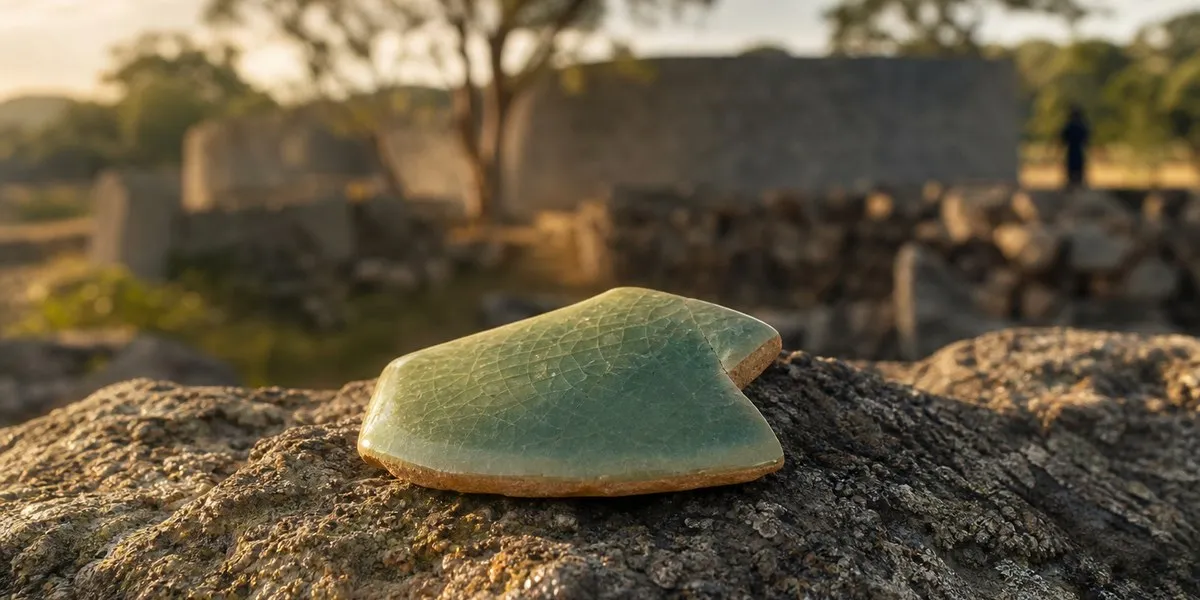
Archaeologists working at Great Zimbabwe in southeastern Zimbabwe have found fragments of jade-green Chinese tableware. The Longquan celadon-style ceramics point to the long-distance trade connections of the medieval African center, Live Science reports.
Rare Chinese ceramics
Researchers discovered the tableware fragments on a slope within the archaeological complex. The glossy surface of the shard indicates that the item was fired at a very high temperature. According to the publication, at that time only China had achieved such technology. Longquan celadon began to be produced in eastern China around 950.
Excavation leader Shadreck Chirikure, an archaeologist at the University of Oxford, noted that Chinese ceramics are found in different parts of Great Zimbabwe, but in small quantities. In his view, these objects may have been rare and highly valuable exotic goods used by the elite.
More current news is available on the UA.News Telegram channel Telegram.
Exchange network
Great Zimbabwe was the capital of an ancient state that emerged in southeastern Africa around 1000. The state flourished from the 11th century until at least the 15th century. Its population left no written history, but excavations are providing new information about this civilization’s crafts, ritual stone carvings, and trade contacts.
Glassware that arrived by sea routes from Southeast Asia, India, and the Middle East had also previously been found at the site. According to Chirikure, the distance from India or Sri Lanka to Great Zimbabwe is at least 8,000 kilometers. Merchants crossed the Indian Ocean using the winds of monsoon cycles.
Other evidence of long-distance exchanges includes metal objects from the territory of the present-day Democratic Republic of the Congo, located about 2,000 kilometers away. The inhabitants of Great Zimbabwe also obtained copper and tin from the territory of the present-day Republic of South Africa, more than 500 kilometers away. Chemical analysis of cattle bones showed that some animals were exchanged over distances of about 140 kilometers.




