
Around 20 journalists face criminal charges in Tunisia — Asharq Al-Awsat
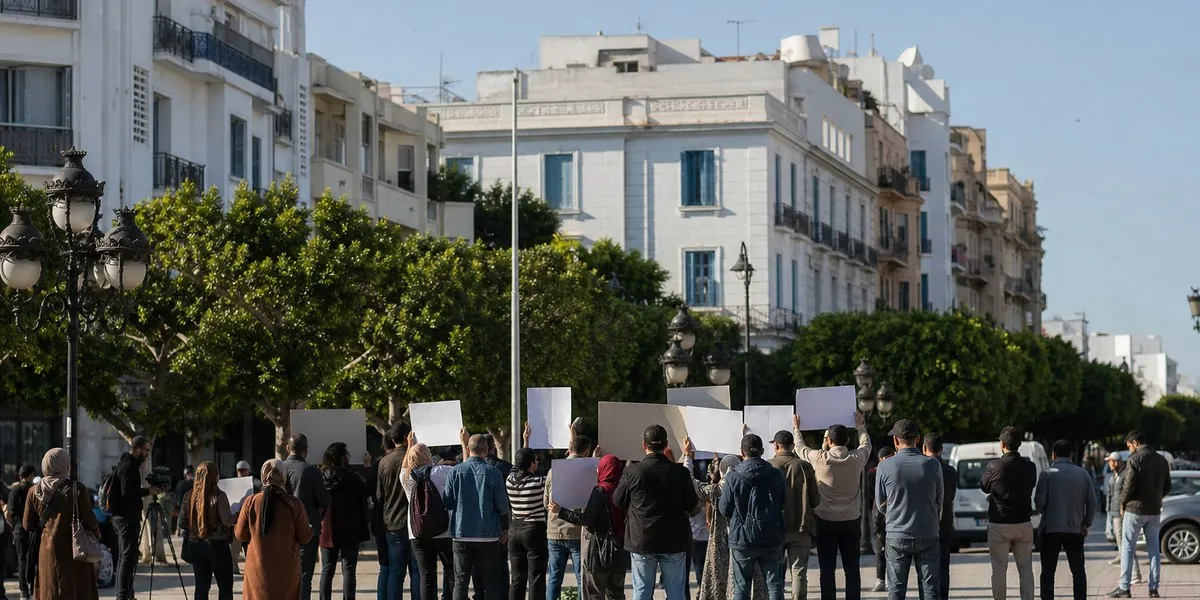
In Tunisia, around 20 journalists face criminal charges over their reporting or social media posts, and four have already been imprisoned. As Asharq Al-Awsat reports, this was stated by Zied Dabbar, head of the National Syndicate of Tunisian Journalists, who described the situation as unprecedented.
After the overthrow of President Zine El Abidine Ben Ali in 2011, Tunisia’s media gained greater freedom. At the same time, according to human rights groups, independent media have faced increased pressure after President Kais Saied concentrated broad powers in his hands. Over the past five years, Tunisia has fallen by more than 50 places to 137th in the Reporters Without Borders press freedom index.
Detentions and sentences
Last month, Mohamed Yousfi, editor-in-chief of the independent news website Al-Qatiba, was detained. This happened while he was on his way to a live broadcast on a private radio station. A judge charged him with illicit enrichment, which the journalist says was fabricated.
Those imprisoned also include prominent hosts Mourad Zeghidi and Borhen Bsaies. They were initially convicted of spreading false news and insulting the president, and later of tax evasion. They deny the charges and say the cases against them were fabricated.
More current news is available on the UA.News Telegram channel Telegram.
Pressure on independent media
Khaoula Boukrim, founder of the independent website Tumedia, left for France in December 2025, fearing arrest. Several months later, she was sentenced in absentia to four years in prison over texts criticizing the judicial system and the model of governance that she described as authoritarian. Journalist Haythem Mekki also left the country after being sentenced over his public statements on conditions in a hospital morgue.
According to the journalists’ syndicate, police often prevent media workers from covering events in public places and sometimes hold them for several hours. Most ministries no longer have press offices, and several international correspondents have been denied accreditation. Critical and political programs have disappeared from the airwaves of many private radio stations, while the state agency TAP remains an exception and continues to cover protests, opposition activities, and civil society initiatives.
Kais Saied denies being a dictator and says journalists are free to criticize the authorities. Government representatives, for their part, describe the prosecutions as impartial judicial cases and stress that no one is above the law.




