
Ceremonial plaza and unusual stele found in Veracruz
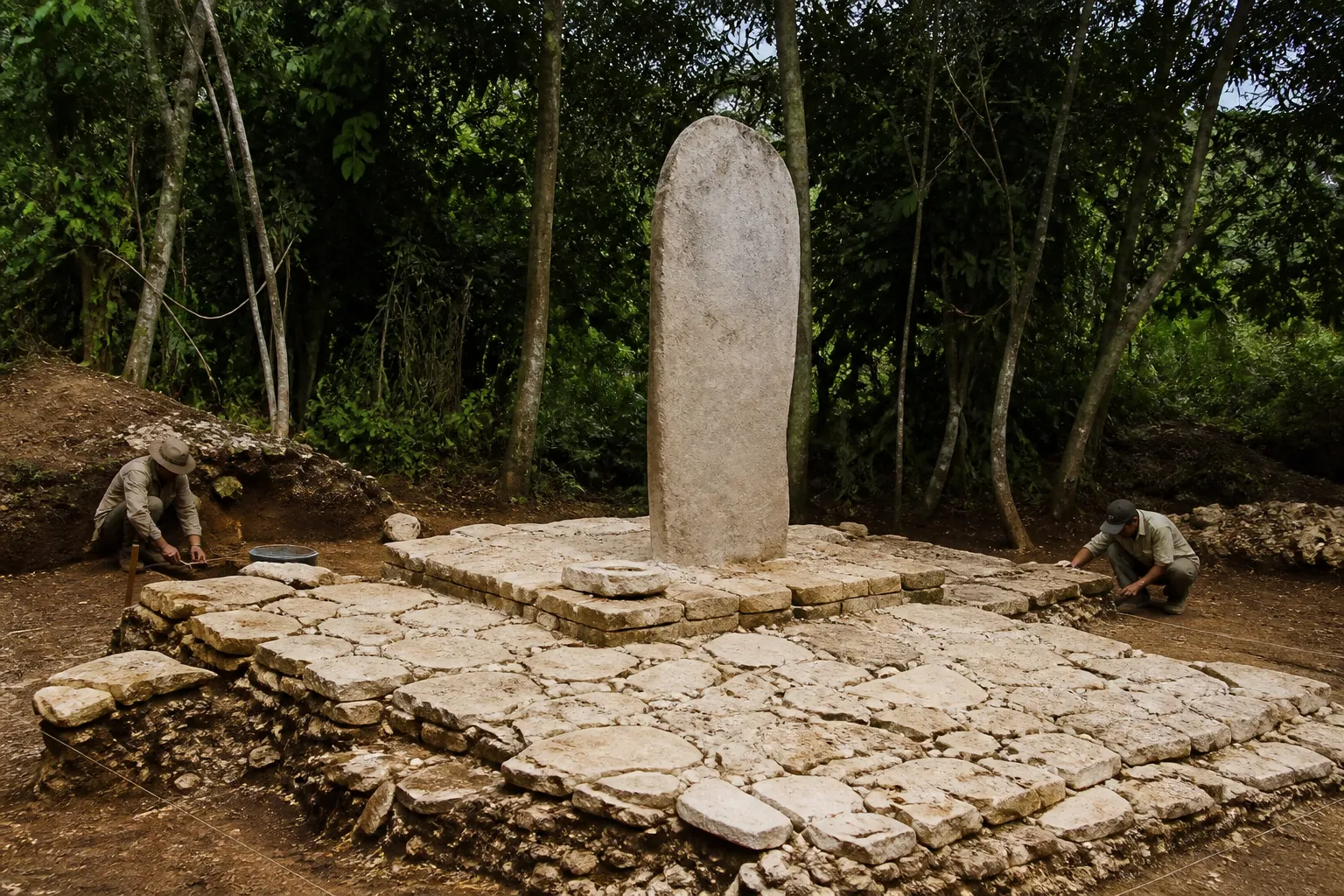
In the Coatepec area of the Mexican state of Veracruz, archaeologists have discovered a public-ceremonial plaza and a monolithic stele with features atypical for this region. Both finds have been preserved in good condition. They were uncovered during archaeological rescue work on the grounds of a private residential property in the San Lucas area, near the Campo Viejo archaeological zone, Mexico News Daily reports.
Mexico’s National Institute of Anthropology and History (INAH) said the discovery provides an opportunity to study a little-researched local cultural expression that is difficult to unequivocally associate with the established traditions of the Gulf of Mexico coast. The platform and sculpture also resemble monuments from neighboring Maya settlements.
Platform with unusual decoration
The discovered platform is 30 meters long and 12 meters wide. It was built of white slabs and blocks of dressed limestone, whose texture resembles plaster. According to researchers, the stone may have been selected or processed to create a particular visual effect.
More current news is available on the UA.News Telegram channel Telegram.
Two sides of the platform feature decorations in the form of square-like figures and round stones. Such elements are not characteristic of the region and had not previously been documented here.
Scene on an andesite stele
The monolithic stele is 1.88 meters high, with a maximum width of 1.47 meters, a minimum width of 0.68 meters, and a thickness ranging from 22 to 25 centimeters. The andesite sculpture bears engravings referring to a symbolic scene: two members of the elite sit in elaborate attire and receive liquid from a deity positioned above them and holding a vessel.
Archaeologist Lino Espinosa García noted that the entire stele is connected to themes of fertility and cultivation of the land. He and archaeologist Alberto Vázquez Domínguez told La Jornada that the settlement emerged around 1500 BCE and that people lived there continuously until the colonial era. At the same time, the platform and stele may date to the Protoclassic period, from 200 BCE to 200 CE. Fieldwork is expected to be completed this month, while laboratory research will continue until the beginning of 2027.




