
Taiwanese students rank among world’s top five in international assessments — Taipei Times
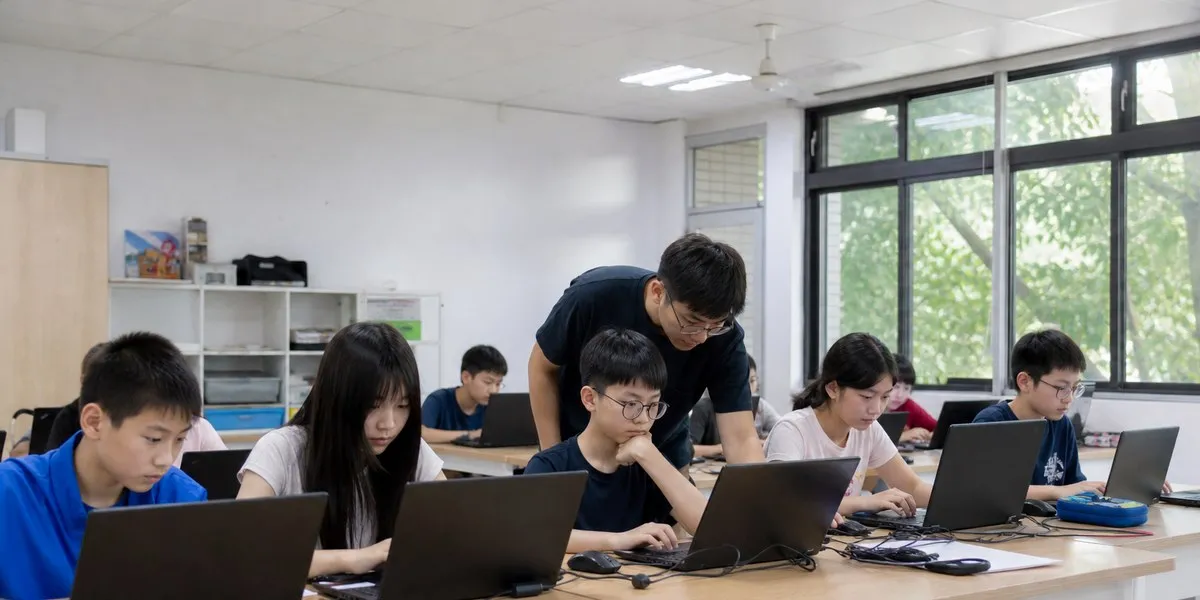
Taiwanese students ranked among the world’s top five in several areas across four international education assessments, including mathematics, science, reading, civic knowledge and digital skills. According to the Taipei Times, Taiwan ranked first in the world in civic knowledge and computational thinking among participants in the respective studies.
Results of international studies
In TIMSS 2023, which involved 70 countries and education systems, Taiwanese fourth-grade students ranked second in mathematics and third in science. Eighth-grade students ranked second in both subjects.
In the ICCS 2022 civic education study, Taiwan ranked first in eighth-grade students’ civic knowledge. About 24 countries and education systems took part in this assessment.
According to the results of ICILS 2023, which assesses eighth-grade students’ computer and information literacy and computational thinking, Taiwan ranked first in computational thinking and fourth in computer and information literacy. Thirty-five countries and regions participated in the study.
More current news is available on the UA.News Telegram channel Telegram.
In PISA 2025, which covers 15-year-old students from approximately 91 countries and education systems, Taiwan ranked fourth in science and mathematics, third in reading, and fifth in computational problem solving.
Assessment of education reform
Education Minister Zheng Ying-yao called the students’ results a source of pride and thanked teachers and parents. According to him, educators are “unsung heroes who support Taiwan’s human resources and the development of its technology industry.”
Tseng Fen-lan, deputy director of the National Taiwan Normal University Center for Educational Research and Evaluation, said that Taiwan belongs to the world’s leading group in academic, digital and civic literacy. She linked these results to stable basic education, traditions of teaching mathematics and science, curriculum reforms, and sustained work in reading, information technology and civic education.
Deputy Education Minister Changliao Wan-chien said that international assessments can help identify students’ learning outcomes and areas requiring improvement when education programs and policies are reviewed.




