
Ukrainian children living abroad will be able to receive a high school diploma without having to repeat a grade
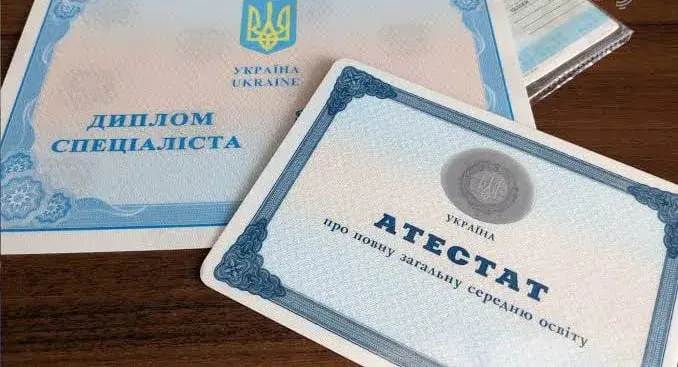
Ukrainian schoolchildren who are currently abroad due to the full-scale war will be able to receive a Ukrainian high school diploma without having to repeat the entire curriculum.
To this end, a mechanism has been established to recognize academic achievements from foreign educational institutions and to ensure mastery of the Ukrainian studies component. Children will be able to study under this program both in person and remotely.
To this end, the government has provided for the possibility of transferring academic credits earned at foreign schools in combination with the study of Ukrainian studies subjects.
The issue of ensuring education for Ukrainian children abroad was raised by Olena Kondratyuk, Deputy Speaker of the Verkhovna Rada. According to her, based on estimates cited in a September 2026 report by the Ministry of Education and Science of Ukraine and the Accounting Chamber, between 320,000 and 400,000 Ukrainian children are currently studying outside Ukraine. Kondratyuk emphasized that one of the state’s key tasks remains maintaining these children’s connection to the Ukrainian education system, as well as creating conditions for their return after the war ends.
In particular, she inquired about the effectiveness of mechanisms for reintegrating schoolchildren, simplifying the recognition of educational documents, and opportunities to study the Ukrainian language in educational institutions in other countries.
Responding to the question, Prime Minister Serhiy Koretsky emphasized that Ukrainian children abroad remain one of the priorities of the state’s education policy.
“Our children abroad are our children; they are Ukrainian children. And we must do everything we can to ensure that, once the danger of war has passed, they return to Ukraine to support and develop the Ukrainian economy,” Koretskyi stated.
According to the head of government, education is one of the most important tools for maintaining the younger generation’s connection to Ukraine. At the same time, he acknowledged that children who are already attending schools in their host countries often lack the opportunity to fully master the Ukrainian curriculum at the same time due to an excessive academic workload.
How Ukrainian students abroad can obtain a high school diploma
To address this issue, the government has proposed a “Ukrainian studies” component that allows students to combine their studies at a foreign school with courses necessary to maintain a connection to the Ukrainian educational system. According to the Prime Minister, this program can be completed either directly at educational centers abroad or remotely through Ukrainian schools.
“It [the program—ed.] can be completed at verified centers operating in other countries—there are already more than 120 of them—which have been verified by the Ministry of Education. It can also be done remotely through Ukrainian schools that operate online,” Koretsky explained.
The program provides that, during time outside of their regular school hours, Ukrainian children study the Ukrainian language, Ukrainian history, Ukrainian geography, cultural studies, as well as individual subjects of their own choosing. In other words, students do not need to repeat the entire curriculum they are already studying in schools in their host countries.
As the head of government explained, in accordance with the agreements reached, the Ukrainian side may recognize academic achievements earned abroad. And after completing the Ukrainian studies component, the child will also be able to receive a Ukrainian certificate of completion of secondary education. This, in particular, opens the door to admission to Ukrainian universities and allows students to remain part of the Ukrainian educational and cultural environment.
In addition, the government is collaborating with Ukrainian communities abroad—particularly religious ones—to support the activities of educational centers and provide them with educational materials.
Ukrainian as a Second Foreign Language in European Schools
Special attention was given during the discussion to the possibility of studying Ukrainian as a second foreign language in schools across European countries.
Olena Kondratyuk noted that this practice already exists in a number of countries that have taken in Ukrainian refugees. According to her, approximately 45 Polish schools are already working in this direction. Similar approaches are being implemented in some educational institutions in the United Kingdom and Austria. The MP also highlighted France’s active role in this regard. In her view, expanding such opportunities will allow Ukrainian children to take the relevant exams in their host countries while maintaining their knowledge of their native language.
Kondratyuk also emphasized that introducing Ukrainian as a second foreign language could serve as an alternative to studying Russian in European schools. She called on Ukrainian authorities to intensify cooperation with the ministries of education of European Union member states to promote this practice.
Some Ukrainian children abroad may remain outside the education system
Another problem highlighted by the Deputy Speaker of the Verkhovna Rada was the absence of some Ukrainian children from the educational institutions’ registration systems.
Kondratyuk emphasized that during meetings with education ministers from European countries, it became clear that some Ukrainian children are not attending either local schools or taking distance learning courses at Ukrainian educational institutions. She called this a serious gap that requires attention from Ukrainian authorities and the education departments of the host countries.
According to Kondratyuk, Ukraine must maintain constant contact with these children, ensure their access to education, and create conditions under which they can remain part of the Ukrainian educational system even during extended stays abroad.
Prime Minister Serhiy Koretskyi announced this during his address to parliament on October 16.
Lubinec stated that it is becoming increasingly difficult for Ukrainian children abroad to attend Ukrainian schools online.
Earlier, the Ukrainian Center for Educational Quality Assessment commented on the situation in the Odesa region, where participants in the National Multidisciplinary Test spent nearly 13 hours at the testing center due to prolonged air raid alerts. According to the agency, graduates were offered the option to reschedule the exam for an additional session, but they refused and decided to wait until the testing was over and take the NMT that same day.
An alternative bill to change the format of the National Multisubject Test (NMT) has been registered in the Verkhovna Rada. The bill proposes reducing the number of subjects to be tested from four to three. In this case, mathematics would be an elective subject.




