
Regional Auslan interpreters in Australia report losing work to online services
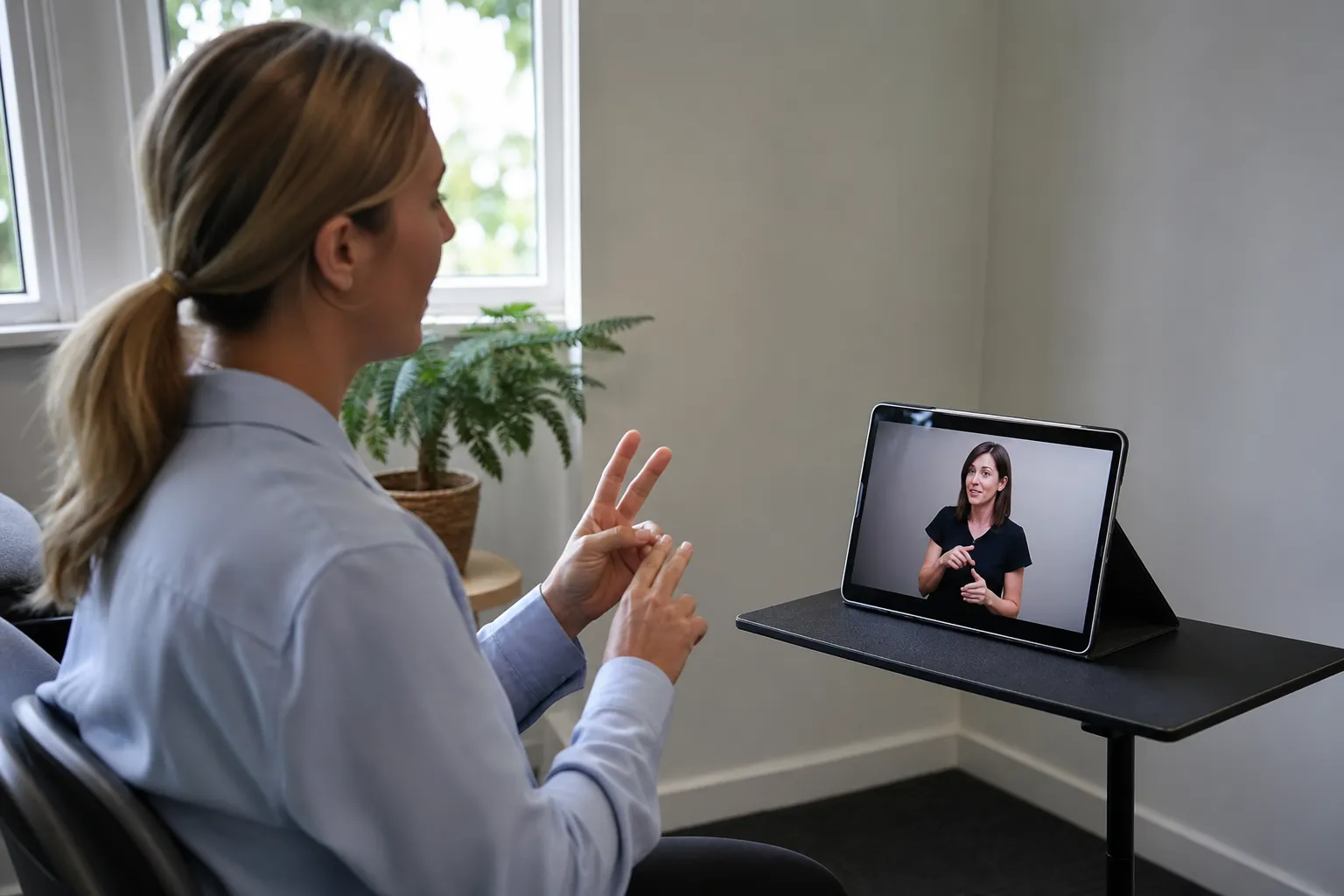
In Australia, registered Australian Sign Language (Auslan) interpreters working in regional areas report losing assignments amid the spread of video interpreting, mobile applications and artificial intelligence technologies. At the same time, these tools are expanding access to services for deaf and hard-of-hearing people in places where it is difficult to find a specialist for an in-person appointment, ABC News Australia reports.
Interpreter Cindy Murray, who worked in regional Victoria, resigned at the beginning of the year. According to her, demand for in-person interpreters exists, especially among residents of rural and regional areas. However, agencies are reluctant to cover travel costs and do not always prioritize in-person appointments over virtual services.
Murray said that one agency told her there was no work in regional areas. At the same time, deaf clients told her that when they tried to book an interpreter, the same agency said that no specialists were available and offered a virtual interpreter or automated real-time captioning.
Opportunities and limitations of technology
AI captioning systems record spoken conversation and reproduce it as text in real time. However, they do not translate responses from Auslan into spoken language, so this format is not always suitable. Virtual interpreters can work remotely, appearing on screen and interpreting via video link; this is often cheaper than the specialist being present in person.
More current news is available on the UA.News Telegram channel Telegram.
Murray noted that some people view AI positively, while others prefer in-person communication. She also expressed the opinion that the shortage of interpreters may worsen because of their working conditions.
The position of services for deaf people
Brent Phillips, head of service delivery at the national organization Deaf Connect, said that his organization primarily takes the client's choice into account: if a person prefers an in-person interpreter, the company does everything possible to provide one. If such a specialist is unavailable, they look for an alternative solution together with the client. Phillips acknowledged that AI is changing the Auslan interpreting sector but stressed that technology will not replace interpreters.
Deaf Victoria representative Gary Kerridge called the shortage of in-person interpreters a widespread problem, as demand is high and specialists are often busy. He helped introduce trials of the Convo app, created in 2021 by a company owned and run by deaf people. For a fee, the app makes it possible to connect with an Auslan interpreter at any time, while qualified specialists from different regions of the country can take assignments when they are available. The Ballarat City Council in Victoria is among the trial participants. According to Kerridge, Convo engages human interpreters and is not intended to displace the in-person format, as not all interpreting tasks are suitable for online delivery.


