
Australia recalls South Australia’s largest flood in history
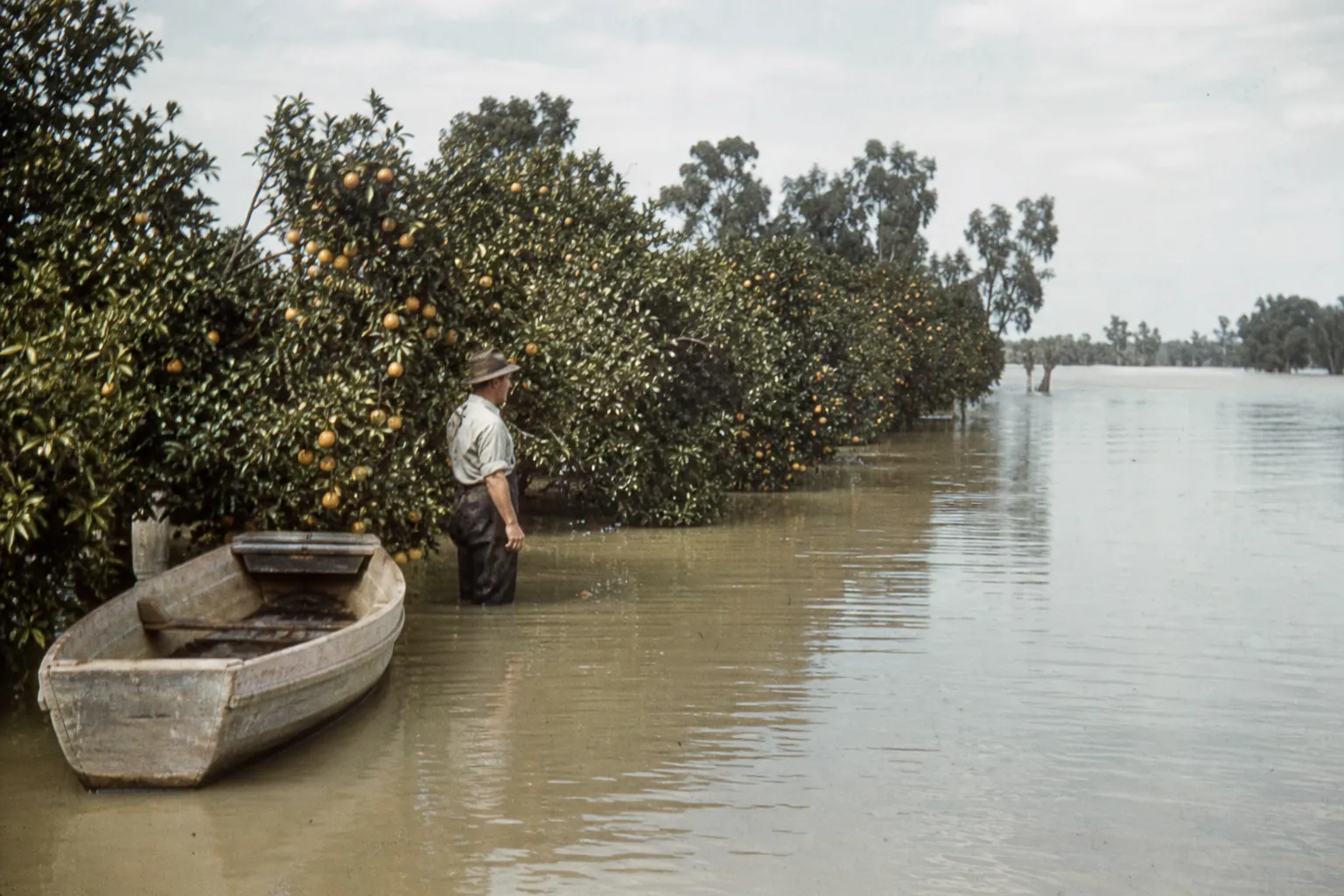
In Australia, residents of the Riverland region recalled the 1956 flood on the Murray River — the largest flood in South Australia’s recorded history. In Renmark, the water reached about 9.1 metres in August 1956, ABC News Australia reports.
Sandbags and film footage
John Peterson, now 88, was in his first year of university during the flood. He travelled to his hometown of Kingston-on-Murray to fill sandbags and load soil into dump trucks. According to him, forecasts for the height of the water and its arrival time were inconsistent, so the situation changed every day.
Peterson said the water flow reached about 300,000 megalitres per day, while 10,000 megalitres per day was usually considered a good figure. The flood destroyed or damaged a number of buildings, including a local garage, shop and bank. Residents organised joint work on the riverbanks every day and provided food for workers.
Peterson also filmed the aftermath of the disaster with an 8mm Eumig C3 camera his parents had given him a year earlier. At first, he used black-and-white film, but because of the dramatic nature of the events, he began filming in colour.
More current news is available on the UA.News Telegram channel Telegram.
Oranges were picked from boats
Loxton resident Theo Kessler, who was eight during the flood, remembers picking oranges from a neighbour’s tree while sitting in a rowboat. The Kessler family home was not affected. According to him, many farmers had to harvest citrus fruit from boats because of the high water level.
Kessler described the water as an ocean wave and said he sometimes heard riverbanks collapsing. A eucalyptus tree photographed during the peak of the flood still grows on his property. He shows visitors the level to which the water rose, but they often do not believe it was that high.
Damage and mutual aid
The flood occurred after several months of heavy rain in Australia’s eastern states, which caused large volumes of water to pass through the lower part of the Murray-Darling Basin. In 1957, the Sunraysia Daily, citing the minister for national development, reported that total damage in Australia exceeded £5 million — more than $204 million in modern equivalent.
Local historian Meredith Arnold, who was 16 at the time of the flood, called mutual aid among Riverland residents the main lesson of that period. She noted that many men had returned from the war about 10 years before the disaster and had experience organising and carrying out joint work.


