
In Spain, the remains of a Diplodocus were discovered for the first time outside North America
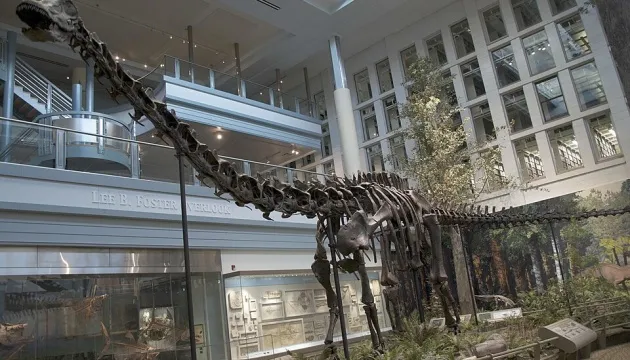
Paleontologists have discovered the remains of a Diplodocus in Spain, marking the first evidence of these long-necked dinosaurs outside North America.
Researchers found 14 vertebrae and several chevrons (bony arches on the underside of the tail vertebrae) in eastern Spain. This dinosaur is estimated to be about 150 million years old.
Until now, fossilized remains of this long-necked, long-tailed herbivorous dinosaur had only been found in North America.
“This discovery is the first evidence of Diplodocus outside North America and one of the most compelling pieces of evidence for the exchange of continental faunas between North America and Europe during the Late Jurassic,” the paleontologists stated.
During the age of the dinosaurs, the continents were just beginning to drift apart. Scientists have hypothesized that temporary land bridges existed in the ancient ocean, episodic retreats of the sea, or other temporary pathways that occasionally allowed land-dwelling dinosaurs to traverse the vast distances between continents.
Recent paleontological discoveries, particularly in Spain and Portugal, confirm this hypothesis. These findings pertain to a section of a land bridge believed to have connected the Iberian Peninsula with the territory of modern-day Canada.
Another route connected North America with Scandinavia, and yet another linked the territory of modern-day Brazil with Cameroon.
This was reported by DW.
A new species of giant dinosaur has been discovered in Thailand.
The remains of a giant dinosaur have been discovered in Argentina.
Dinosaurs weren’t exactly like lizards: scientists have revealed what their skin was like.
As a reminder, the oldest wooden tools were found in Greece.
Archaeologists also found artifacts from the Kievan Rus’ period during excavations.


