
Scientists refine diamond’s melting temperature under extreme pressure
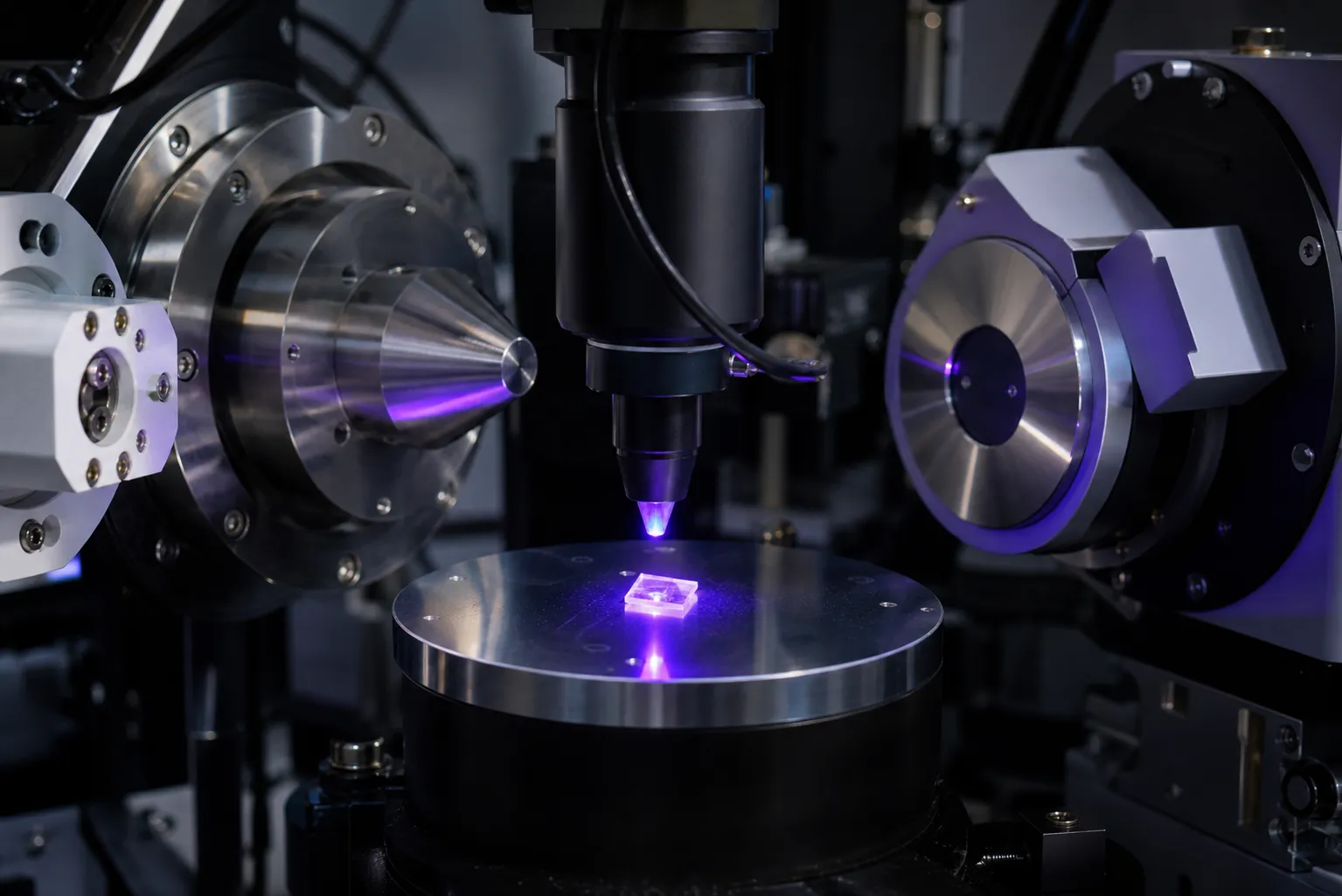
Using a powerful ultraviolet laser, researchers melted samples of synthetic diamond and refined its melting temperature under ultra-high pressure. The new measurements showed that previous experimental estimates had been overestimated by more than 700 degrees Celsius, Live Science reports.
Laser shocks and measurements
Scientists directed a laser at small plates of synthetic diamond, creating shock waves. Under their impact, the material changed from transparent to mirror-like, and a significant increase in reflectivity became one of the signs of melting.
The team also measured the brightness of the samples’ glow during the experiment, which made it possible to determine the melting temperature more precisely. Study co-author Marius Millot, a research scientist at Lawrence Livermore National Laboratory, said the samples were compressed by a shock wave to temperatures higher than the surface temperature of the Sun and pressures greater than those at the center of Neptune and Uranus.
The results of the study, published on August 13 in the journal Nature Physics, brought experimental data into agreement with theoretical models. Previously, the difference between earlier measurements and model predictions reached 1,244 degrees Celsius — approximately 20%.
More current news is available on the UA.News Telegram channel Telegram.
Diamond in liquid carbon
Using X-ray diffraction, the researchers found that before melting, diamond did not transition into another solid form of carbon. According to the authors, more energy may have been needed to rearrange the atoms. At the same time, they suggested that several consecutive shocks could cause such a phase transition.
At pressures of approximately 660 to 1,060 gigapascals and a temperature of about 6,727 degrees Celsius, diamond can exist as solid fragments in liquid carbon. Under such conditions, liquid carbon has metallic properties, conducts electricity, and is denser than diamond.
These data are important for nuclear fusion research, where lasers compress diamond capsules containing deuterium and tritium. They may also improve models of the internal structure of Uranus and Neptune, where, scientists suggest, layers of liquid carbon and solid diamonds may exist.




