
Video: How Europe Experienced the Solar Eclipse
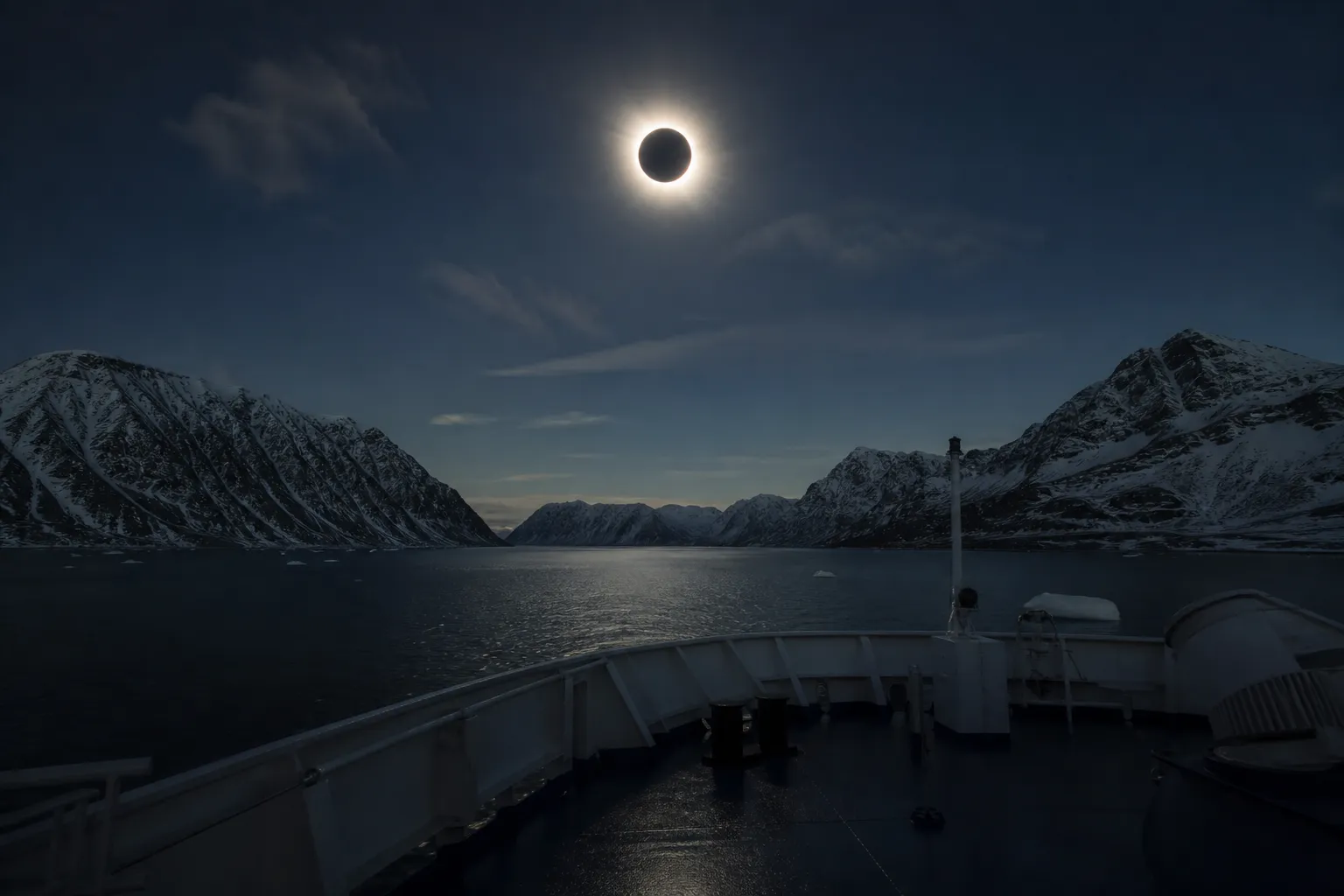
On the evening of August 12, a solar eclipse took place: the Earth, the Moon, and the Sun aligned in a straight line, causing the Moon’s shadow to completely cover the Sun’s disk.
The eclipse was best viewed in southern Europe—in Spain and Portugal. It peaked at 8:33 p.m. local time in Spain and at 7:36 p.m. in Portugal.
️ Look up and relive the #Eclipse from @domainechambord. The next one will take place in 2081. pic.twitter.com/lMJX2RqSez
— Château de Chambord (@domainechambord) August 13, 2026
The next one in 100 years? pic.twitter.com/ArCPL3Jrwg
— Donald Tusk (@donaldtusk) August 12, 2026
Beautiful photo of the total eclipse in Valencia, Spain ❤️ pic.twitter.com/FKlcgF4hif
— Carlos Eduardo (@carlos_edddo) August 13, 2026
The Olympic professional skateboarder and the photographers totally nailed it pic.twitter.com/LTO86C8Ku6
— La Vermu (@Vermutin2) August 12, 2026
The first photos of the total phase of the solar eclipse on August 12, 2026, were captured over the Skorsby-Sun fjord in Greenland. The photos were taken from the deck of the MS Spitsbergen, which was participating in an HX Expeditions cruise to observe the eclipse.
During a live broadcast of the solar eclipse on August 12, NASA displayed a map on which the temporarily occupied Crimea was marked as part of Russia. This sparked outrage due to the inaccurate depiction of Ukraine’s internationally recognized borders.


