
High Court of Australia hears appeal in James Cullen case
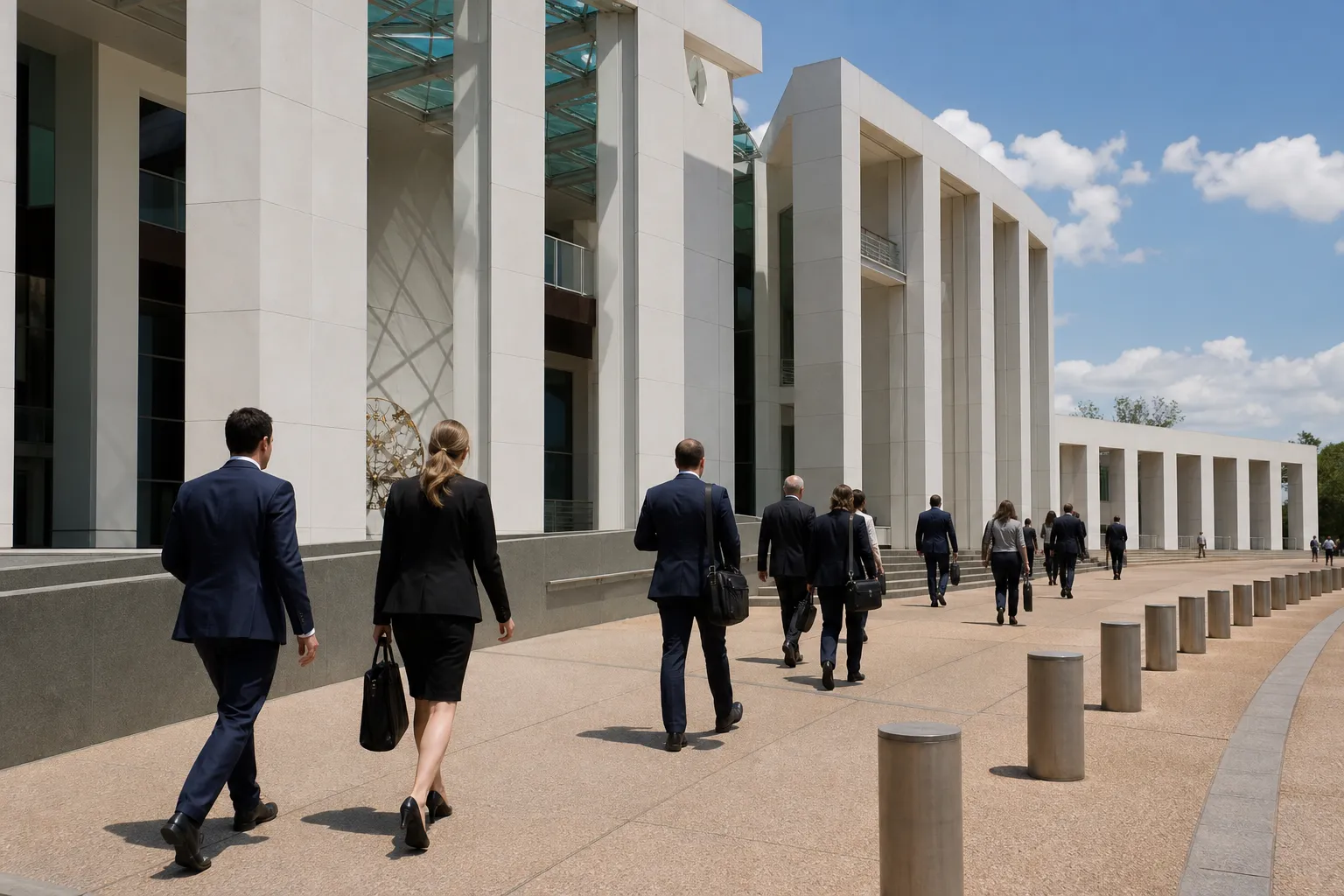
The High Court of Australia in Canberra heard an appeal in the case of James Cullen, chief of staff to New South Wales Premier Chris Minns. The dispute concerns the legality of a procedure under which Cullen could have been arrested and compelled to appear before a parliamentary committee after refusing to attend an inquiry into the leak of confidential minutes, ABC News Australia reports.
Parliamentary powers
In December last year, the New South Wales Court of Appeal found that the mechanism for compelling witnesses to appear, dating back to the 19th century, was invalid. Other people subsequently also relied on the decision in Cullen's case to avoid questioning by representatives of the state legislature.
The case concerns sections 7–9 of the Parliamentary Evidence Act 1901. Under these provisions, the President of the Legislative Council may certify the absence of a summoned witness before a judge of the state Supreme Court. The judge was then required to issue an arrest warrant to bring the person before a chamber of parliament or a committee to give evidence.
The Court of Appeal considered this role of the judge to be a constitutional flaw in the scheme. In the court's view, the judge had no choice but to sign and seal the warrant, creating the appearance of a judicial decision on a matter that had essentially already been decided by the President of the Legislative Council.
More current news is available on the UA.News Telegram channel Telegram.
Arguments and costs
The appeal by Legislative Council President Ben Franklin was heard by a panel of five judges led by Chief Justice Stephen Gageler. Representatives of the Commonwealth of Australia, South Australia and the Northern Territory also took part in the case.
Franklin's lawyer, Bret Walker, said that the Court of Appeal's conclusion was inconsistent with the history of Australia's Constitution. He noted that the warrant powers in the 1901 Act had previously been vested in the Supreme Court under the Parliamentary Evidence Act 1881. Cullen's representative, Brendan Lim, countered that the principle of non-interference by the courts in parliament's internal affairs does not mean that a court is obliged to lend its authority to such procedures.
According to Stephen Reynolds, Clerk of the Parliaments and the Legislative Council, the defence in the original case cost $443,518, while the costs of the High Court appeal stood at $384,620 as of July. Franklin was also ordered to pay Cullen about $250,000 in legal costs; Cullen's legal services are covered by a government grant. New South Wales Opposition Leader Kellie Sloane criticised the use of taxpayers' money in the case, while Cullen declined to comment.
The Coalition has introduced a bill to restore powers to compel witnesses to attend parliamentary inquiries. The state government is not considering the initiative until the High Court appeal proceedings are completed.


