
Since 1979, Greenland and Antarctica have lost more than 11 trillion metric tons of ice
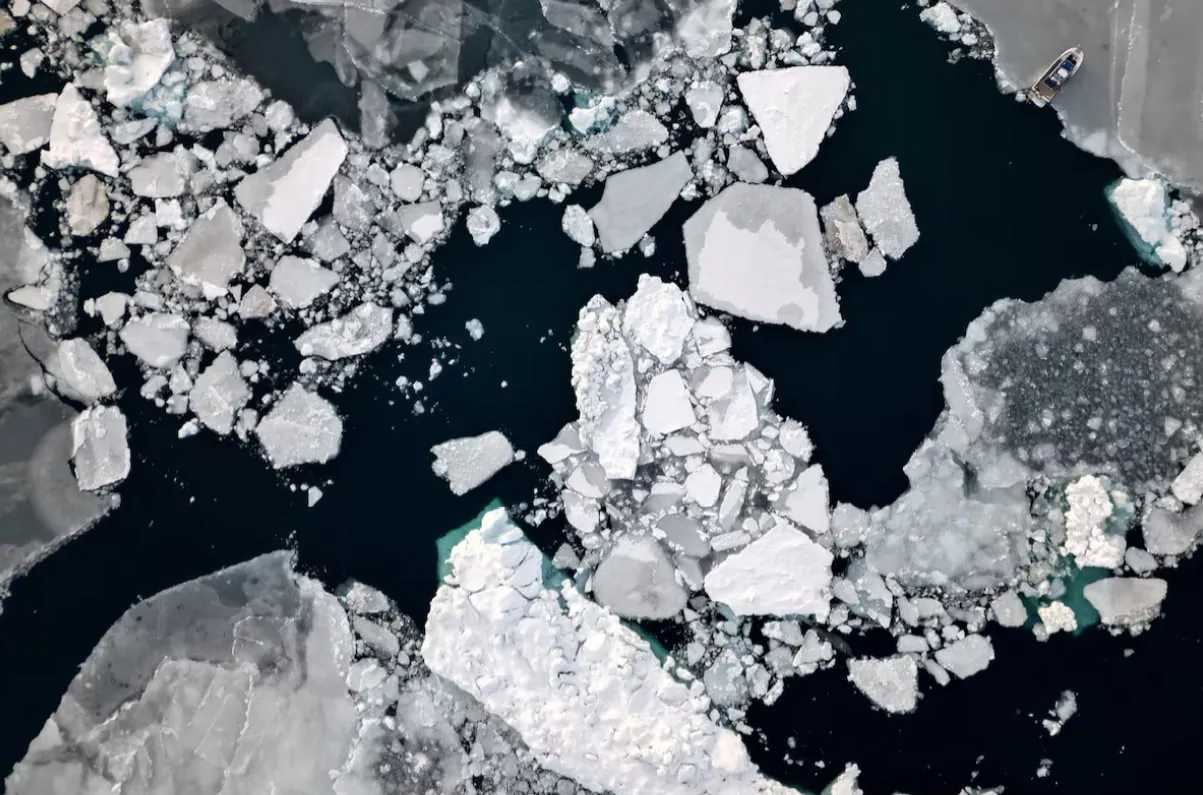
A new study based on satellite data from the 1970s has documented significant ice loss in Greenland and Antarctica. These are the Earth’s two largest ice sheets, and their melting contributes to rising global sea levels.
Between 1979 and 2023, Greenland and Antarctica collectively lost 11.3 trillion metric tons of ice. This has caused a 3.14-centimeter rise in global sea levels, according to the new study by an international team of scientists.
The study, which uses the longest-ever series of satellite observations of changes in ice sheets, was conducted by an international team of scientists—the Ice Sheet Mass Balance Inter-Comparison Exercise (IMBIE) project team. According to the authors, the results provide the most comprehensive picture to date of ice loss in Greenland and Antarctica and offer further confirmation of the consequences of human-induced climate change.
To put this enormous amount into perspective, 11.3 trillion metric tons of ice would be enough to fill a cube 23 km high, explained climatologist Inés Otosaka.
About 60% of the ice loss occurred in Greenland, even though its area is about eight times smaller than Antarctica’s. These losses already account for about a quarter of the total sea-level rise. Meanwhile, with every additional centimeter of sea-level rise, between 2 and 3 million people are at risk of annual coastal flooding.
The data also showed that ice loss began in the 1990s and has been increasing ever since. The rate of ice sheet retreat in the 2010s was about four times higher than in the 1980s.
Separately, the study noted a slowdown in ice loss between 2020 and 2023; however, according to scientists, this is a short-term fluctuation rather than a reversal of the long-term trend: unusually heavy snowfall in East Antarctica offset some of the losses from glaciers in other parts of the continent, as well as surface melt. At the same time, 84% of the lost ice was not due to surface melting but to accelerated glacial outflow into the ocean—this indicates that the long-term trend is driven by the response of ice sheets to ocean warming.
According to the researchers’ estimates, the sea-level rise caused by these losses poses an additional risk of coastal flooding and erosion for 6–9 million people worldwide.
Source: Reuters.
As a reminder, Antarctica gained a record 695 billion metric tons of ice over two years.
Antarctica is rapidly becoming greener due to climate change.
We previously reported that Ukrainian polar explorers managed to observe the southern aurora near the “Akademik Vernadsky” research station.
We also recall that Russian research vessels discovered reserves of 511 billion barrels of oil in the British Antarctic Territory, which is approximately 10 times the total 50-year production of the North Sea.


