
MBDA plans Hydis flight tests by the end of 2029 — Defense News
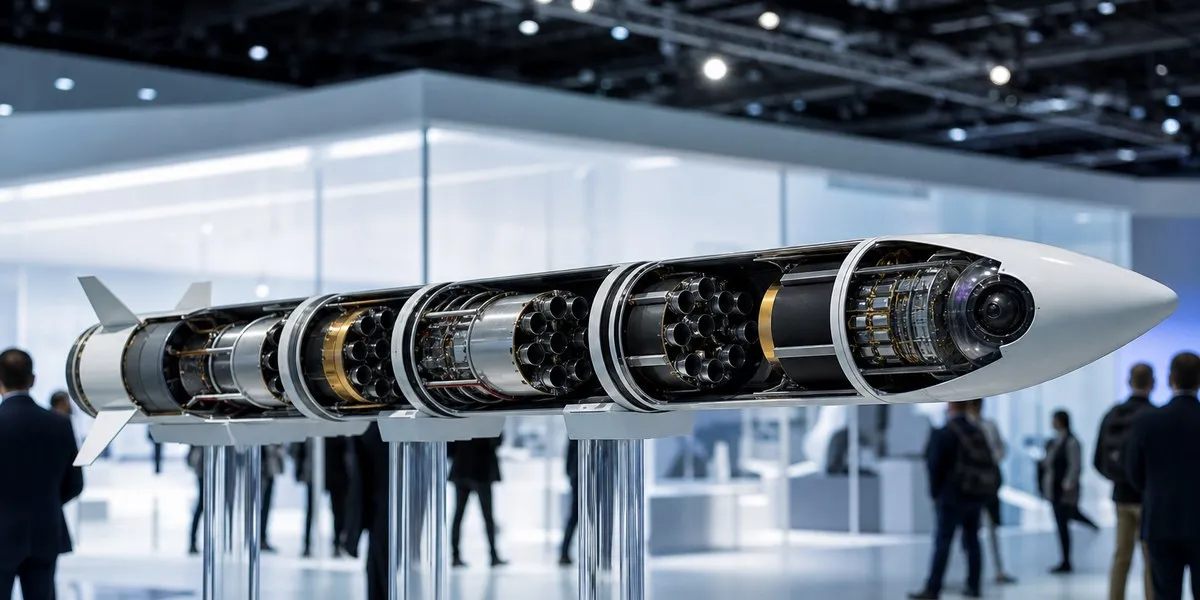
A European consortium led by MBDA plans to conduct flight tests of a full-system demonstrator of the Hydis hypersonic interceptor by the end of 2029. Lionel Mazenq, a company representative, announced this at the Euronaval exhibition in Paris, France, Defense News reports.
Hydis is competing with the Hydef program, coordinated by Spain's Sistemas de Misiles, for €100 million in European Defence Fund financing for the second stage of development. A decision on allocating the funds is due at the end of the month. The fund plans to finance only one of the two proposals under the 2026 work program.
Testing and funding
The current three-year Hydis phase will run until May 2027. It received €80 million in European funding and another €57 million from France, Italy, Germany and the Netherlands. At this stage, the consortium is conducting ground demonstrations to raise the technology readiness of individual solutions to the third or fourth level on a nine-level scale.
The second phase is planned for the period from mid-2027 to mid-2029. It will include full-scale flight tests. The consortium is expected to include 36 industrial and scientific partners and 14 subcontractors, while 19 companies are currently participating in the project. In particular, Safran is to supply terminal-guidance sensors, while Thales, Saab and Leonardo are to provide communications and data-transmission systems.
More current news is available on the UA.News Telegram channel Telegram.
Intercepting hypersonic targets
MBDA unveiled the concept of a four-stage interceptor missile designed to engage both hypersonic targets moving horizontally at medium altitudes and ballistic missiles following a steeper trajectory. The system is to operate on the principle of kinetic target destruction and use technologies developed for the Aster air-defense missile for flight control, while high-power solid-propellant motors will be supplied by Italy's Avio.
According to Mazenq, a key element of interception will be predicting the trajectory of maneuvering hypersonic glide vehicles at altitudes of 30 to 45 km. Artificial intelligence is planned to be used for this purpose, calculating the point and time of interception in real time after the target is detected. The project provides for engaging a target with a maximum of two missiles, while the closing speed of the target and interceptor may reach 5 km per second.
Production of the interceptor is scheduled to begin in the first half of the 2030s. The missile, about seven meters long, is to be compatible with Mark 41 shipborne vertical launch systems and a future version of Naval Group's Sylver VLS.




