
Over the course of a week, NATO fighter jets escorted Russian aircraft five times
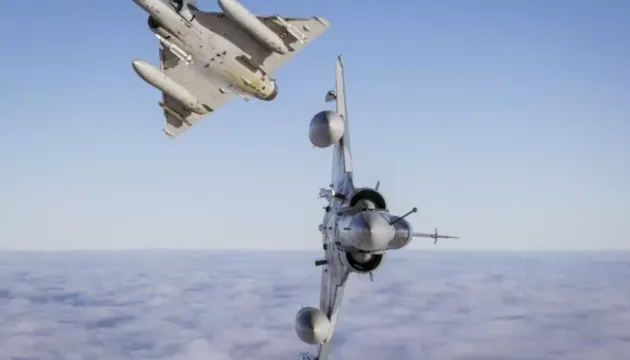
Last week, fighter jets from NATO’s air patrol mission in the Baltic states took to the air five times to identify and escort Russian military aircraft. Most of these aircraft were flying without pre-submitted flight plans.
The agency noted that on October 1, an An-26 transport aircraft was identified flying without a flight plan and with its transponder turned off. However, the crew maintained radio contact with the regional air traffic control center.
The following day, NATO fighter jets scrambled several times. Initially, two Su-35 fighter jets were detected flying without a flight plan and with their transponders turned off. Only one of the aircraft maintained radio contact with air traffic controllers. Later that same day, two Su-30SM fighters were identified; they also had no flight plan but were using their transponders and maintaining communication with air traffic control.
On the same day, NATO escorted another pair of Su-30SMs. According to the Lithuanian Ministry of Defense, these aircraft were flying without flight plans, with their transponders turned off, and did not establish radio contact.
Another sortie took place on October 3 after an unidentified aerial object was detected, but the crews were unable to locate it.
The Lithuanian Ministry of Defense emphasized that military flights without a flight plan or with transponders turned off regularly trigger NATO fighter jet sorties in the Baltic region. Such missions are conducted to identify aircraft and monitor the situation in international airspace.
The NATO air patrol mission operates on a permanent basis, as Lithuania, Latvia, and Estonia do not have their own fighter jets to protect their airspace.
This was reported by BB.lv, citing the Lithuanian Ministry of Defense.
NATO fighter jets have intercepted Russian aircraft over the Baltic region three times.
The first soldiers from the German brigade, which will be deployed in Lithuania, will move to the Rudninkai military base as early as fall 2026.
NATO fighter jets have sharply increased the number of intercepts of Russian aircraft.




