
Fedorov Before His Dismissal: “It’s Time for Us to Have a Mature Conversation”—Key Statements from the Press Conference
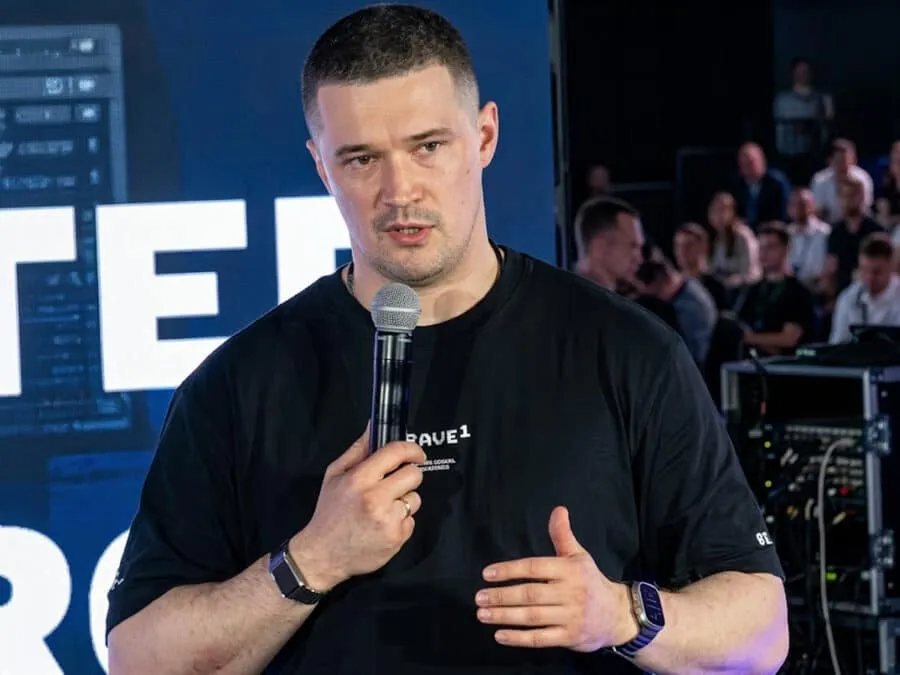
Defense Minister Mykhailo Fedorov held an emergency press conference today before stepping down from his post. “It’s time for us to have a grown-up conversation,” he began. Indeed, in recent days, numerous speculations and theories have circulated regarding his resignation. Fedorov himself publicly explained for the first time his view of the reasons for his dismissal, spoke about conflicts within the system, the reform of the Ministry of Defense, mobilization, and the digitization of the military, and outlined the problems that, in his opinion, require immediate resolution.
One theory that has been actively discussed on social media in recent days was the idea that the large-scale government reshuffle served merely as a pretext for replacing the head of the Ministry of Defense, and that the widespread personnel changes were intended to make this decision less conspicuous. There were also speculations that, after taking office at the Ministry of Defense, Fedorov disrupted some of the established mechanisms of defense procurement by changing decision-making principles to prioritize the actual needs of the front lines, which affected the interests of influential groups. Another assumption was that the excessive public visibility and high approval ratings of certain members of the ruling team could be perceived as a potential political risk, and therefore such figures sooner or later find themselves out of the government.
Fedorov did not directly confirm whether these assumptions were true. At the same time, during a nearly two-hour press conference, he answered questions from journalists and members of parliament in detail, effectively presenting his own version of the reasons for his resignation and his view of what is currently happening in Ukraine’s defense sector. So, here’s what Mykhailo Fedorov said.
On his work in Zelenskyy’s team
“I didn’t build a political career, didn’t start my own companies, and didn’t engage in business. Among the president’s inner circle, I’m probably the person who valued him the most. And I never let him down. Just as I never let you down. There were no corruption scandals, no schemes were set up. We built a digital state. If you look at public opinion polls, this is probably one of the few reforms that Ukrainians consider a success.”
How Ukraine Became a Country of Drones
- “Today, 95% of our enemy kills come from drones. We defend our skies with drones. It all began back in 2022, when we opened the market to drone manufacturers, launched the ‘Drone Army,’ and began purchasing the first maritime drones and the first deep-strike drones. At that time, the Ministry of Defense wasn’t buying drones at all. We essentially built this market from scratch.”
- “When we proposed opening the market for interceptor drones and allowing private companies to test them in combat conditions, everyone was against it. But at the General Staff, the president said, ‘We’re going into battle.’ We made that decision. Today, these interceptors shoot down 70–90% of the Shaheds.”
- “Over the past five months, we’ve purchased more drones than in all of last year. But most units haven’t even noticed this, because distribution is done manually: the loyal get them, the disloyal don’t. It took us four months to approve a basic plan for providing drones to the brigades.”
On the “eBaly” system and the digitization of the army
- “We created the ‘eBaly’ system. It’s essentially Amazon for war. Units receive electronic points for confirmed enemy kills and can independently purchase the necessary drones through the Brave1 Market. This allows us to quickly acquire new technologies and stay ahead in the innovation cycle.”
- “We’ve created a registry of military personnel for the first time. It’s currently 95% complete. This registry is built on SAP and a system that collects information directly from the field.”
- “The registry will provide insight into a service member’s entire life cycle: from receiving a draft notice to their place of service, training, combat deployments, and pay. We’ll be able to view all information about an individual and analyze it.”
- “In the coming days, the digital military ID was set to launch—just like the digital passport in the ‘Diia’ app. Every service member will have a digital profile containing complete information about their service, equipment, and other details.”
On funding the most effective units
“Our logic was simple: if there’s no time to build a perfect system, we need to support the strongest units. That’s exactly why we began directly funding the most effective units—‘Madyar,’ ‘Achilles,’ ‘Rarog,’ K-2, ‘Alpha,’ and others. They began receiving billions of hryvnias and investing them in developing their capabilities.”
On robotic systems
“Last year, we contracted for 12,000 ground-based robotic systems, even though many people were opposed to it. This year, we’ll be purchasing 50,000. That’s a record number. Today, the government is buying up practically everything that’s being produced.”
On Operation “Ashan”
“We carried out Operation ‘Ashan,’ during which, over the course of several nights, thousands of drones destroyed more than 700 pieces of Russian military equipment. After that, from May through October, the enemy did not carry out a single mechanized attack. This year, we repeated the operation and destroyed another 250 artillery systems in two nights.”
On the agreement with Elon Musk
“When the first Shahed drone equipped with Starlink appeared over Kyiv, we realized that if we didn’t shut down Starlink for the Russians right away, it would be a disaster. I spoke with Elon Musk. He agreed to do it, but changed the registration rules for large countries. Thanks to the fact that we had already built a digital state, we were able to re-register a huge number of terminals in just a few days through “Diy” and the Administrative Service Centers. SpaceX was shocked by the speed with which Ukraine implemented this.”
On the main challenges facing the Ukrainian army
- “We are fighting primarily at the tactical level, while Russia is operating at the operational level. The corps system still isn’t functioning as it should. There are corps that are advancing and have become a model, while in others, it’s not even clear how many brigades there are or what’s going on.”
- “There are brigades that can’t even say how many battalions they have. A battalion is pulled out of one brigade and thrown into another. Commanders are constantly changing: someone arrives, works for a month—and is then removed. In such a system, it’s impossible to establish effective command and control or to plan anything.”
- “Decisions about who to support, who to reinforce, and who to fund are often made not based on data. They’re made based on loyalty. And it’s impossible to build a system that way.”
- “In six months, we were unable to establish centers of excellence, change the organizational structure, or transfer the necessary personnel to the Ministry of Defense. The General Staff wouldn’t even approve the structure for purely formal reasons. A country at war is effectively blocking its own reforms.”
- “If someone starts showing results, they begin to be targeted. They’re prevented from signing documents, decisions are blocked, and they’re swamped with red tape. This is a constant problem. Systemic projects are very difficult to implement precisely because of this approach.”
- “I think that after this speech, Drapatiy will receive his fourth reprimand. But we no longer have the right to remain silent about these problems.”
On the Need for Changes in Military Leadership
- “We promised today that we need to talk like adults. In fact, we have no other choice if we want to defeat the enemy asymmetrically, with minimal losses. We need strong leaders and commanders who will grow and develop, rather than those who are stifled, reprimanded, or simply have their initiative crushed.”
- “A modern, technology-driven organization requires a completely different kind of leadership and management. It involves working with IT specialists, smart people, and new approaches. It’s a different kind of management.”
- “There are corps that have become a school and a philosophy, and there are corps where we don’t even know how many brigades there are or what’s going on there.”
On the New Model of Warfare
- “We cannot mobilize as many people as Russia does. We need to fight asymmetrically. All we have going for us is technology and asymmetry.”
- “Technology is doing the fighting; we’re losing drones, not people. And only after that do the infantry move in. We must fight for every single person.”
- “We need to avoid losing people where we can. We need to build defensive lines, wear down the enemy as much as possible, and minimize our own losses.”
On reforming the corps system
- “Corps must be responsible for their section of the front, for the troops, drones, artillery, and training. Today, this isn’t happening. As a result, no one is responsible for the front lines.”
- “Logistical support must provide brigades and corps with the resources they need to plan their actions, rather than waiting for manual allocation.”
- “We need to establish an academy of modern warfare. We need a leadership school that will teach modern doctrine and new approaches and train new commanders.”
On Arms Exports and Procurement
- “We have launched a controlled export program, and it will soon be operational. We have also managed to begin cracking down on corruption in procurement. These are only the first steps, but they have already been implemented.”
On the Outcomes of the Technology War
- “Starlink has been a complete game-changer. The Russians haven’t been able to replace it with anything.”
- “Through the ‘eBals’ system, we are eliminating between 27,000 and 35,000 Russians every month.”
- “A proper procurement and financing system has led to a significant increase in the number of targets hit at ranges of over 20 and over 50 kilometers.”
On the conflict with Oleksandr Syrskyi
- “When the president said he had no plans to replace Syrskyi, I fully agreed and said, ‘In that case, I’ll learn to work with him.’ Our client is the Ukrainian people.”
- “We found that all the initiatives we proposed began to be blocked.”
- “Syrskyi isn’t ready to speak openly about problems. He’s willing to attend private meetings, engage in intrigue, and assume that someone has orchestrated a media campaign, rather than acknowledging the real problems.”
- “I didn’t set the condition: either me or Syrskyi. I said, ‘We’ll defeat Russia even with a commander-in-chief like that.’ But it was the commander-in-chief himself who issued the ultimatum.”
- “Syrskyi saved our country in 2022. He took part in the Kyiv, Kharkiv, and Kherson operations. We cannot underestimate that. But the war has completely changed. Technology changes dozens of times a year, and the command system must change as well.”
On the conversation with Zelenskyy after his dismissal
- “The president offered me the position of advisor or suggested I find another way to remain on the team. I declined the position of advisor.”
- “It was never my goal to remain a minister or seek a position for myself.”
- “Today, this isn’t about me. It’s about all of us. We can either close our eyes and pretend everything is fine, or we can honestly talk about the problems and change our approaches.”
- “For seven years, I worked alongside the president to implement reforms and was involved in the most critical areas of the country’s transformation. But today, my task is to show what we’ve accomplished and warn about the risks.”
- “I don’t want to look my children in the eye later and realize that I kept quiet about what’s really going on.”
- “I didn’t come out today to cause a sensation. I simply organized the points I’ve been making all along and highlighted the problems we’re facing and what needs to be done.”
On the reaction of international partners
“Many people are calling. But this is our internal matter. I don’t want international pressure to influence this decision. We must reach an agreement within the country ourselves, stop the Russians, and force them to make peace on our terms.”
On a possible return to the post of minister
- “The Ukrainian people didn’t take to the streets for a specific minister. The Ukrainian people took to the streets for themselves—for the changes that have begun to take place, and to ensure they aren’t undone. Right now, it’s not about me, but about the root of the problem that needs to be solved.”
- “I don’t need the position of defense minister for the sake of the position itself. It is needed only to win the war. Under the current structure, I personally don’t know how this war can be won.”
On Mobilization Reform and the Role of the General Staff
- “It’s impossible to reform the contract system solely through the Ministry of Defense. The General Staff must be a full-fledged participant in this process. Whether people sign contracts depends on the specific unit and the specific commander.”
- “We made a big mistake when we launched the first phase of military transformation. I thought we were already experienced enough, but we didn’t consult with the Ukrainian people, lawmakers, experts, or military personnel. You can’t launch such major reforms that way.”
- “Before moving on to the next stage of mobilization reform, we need to have an open dialogue with society. We need to bring together lawmakers, military personnel, experts, TCC leaders, and the police to forge a new social contract.”
- “This isn’t about the Territorial Defense Centers at all. It’s about where we’re going, how we’re getting there, and what we’re bringing with us. We need to talk to the Ukrainian people about what concerns them most.”
- “The issue of mobilization cannot be resolved without addressing the issues I’ve outlined to you. Young people today aren’t discussing new contracts; they’re discussing the history of the 155th Brigade and specific failures. It is impossible to resolve the issue of mobilization without a new social contract and without real changes in the military.”
- “Look at the Third Assault Corps or ‘Charter.’ They have processes, accountability, doctrine, logistical support, and strong leadership—that’s why they have no problems with mobilization. The ‘Charter’ currently has a waiting list of at least two thousand foreigners who want to join.”
- “The problem lies with our product. We’re selling lies, chaos, and irresponsibility. Ukrainians need respect, proper contracts, defined terms of service, the option to transfer, competent commanders, and social support. Only then will people be willing to take on responsibility themselves.”
On the fight against corruption in procurement
- “We have completely overhauled the procurement system. Whereas before we simply drew up a list of companies, now 80% of drones are procured from the best manufacturers based on combat performance, and another 20% through open tenders. This has significantly improved the quality of what the front lines receive.”
- “We’ve opened tenders for ammunition and drones. We’ve managed to save over $100 million on artillery procurement alone. In some tenders, competition has allowed us to lower the price of each shell by about $1,000.”
- “We terminated a large number of old contracts that were disadvantageous to the state. This sparked fierce resistance, but I cannot in good conscience allow us to buy things the front lines already have enough of, simply because someone needs to fulfill an old contract.”
On corruption within the Ministry of Defense
“When we began to reform the system, it turned out that certain department heads were effectively working in the interests of private companies and even attended meetings alongside law enforcement officials. We began dismissing them, conducting internal investigations, and administering polygraph tests. There were some decisions I simply didn’t have time to sign.”
Why he isn’t naming the commanders
“I don’t want to publicly name and fire people or stigmatize them right now. It’s the new leadership’s job to conduct an audit, evaluate all the data, and make decisions. My job right now is to ensure the country’s defense capabilities aren’t compromised.”
Why the president didn’t support Fedorov
“I don’t believe the president has already taken sides. We worked together for seven years and never let each other down. Right now, everyone is acting according to their own vision. The president is listening to the Ukrainian people, and I’m confident the situation will be rectified.”
On the dismissal
- “There were no specific arguments about what exactly was wrong with my work. There was general dissatisfaction, which the media has already reported on: the military leadership believes that I’m getting in their way or not helping enough. But no one ever told me this to my face. I’m used to working differently—if I made a mistake, I admitted it, reversed the decision, and apologized. I didn’t engage in intrigues or information campaigns.”
- “As for the conversation with the president—there was no ‘either Syrskyi or me’ scenario. I think the decision had already been made. I can’t say anything fundamentally new on this matter.”
On the mobilization of young people
“People ask me if I was against certain decisions regarding young Ukrainians. The answer is simple: the decision was made; I was a member of the team, so I supported it.”
An appeal to lawmakers
- “Everyone should do what their conscience tells them to do. Don’t be afraid that there will be problems later, or pressure, or that someone will stop inviting you places. I’ve always built teams on values—people come up with ideas on their own and work hard because they believe in a shared mission. That’s exactly how politicians should act.”
- “For seven years, I worked on the president’s team and did many things as a team player. But now I feel that we need to at least speak honestly about the problems. I may be wrong, but if someone has a different vision—let them propose it. I act as I see fit, and I won’t be ashamed.”
- “If you’re unhappy with the lack of independent institutions—make them independent. If you’re unhappy with the lack of civilian control over the military—propose a constructive solution. Don’t just shout about the TCC. Talk about the real problems: troop redeployments, assaults, the effectiveness of commanders, and the allocation of resources. People are dying for freedom, and here we’re afraid to say what we truly believe.”
On the Army’s Evaluation System
“We’ve built a system to evaluate combat effectiveness. For each brigade and corps, we can see how much territory has been lost or recaptured, as well as the rates of casualties, injuries, and desertions. But any product needs a client. Someone has to take this data and make decisions: why are 45–60% of the personnel in one brigade going on leave or requesting transfers—what’s happening with the commander, logistics, and command and control? We’ve digitized almost everything, but that’s not enough without management decisions.”
On the Economy, Mobilization, and War Strategy
- “The question isn’t whether we need more people or more money. First, the state must answer: What is our strategy? What is the goal of the war? How do we envision victory? What does a just peace mean? Based on that answer, we need to calculate how many people, funds, and drones are needed, and determine which decisions are effective and which are not.”
- “Perhaps we need to invest more not in mobilizing people, but in drones. Perhaps, on the contrary, we need to increase the level of mobilization. But without a clear state strategy, all these discussions are meaningless. The commander-in-chief’s task is to offer the country a vision of how to end the war and achieve a just peace.”
On the Sumy Region
- “We went to the Sumy region and saw a typical situation. No one is responsible for air defense in the region. There are various military units, but there’s no one you can say to: ‘You’re responsible for defending the city and the region.’”
- “It pained me deeply when we met a man who had lost his wife and daughter in a KAB strike. He told me only one thing: ‘Get to the bottom of this. Destroy those who killed my family.’ This is precisely why we need to change the command structure.”
On the Ministry of Digital Transformation
- “No one has spoken to me about returning to the Ministry of Digital Transformation. But it’s very important to preserve the Ministry of Digital Transformation, because that’s where Brave1 is based, which works on military technologies.”
- “The Ministry of Digital Transformation is something we can be proud of on the world stage. We’re one of the leading countries in digital transformation; we’re rolling out artificial intelligence and setting trends that other nations are watching.”
About Brave1
“I’m confident that Brave1 will continue to operate. I can’t imagine anyone wanting to roll back the way Brave1 Market works today or the way military technologies are developing.”
On Support for Ukrainians
- “I’m very grateful to the people who took to the streets today in various cities. But we must remember that a full-scale war is underway, so we need to take care of ourselves.”
- “We don’t need to destabilize the country. We need to ensure that the right governance decisions are made, after which we can all continue working together toward victory.”
- “Russia will do everything it can to exploit any weakness within the country. So please take care of yourselves. I love the Ukrainian people because they feel and know what is right.”


