
Transportation gridlock in Kyiv following the Russian attack
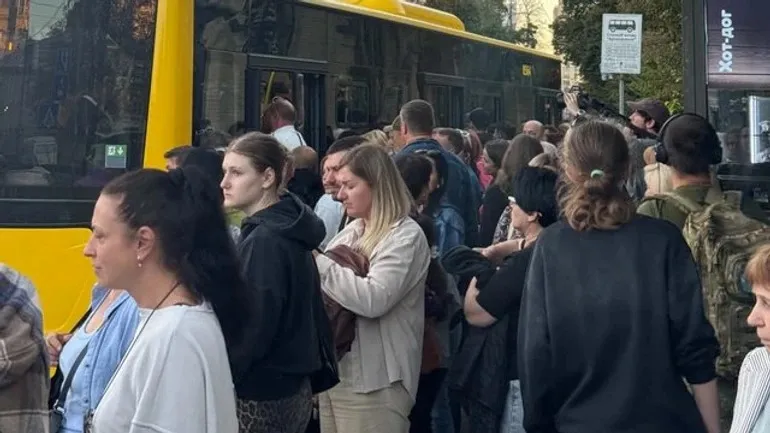
Following the Russian attack on the evening of September 8, Kyiv experienced serious public transportation problems. Passengers spent hours trying to get from the left bank to the right bank, while buses ran overcrowded and were unable to pick up everyone who wanted to ride.
On the evening of September 8, following Russia’s attack, a full-blown transportation crisis erupted in the capital. Public transportation operated intermittently, making it difficult for people to get around the city. The situation was particularly difficult for passengers who needed to get from the left bank of Kyiv to the right bank. People waited a long time for buses, but even after they arrived, not everyone was able to get on.
Buses arrive already overcrowded
Long lines of passengers formed near the temporary bus route 1-M, which duplicates the surface section of the red metro line. Buses arrived at the “Arsenalska” station already full. They picked up a significant number of people near the “Palace of Sports,” after which passengers continued on toward the left bank.
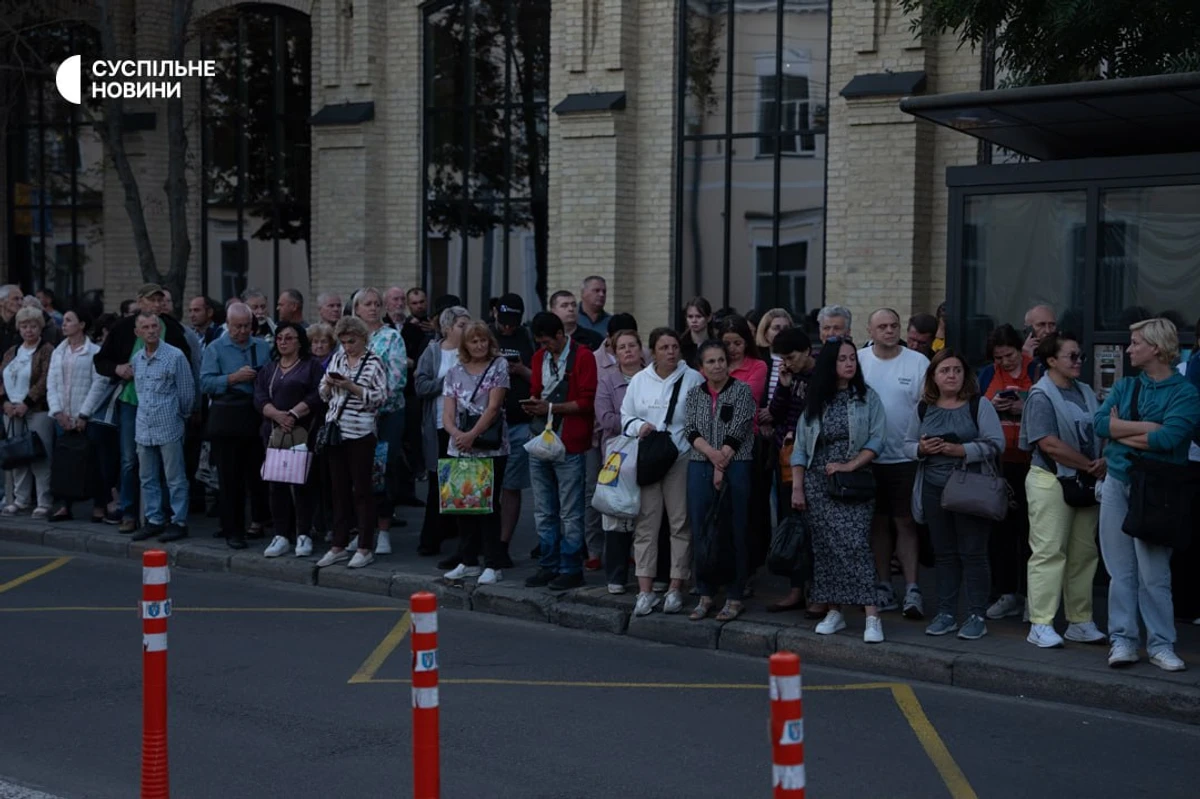
As a result, people at “Arsenalska” waited for the next bus, hoping there would be room on board this time. However, the situation repeated itself over and over again. The interval between buses was about four minutes. However, even this frequency did not solve the problem, as the buses arrived overcrowded.
Passengers cannot board the buses
According to eyewitnesses, practically no one got off the buses. Most passengers were traveling to the final stops, so there were almost no empty seats left on the buses. Because of this, people had to wait for several buses in a row. When the next bus pulled up to the stop, it was already full again.
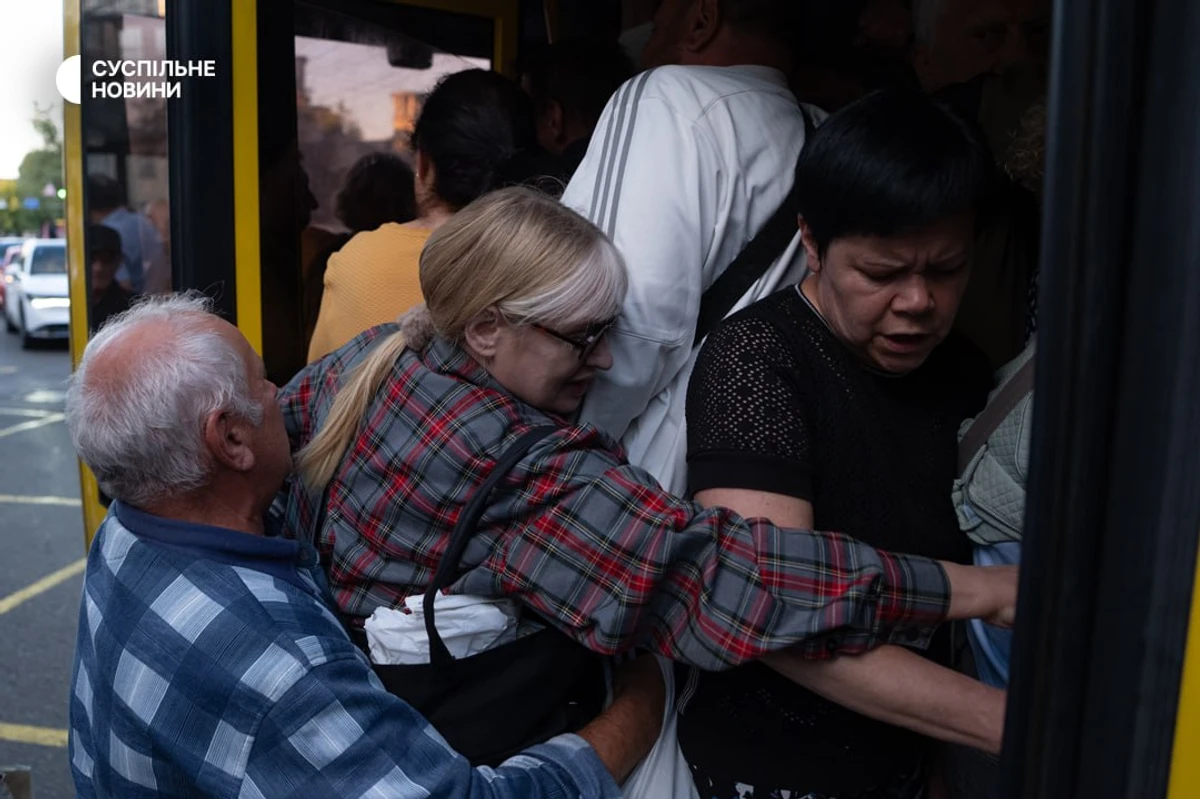
The situation was also difficult in the city center. On the evening of September 8, some buses were traveling along Khreshchatyk, even though this route did not correspond to their designated route. They also passed by the “Khreshchatyk” metro station already completely full. As a result, passengers had to find other ways to get around or simply wait until the situation stabilized.
Why the Problems Arose
Transportation difficulties arose following the Russian attack on Kyiv. Due to the aftermath of the strikes and disruptions to the city’s infrastructure, regular routes were unable to operate as usual. The problem was particularly acute for those using the metro and surface transit between the right and left banks. When passenger traffic surged, buses were unable to transport everyone quickly enough.
Under such conditions, even a minor delay on a single route quickly leads to long lines. If a significant portion of passengers is traveling across the Dnipro River in one direction, the strain on temporary routes becomes even greater. As of the evening of September 8, Kyiv residents reported long waits for public transportation and overcrowded buses. Passengers planning trips around the city had to factor in significantly longer travel times. Following the attacks, the city’s public transportation system may operate on temporary schedules, so routes and wait times may vary depending on the situation. “Suspilne” and “Interfax-Ukraine” reported on the transportation issues.
As a result of the massive nighttime attack by Russian armed forces on Kyiv on September 8, the number of wounded rose to 25, and the death toll increased to three. Units of Ukraine’s State Emergency Service continue to deal with the aftermath of enemy shelling in the capital.
On September 8, during the Russian Federation’s attack on Kyiv, a Russian drone struck the building housing the “We Are Ukraine” television channel. The strike partially destroyed the building, and five employees of the television channel were injured.
On September 8, Russian troops launched an attack with two “Shahed” drones on the Kyiv–Sumy train. The train had been stopped in advance, and passengers and crew members were evacuated following a warning from the “Ukrzaliznytsia” monitoring team.
As a reminder, fires broke out at industrial facilities in the Kyiv region as a result of the Russian Federation’s attack.
Russia also launched a massive attack on Kyiv, killing and wounding civilians.
Later, rescue workers showed the aftermath of the strikes on Kyiv.




