
The Kyiv City State Administration has not responded to the proposal for free public transportation in Kyiv
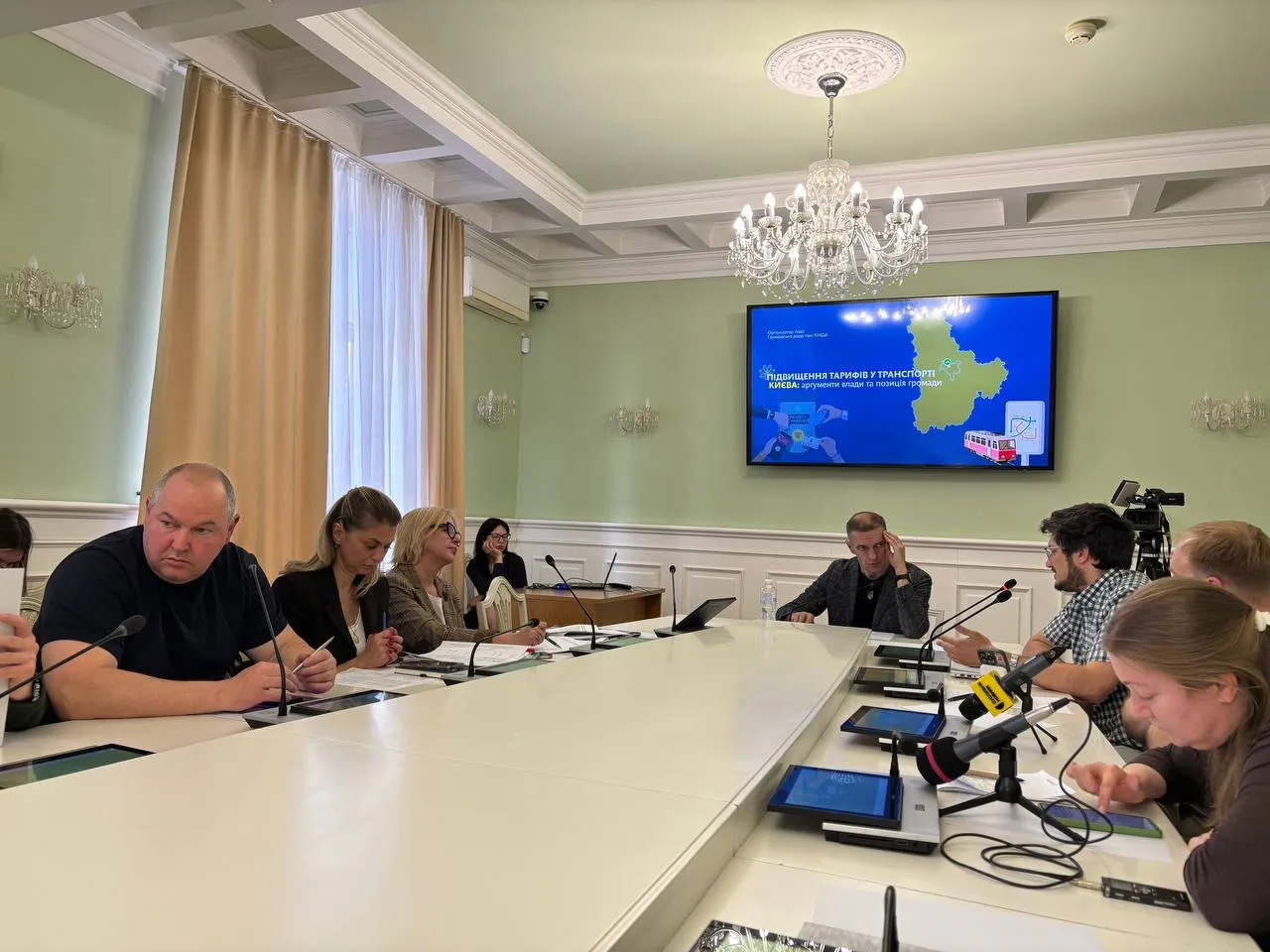
In Kyiv, during a public discussion at a conference, representatives of city authorities, the metro, civic organizations, and students discussed possible changes to fare rules and a new fare model. The discussion focused on 90-minute transfers, a potential increase in fares, and the idea of free public transportation for the city.
In Kyiv, during a public discussion on public transportation fares, the conversation once again turned to transfers, ticket prices, and potential fare hikes, with some participants emphasizing passenger convenience while others highlighted the economic realities of a system burdened by fixed costs and resource shortages.
Gennadiy Kryvoshey, chairman of the Public Council under the Kyiv City State Administration, directly raised the issue of the transportation’s financial model, emphasizing that the city needs to clearly understand how much the system costs and whether free transit is possible with subsidies. He noted: “Do we have such a figure? No? There is no such figure. Here’s my point: if there is an understanding in Kyiv that free transit is possible, then the city would have to allocate 10–15 billion.”
He also raised the issue of cost-effectiveness and the possible reallocation of budget funds: “There are funds that can be freed up from other budget items… deputy funds… perhaps part of this could go toward free transit.”
A representative of the civic organization “Passengers of Kyiv” added that even raising fares does not always solve the problem systematically, since the cost structure remains constant: “Most of it consists of fixed costs. And accordingly, by raising the fare this way, we will reduce the number of passengers.”
Iryna Kovalchuk, a member of the Public Council under the Kyiv City State Administration, emphasized that transportation costs do not depend on the number of passengers: “The metro has to operate. Trolleybuses, buses… costs do not depend on the number of passengers.”
Viktor Mykhailovych Vyhovskyi, head of the Kyiv Metro municipal enterprise, explained the logic behind the transfer ticket and why it is being introduced. According to him, the system is designed for people who commute to work daily and use multiple modes of transportation.
He noted: “This transfer ticket allows you to travel, roughly speaking, for two hours… during this time, you can make a transfer if you use three modes of transport.”
Vygivsky also explained that the metro is currently operating under difficult conditions: electricity costs are rising, there is a staff shortage, and there are additional expenses due to operating in wartime conditions. “Anyone commuting to or from work… we don’t travel for more than two hours… this allows a certain category of people to use the ticket,” he said, commenting on the model of 90-minute and longer transfers.
He also emphasized that the actual cost of transportation is rising: according to him, it already exceeds previous years’ levels and continues to increase due to energy costs and infrastructure burdens.
The discussion at the Kyiv City State Administration showed that the issue of fares in Kyiv’s public transport remains unresolved, and the balance between affordability for passengers and the system’s financial sustainability is still being sought.
Viktor Mykhailovych Vyhovskyi, head of the Kyiv Metro municipal enterprise, explained what makes up the actual cost of transportation and why the current fare is significantly lower than the cost of operations, which is driven by electricity costs, salaries, and staff shortages.
The Kyiv City Council was unable to pass a resolution that would allow negotiations to begin with international partners regarding a loan for the construction of the metro line to Troieschyna.
The KyivMetro lost half of its passengers during the war.
The Lukyanivska metro station resumed operations after the Russian attack
A petition to rename the Pochaina metro station to “Banderivska” did not receive enough votes


