
13 photo series by Hiroshi Sugimoto presented in Tokyo — The Japan Times
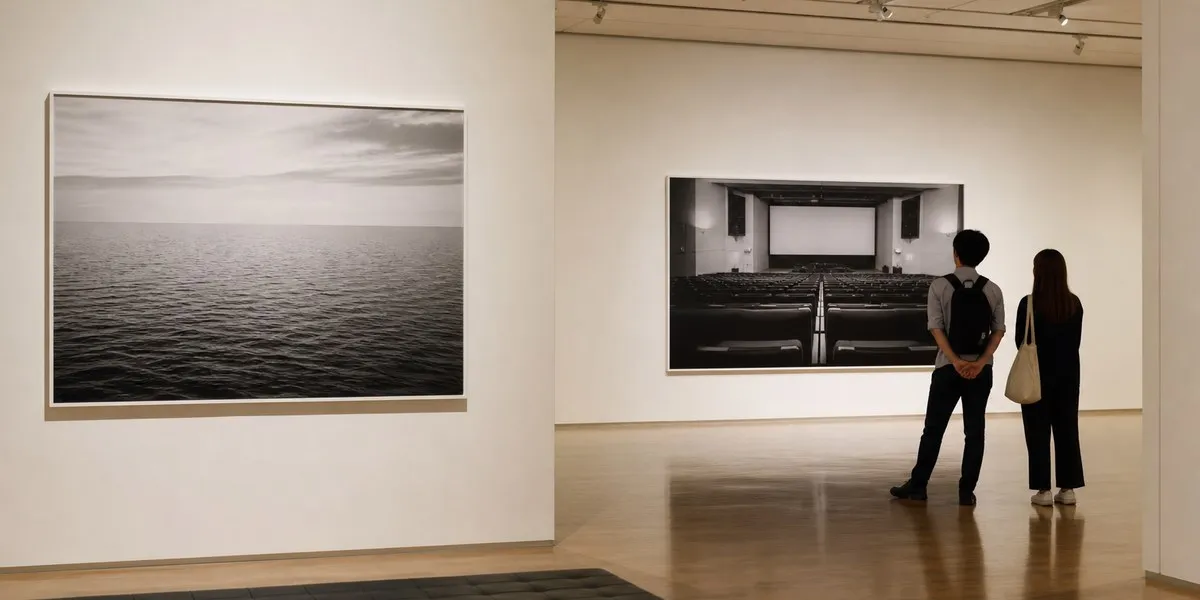
This summer, the Museum of Contemporary Art Tokyo in Japan presented the exhibition “Hiroshi Sugimoto: Extinction,” featuring 13 photographic series by Japanese artist Hiroshi Sugimoto. The exhibition focuses on his reflections on human history, memory and the possible disappearance of the human species, The Japan Times reports.
Photography as part of an artistic practice
The 78-year-old Sugimoto is often called a photographer, but his work is not limited to this medium. Over five decades, he has also worked as an architect, sculptor, designer, landscape artist, tea-practice master, museum founder, art dealer and entrepreneur. The publication notes that these fields interact in his work, while photography is part of a broader artistic vision.
Among Sugimoto’s best-known cycles are “Dioramas,” created on the basis of museum installations and bringing him recognition in the 1970s. In the “Portraits” series, stuffed animals are replaced by wax figures from Madame Tussauds. In both cycles, the artist addresses the theme of returning to life.
More current news is available on the UA.News Telegram channel Telegram.
Horizon, light and memory
An important element of Sugimoto’s works is linear perspective. In his “Seascapes” series, the horizon defines the composition of the frame and serves as a symbolic boundary between light and darkness. The exhibition also presents images of uninhabited spaces: seascapes without viewers, an abandoned solar observatory and empty movie theaters from the “Theaters” series.
In the exhibition catalogue, the artist describes photography as the art of extracting the spirit. For Sugimoto, a photograph is not merely a captured moment, but also a repository of memory and knowledge. He suggests that after the possible disappearance of humanity, such repositories of memory could preserve the possibility of resurrection.
The artist’s permanent installations are located at the Enoura Observatory, an open-air museum near Odawara in Kanagawa Prefecture. His works are also displayed on Naoshima Island, including at the Hiroshi Sugimoto Gallery: Time Corridors.




