
Roman camp from the Cantabrian Wars found in Spain — Live Science
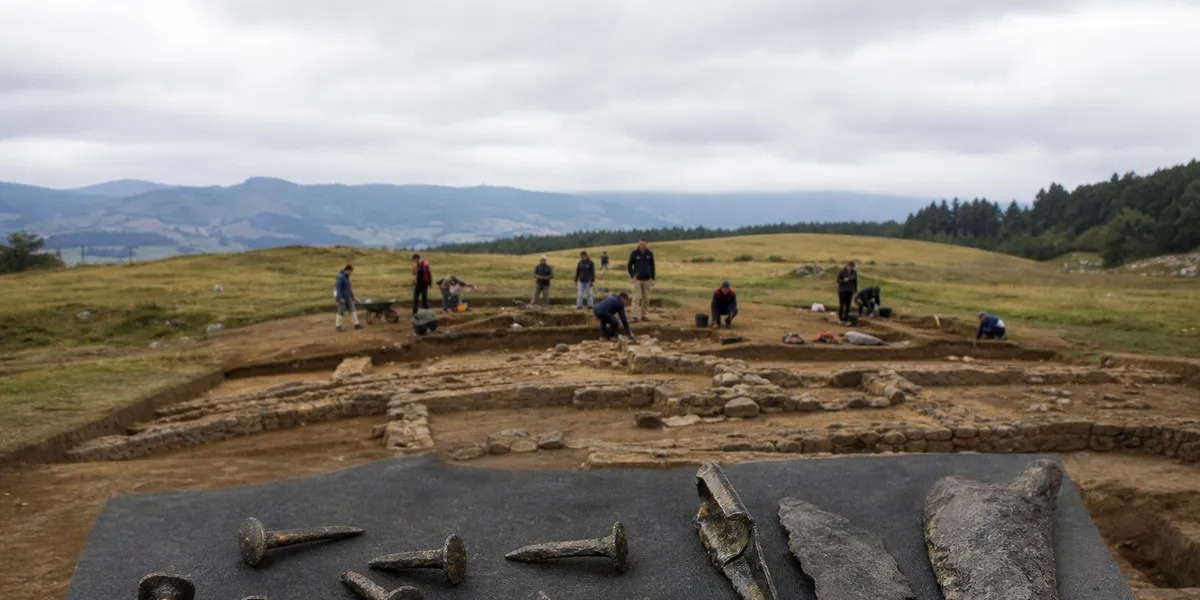
In northern Spain, archaeologists have discovered a fortified Roman military camp that was used during the Cantabrian Wars in the 1st century BCE. Evidence of a large-scale fire that destroyed most of the pre-Roman Cantabrian settlement, including two temples, was also found nearby, Live Science reports.
Camp near a Cantabrian settlement
The camp was excavated this year approximately 500 meters from an Iron Age settlement inhabited by the Cantabri, a group of Celtic tribes from the Cantabrian Mountains in what is now northern Spain. The fortification consisted of an earthen rampart about 12 meters wide, surrounded by a stone wall approximately 1.5 meters thick.
Well-preserved finds include fragments of metal weapons and small iron nails for the soles of Roman soldiers' military sandals. Such nails provided better traction on rocky and muddy terrain. Researchers believe the finds indicate that the Roman army was preparing to attack the Iron Age community.
More current news is available on the UA.News Telegram channel Telegram.
Deliberate arson theory
The Cantabri resisted Roman rule for about 10 years, but in 19 BCE they were subdued by an army under the command of Emperor Augustus. The Cantabrian Wars ended local control over this territory, after which the Iberian Peninsula came under the control of the Roman Empire.
Eduardo González Gómez de Agüero, co-director of the excavations and an archaeologist at the University of León, suggested that the Romans may have deliberately caused the fire in the settlement during the conquest. At the same time, scientists are still establishing the chronology of the final attack and determining whether the settlement was destroyed in a single event or gradually.
Previously, another research team identified 66 Roman camps in northern Spain. According to archaeologists, the new discovery helps determine the scale and location of Roman operations on the Cantabrian slope of León.




