
Scientists develop membrane for separating crude oil at room temperature — ScienceDaily
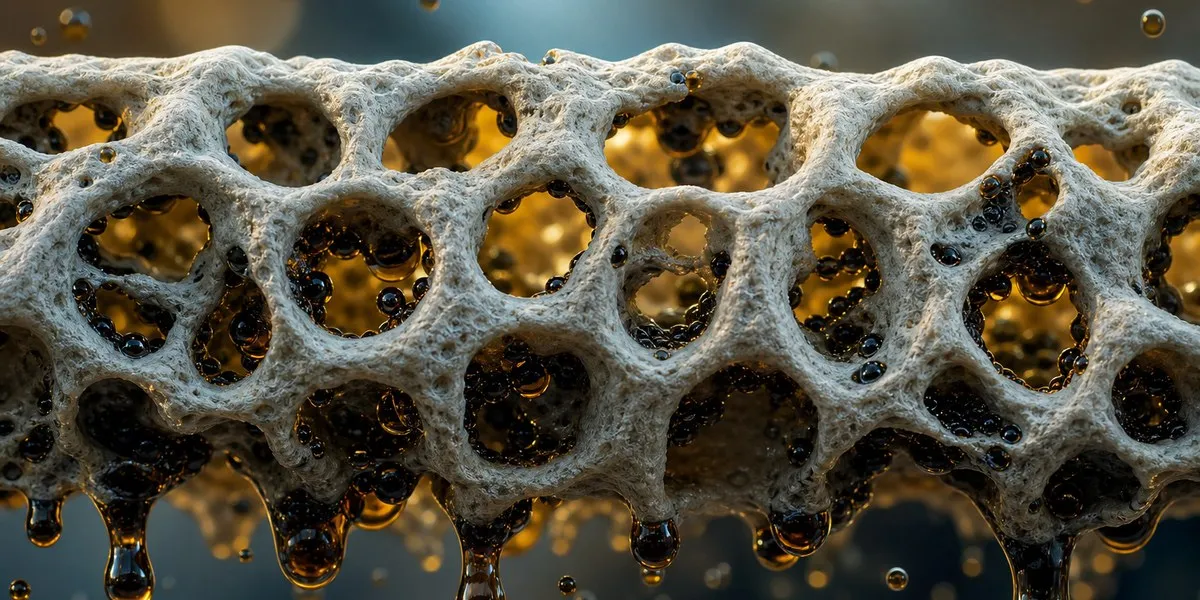
Researchers from the Korea Advanced Institute of Science and Technology (KAIST) in South Korea, together with a group from the Georgia Institute of Technology, demonstrated a membrane capable of separating crude oil at room temperature. They used an inexpensive porous polyacrylonitrile (PAN) membrane for this purpose, ScienceDaily reports. The results were published in the journal Nature.
Traditionally, oil refineries use distillation: oil is heated to temperatures above 350 °C, its components are evaporated, and the vapors are then cooled to obtain separate fractions. According to an estimate cited in the report, global crude oil distillation consumes about 1,100 TWh of energy annually.
Oil itself narrows the pores
As crude oil passed through the pores of the PAN membrane, heavier hydrocarbon molecules accumulated on their inner walls. This narrowed the openings and formed channels less than 2 nanometers wide. Lighter fractions, including naphtha, gasoline and kerosene, passed through them faster, while heavier components were retained more effectively.
Usually, such accumulation of substances in pores, known as membrane fouling, is considered a problem for filtration. In this case, it became a mechanism for molecular separation. The uncoated PAN membrane showed a crude oil permeation rate approximately 23 times higher than previous leading membranes for this task and operated stably for 28 days.
More current news is available on the UA.News Telegram channel Telegram.
Projected cost reductions
The authors propose installing the membranes before existing distillation equipment rather than completely replacing refinery infrastructure. Computer modeling showed that such integration could reduce energy consumption by 31.6%, carbon dioxide emissions by 37.6%, cooling water consumption by 20.7%, and operating costs by 36%.
These figures are modeling results, not data on emission reductions already achieved at industrial facilities. The scientists also estimate that widespread deployment of the technology in South Korea's oil refining and petrochemical industries could prevent approximately 10 million tonnes of greenhouse gas emissions annually.
The team tested the membrane on real crude oil supplied by HD Hyundai Oilbank. Next, the researchers plan to improve the production of large membrane modules and test their reliability during longer operation. Possible applications include purifying pyrolysis oil obtained from plastic waste processing, recovering solvents for battery production, purifying pharmaceutical compounds, and producing biofuels.




