
Experts point to loopholes for Santos in gas scheme — ABC News Australia
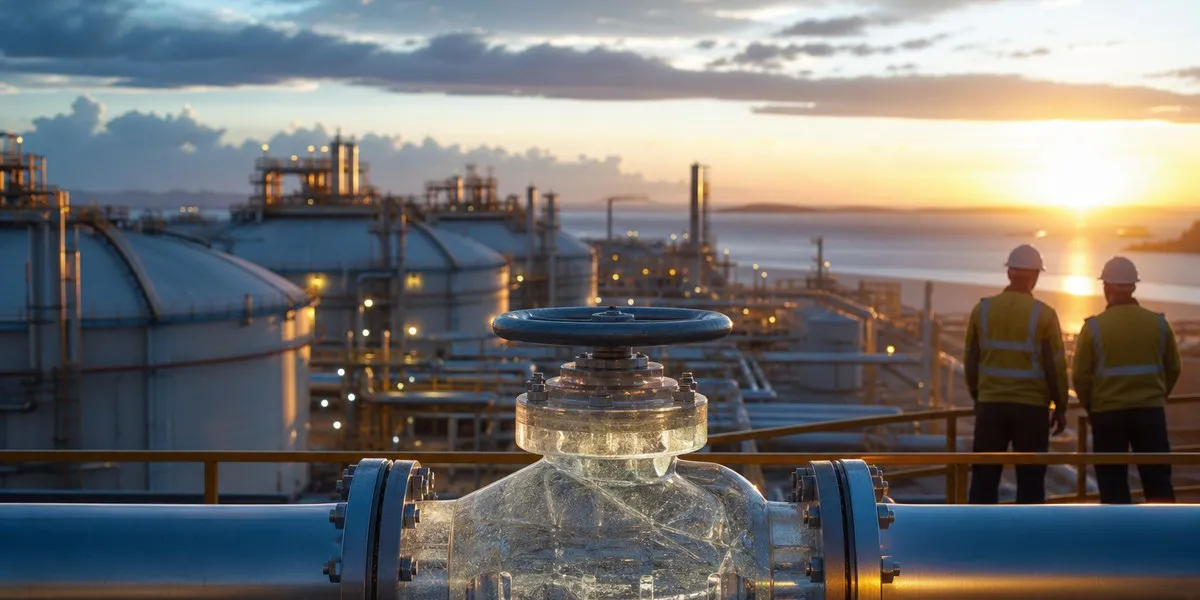
Australia’s federal parliament is considering a bill on a national gas reservation scheme. It provides that exporters will reserve for the domestic market each year an amount equivalent to 20% of their production. Analysts, trade unions and major gas consumers warn that the document still contains loopholes that Santos could potentially use, ABC News Australia reports.
The government of Anthony Albanese seeks to somewhat increase gas supply on the country’s east coast, where prices rose after liquefied natural gas exports from Queensland began in 2016. Western Australia will be exempt from the scheme, while the Northern Territory may fall under it.
Concerns over Santos
Australian Workers’ Union secretary Paul Farrow said that despite changes to the draft law, it still contains provisions that could allow Santos not to supply additional gas to the local market. According to him, the exporter could meet the requirements through so-called paper supplies — for example, by acquiring local gas projects and counting their production as its own.
MST Financial analyst Saul Kavonic believes that the scheme’s effectiveness will depend almost entirely on the baselines used to determine gas projects’ obligations. He warned that the process of setting these baselines could be opaque and vulnerable to lobbying influence.
More current news is available on the UA.News Telegram channel Telegram.
According to an ABC investigation, the Santos-led Gladstone LNG project over the past 10 years has drawn from the domestic market and exported a volume of gas equivalent to 20% of domestic demand on Australia’s east coast. Its LNG plant has a capacity of 7.8 million tonnes per year, although the project did not have enough of its own gas to fully utilise the facility.
Debate over prices and sales rules
Energy Users Association representative Andrew Richards supported the reform’s concept but called for avoiding ambiguous provisions that could weaken its purpose. According to him, gas prices in the eastern states fell this year from about A$13 to A$8.50 per gigajoule after Santos reduced its gas purchases on the domestic market; Richards considers this evidence of GLNG’s impact on prices.
At the same time, industry group Australian Energy Producers opposed certain provisions of the bill. Its chief executive, Samantha McCulloch, told a Senate committee that requiring companies not merely to offer but to compulsorily sell reserved gas could force producers to enter into agreements below cost or on non-commercial terms. Kavonic also warned that the current version of the document could encourage exporters to buy up smaller domestic producers and strengthen their market influence. ABC approached Santos for comment.




