
Kenya defends local fuel importers after Uganda’s claims — Nation Kenya
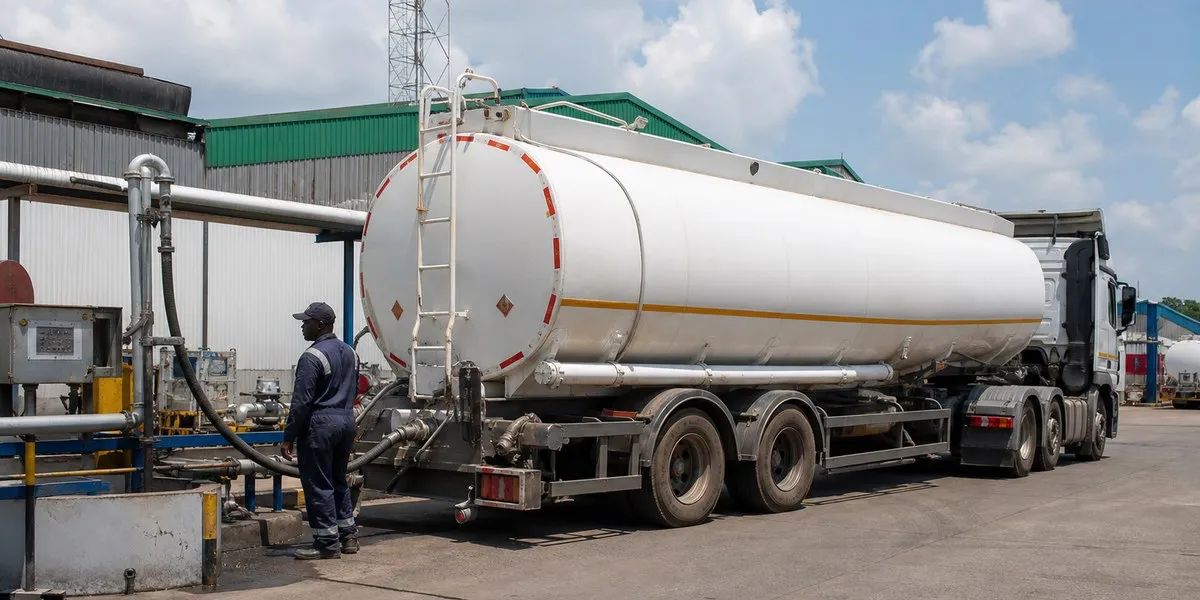
In Kenya, the government defended local companies that import refined fuel under the Government-to-Government agreement after Ugandan President Yoweri Museveni criticized the role of intermediaries. Kenya’s Cabinet Secretary for Energy and Petroleum, Opiyo Wandayi, said that local counterparties were selected by three oil companies from the Persian Gulf countries, rather than by the Kenyan government, Nation Kenya reports.
Kenyan government’s position
According to Wandayi, the government provided suppliers with a list of all licensed Kenyan petroleum marketing companies for vetting. He said that Kenya’s insistence on choosing its own counterparties could have led international oil companies to refuse to participate in the agreement and preserved the previous situation, in which fuel supplies would have been at risk.
Kenya concluded an agreement with Aramco Trading Fujairah FZE, Abu Dhabi National Oil Company Global Trading Ltd and Emirates National Oil Company Singapore Private Limited. The arrangement provided for fuel imports with payment deferred for 180 days. Initially, the suppliers selected Gulf Energy Limited, Galana Energies Limited and Oryx Energies Kenya Limited as counterparties; later, One Petroleum Limited, Asharami Synergy Limited and BE Energy Limited were added to the mechanism.
More current news is available on the UA.News Telegram channel Telegram.
Uganda’s claims and prices
Ugandan President Yoweri Museveni said that intermediaries in Kenya’s G-to-G scheme allegedly inflated the cost of diesel, petrol and kerosene through high premiums. In 2024, Uganda stopped relying on the Kenyan agreement and introduced its own supply mechanism with Vitol Bahrain, saying this would help reduce fuel prices in Kampala.
According to the publication, Uganda’s premiums under its contract with Vitol amount to $83 per tonne of diesel, $61.50 per tonne of petrol and $79.25 per tonne of aviation fuel. Under the Kenyan scheme, the respective figures are $78, $84 and $97 per tonne.
At the same time, retail prices in Kampala are higher than in Nairobi: a litre of diesel costs $1.694 versus $1.673, while a litre of petrol costs $1.664 versus $1.642. The administration of Kenyan President William Ruto had previously said that the G-to-G agreement was intended to help overcome a dollar shortage that had caused the Kenyan shilling to weaken and imports to become more expensive.


