
Researchers identify E-cadherin’s role in the uptake of dead cells — ScienceDaily
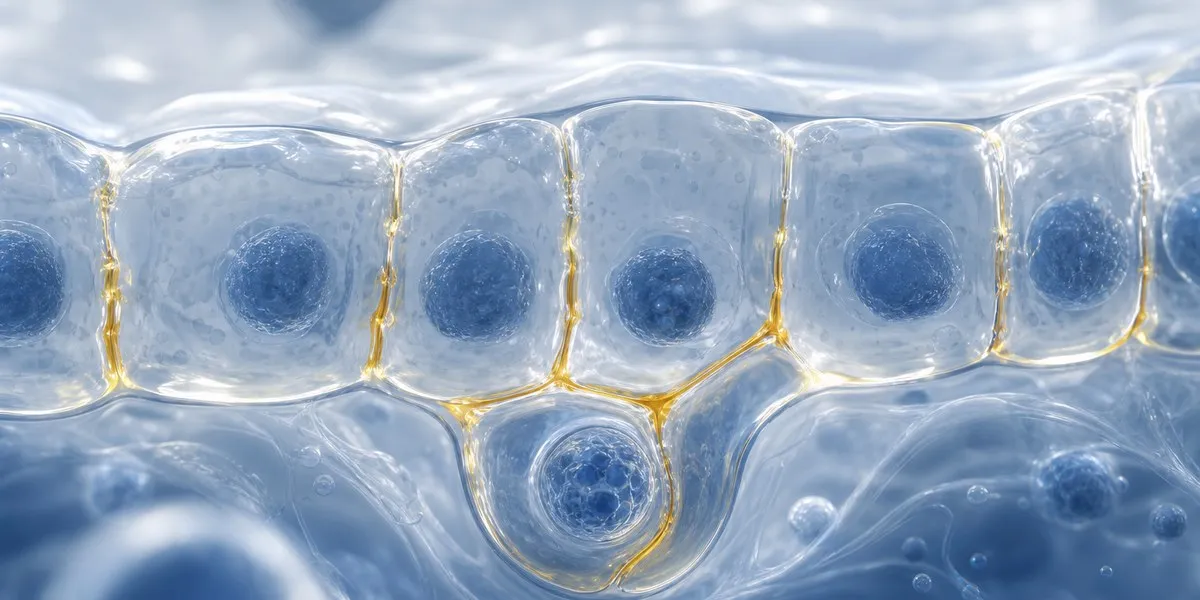
Researchers have found that the E-cadherin complex, which ensures cell adhesion in tissues, also helps epithelial cells absorb neighboring dead cells. The results of the work, published in Nature Communications, are reported by ScienceDaily. Studying this mechanism may be important for understanding how tissues dispose of cellular debris, the accumulation of which can contribute to inflammation.
How cells clear debris
A team led by Verena Ruprecht studied epithelial tissues in living zebrafish and mouse embryos. Epithelium forms dense protective layers, including in the skin, intestines, and airways. The scientists found that the E-cadherin complex assembles at the point of contact between tissue and a dying cell.
To test how the system works, the researchers used dead cells without E-cadherin. Epithelial tissue removed them as effectively as ordinary dead cells. In another experiment, cells were presented with protein-free lipid droplets carrying a signal characteristic of the surface of dying cells. Epithelial cells also absorbed these droplets.
More current news is available on the UA.News Telegram channel Telegram.
The barrier remains intact
Real-time observations showed that the upper and lower surfaces of a single epithelial cell behave differently during uptake. The lower part of the cell stretches and wraps around dead material, while the upper surface changes very little. This makes it possible to keep the tissue’s protective barrier sealed.
The researchers also described the role of two components of the complex. One of them connects the molecular system to the cell’s internal framework and enables force transmission. Without this connection, cells could not absorb dead cells. Another component restrains the contractile mechanism: removing it made cells too rigid, which also prevented tissue clearance.
Results in mouse embryos
In mouse embryos, blocking E-cadherin caused dead cells to remain uncleared. This is consistent with observations in zebrafish and indicates that the mechanism may be shared among vertebrates. At the same time, the authors note that they have not yet determined whether the same E-cadherin-dependent system operates in adult animal and human tissues.




