
South Korea completes Arctic voyage without icebreaker — Korea Herald
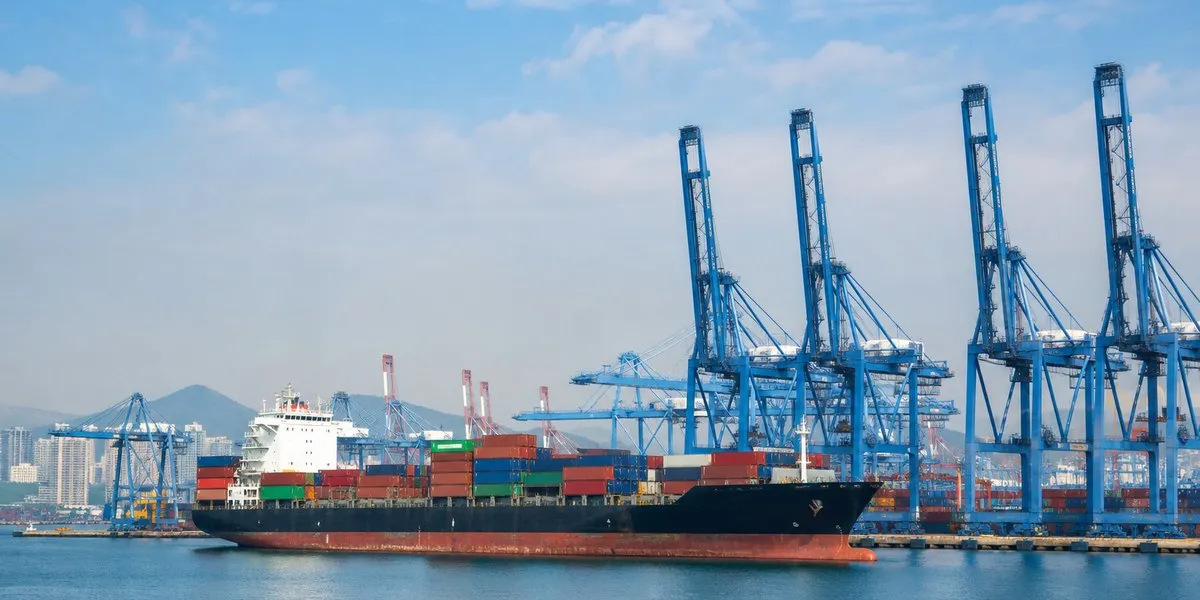
In Busan, South Korea’s Ministry of Oceans and Fisheries released the results of the first state trial of an Arctic sea route. The container ship Panstar Acro sailed to Europe and returned via the Arctic without icebreaker assistance. The trial showed that the route could reduce the distance to Europe by about 35% and travel time by approximately 10 days compared with the route through the Suez Canal, Korea Herald reports.
49 days at sea
The vessel departed Busan on August 22 and returned on October 11. The full voyage lasted 49 days and 10 hours, including calls at Felixstowe in the United Kingdom, Rotterdam in the Netherlands, and Gdańsk in Poland. The journey from Busan to Felixstowe took about 20.2 days, while the trip from Gdańsk to Busan took 21.9 days.
The 2,758-TEU container ship carried 737 TEU of export cargo to Europe, including chemical products, used cars, auto parts, and cosmetics. On the return journey, it carried 1,743 TEU of empty containers being repositioned as part of logistics operations.
More current news is available on the UA.News Telegram channel Telegram.
Ice and bad weather complicated navigation
Participants in the trial said that one of the most difficult episodes was an encounter with drifting ice near the Bering Sea. Because of darkness and limited visibility, the crew did not proceed relying solely on radar, instead waiting for daylight and slowly passing through an open section. Near the Vilkitsky Strait, the vessel also had to navigate around large ice floes.
Low temperatures triggered warning signals in the fuel and lubricating oil circulation systems, so the crew used heaters and additional insulation. During the return voyage, rapid time changes disrupted sleep schedules, while rough seas in the northern Pacific Ocean caused prolonged rolling. The vessel also took a different route between the Kuril Islands to avoid a typhoon moving north.
The ministry plans to analyze voyage data, support operators in acquiring vessels suitable for navigation in ice conditions, and continue developing icebreaking container ships. A separate economic assessment of the trial is to be presented in November.




